
- home
- journeys
The Mei-Mei Trail: Siang (8 days)
about
Welcome to Knowhere Travel Co. and Further & Beyond’s newest walking holiday in the Eastern Himalaya. An invitation into the forests, homes, and traditions of its Indigenous communities.
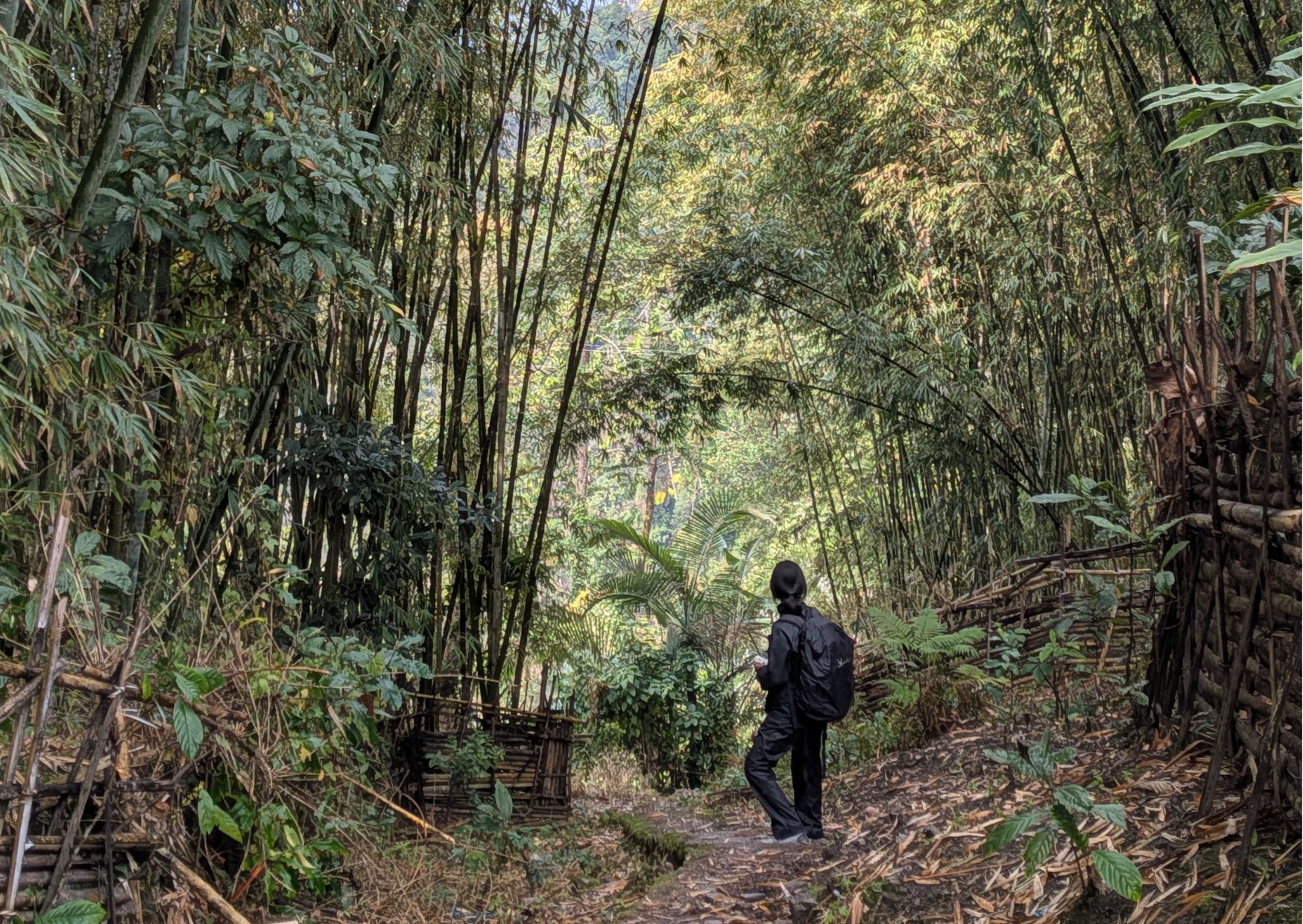
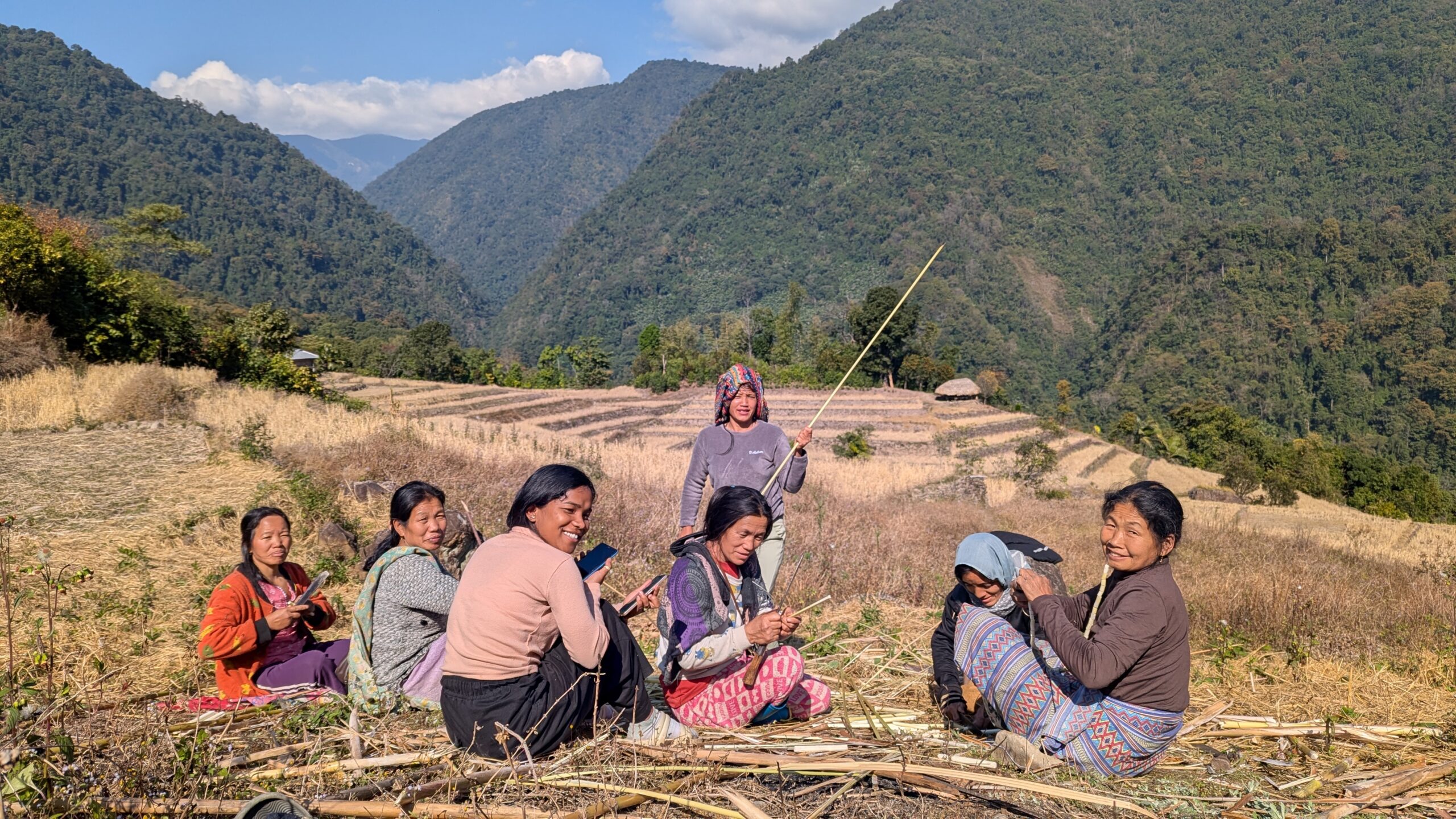
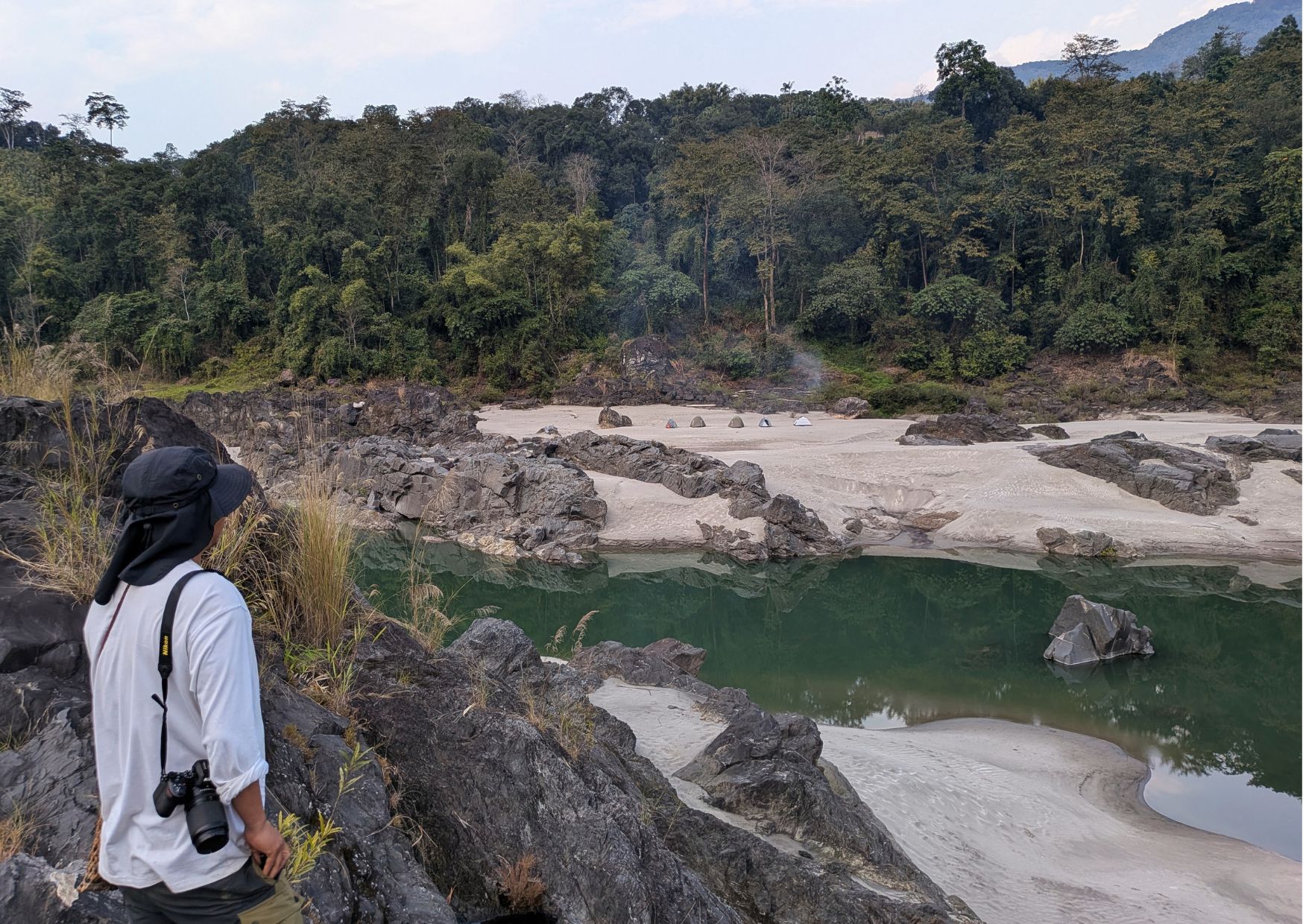
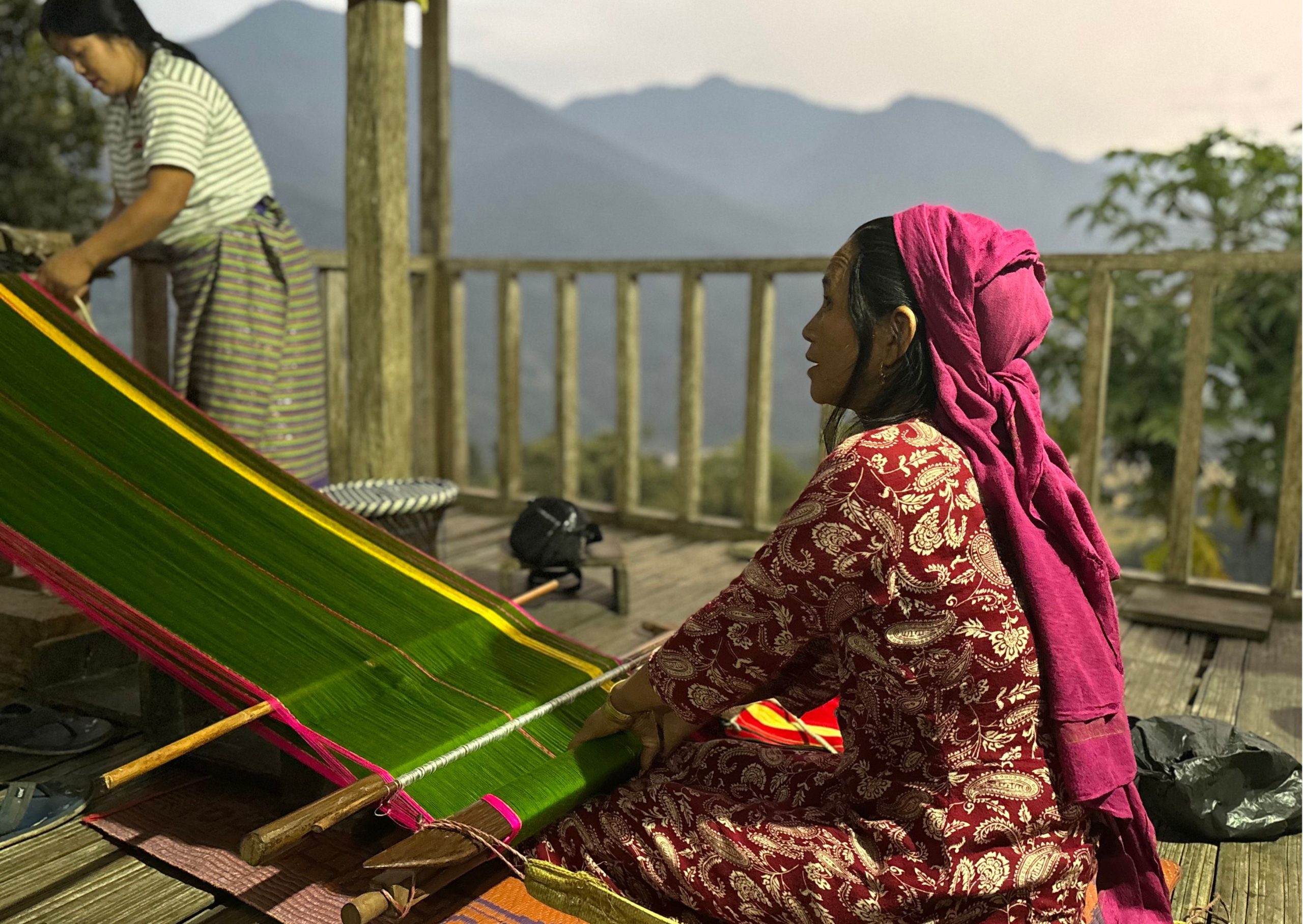
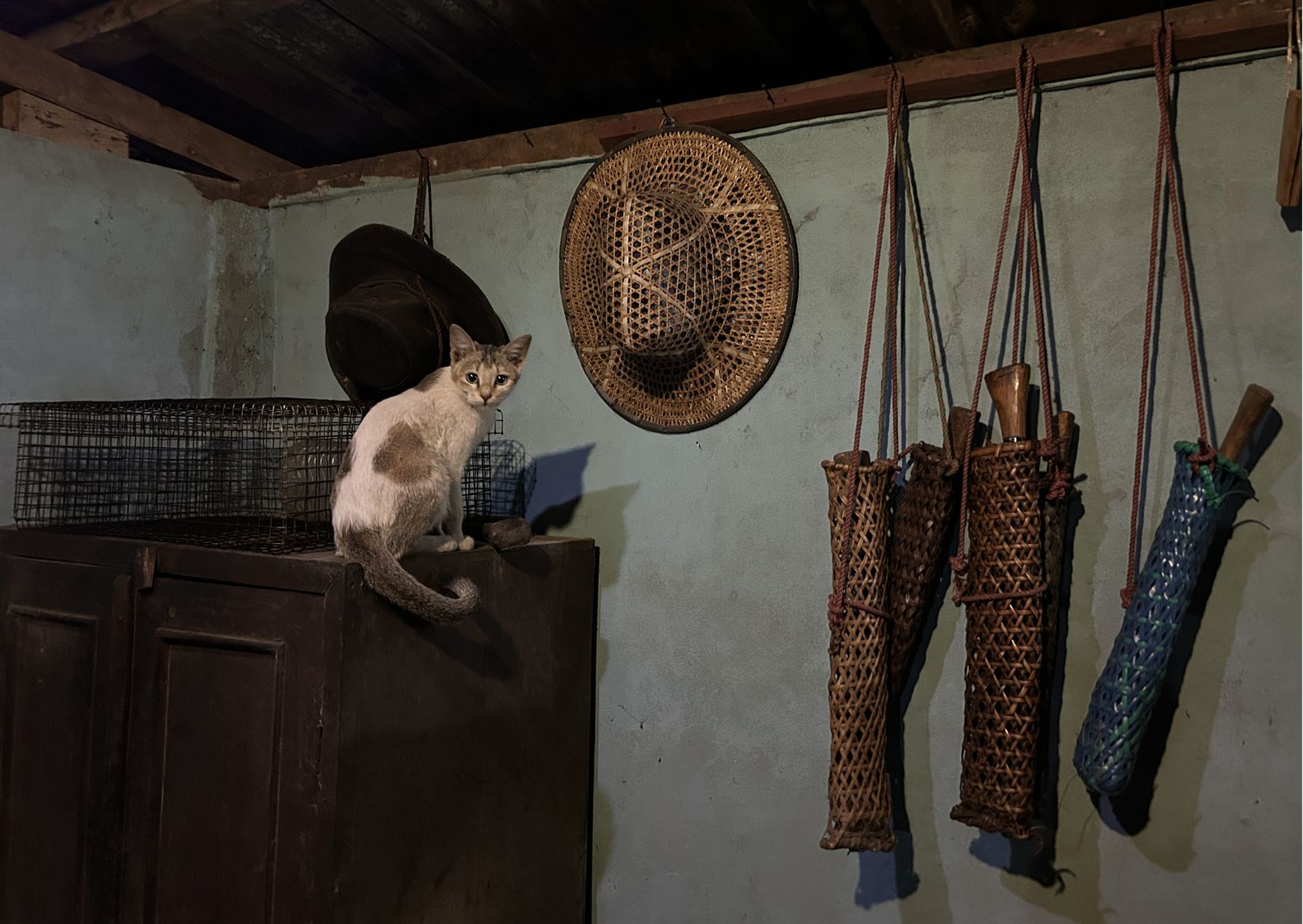
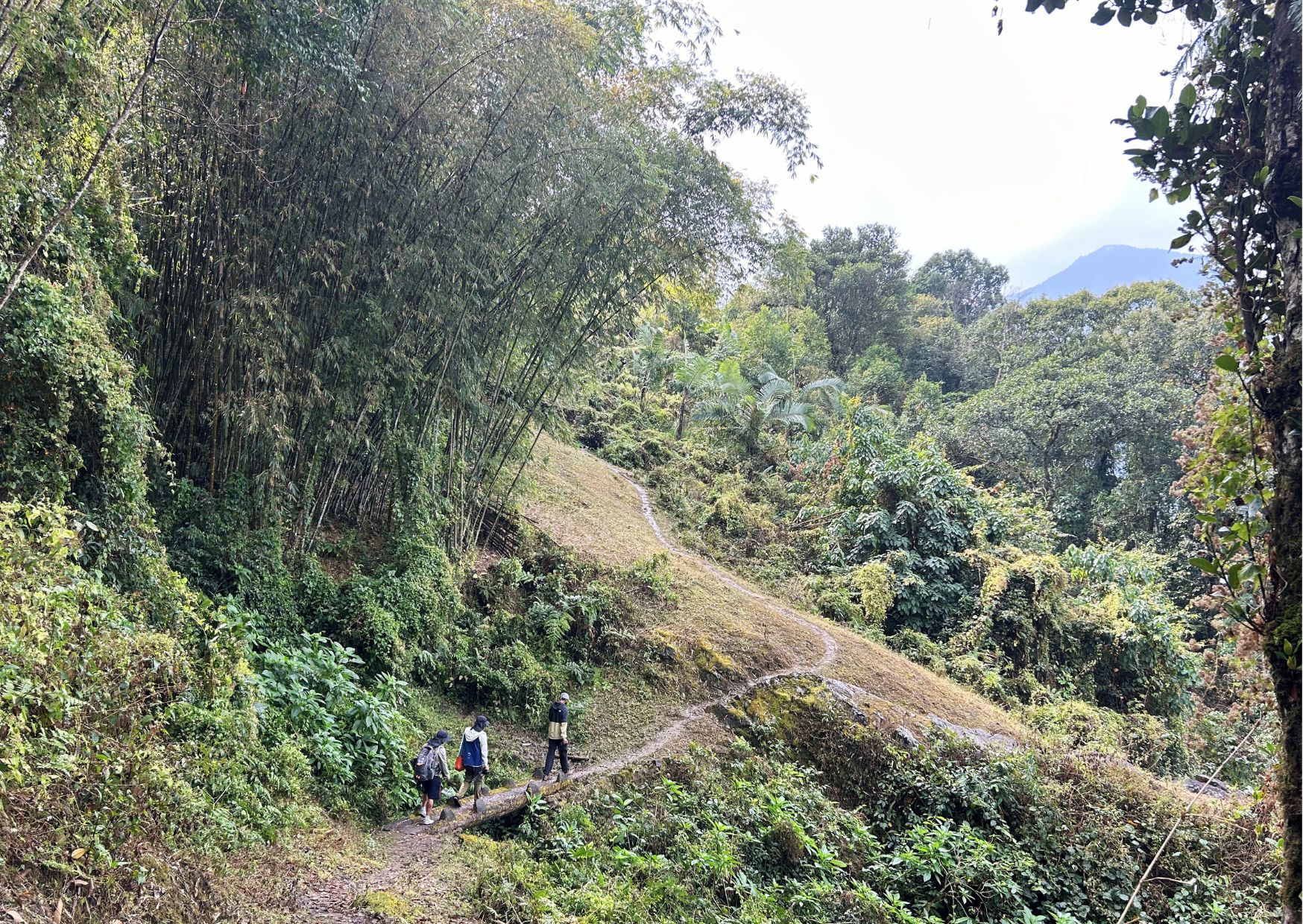
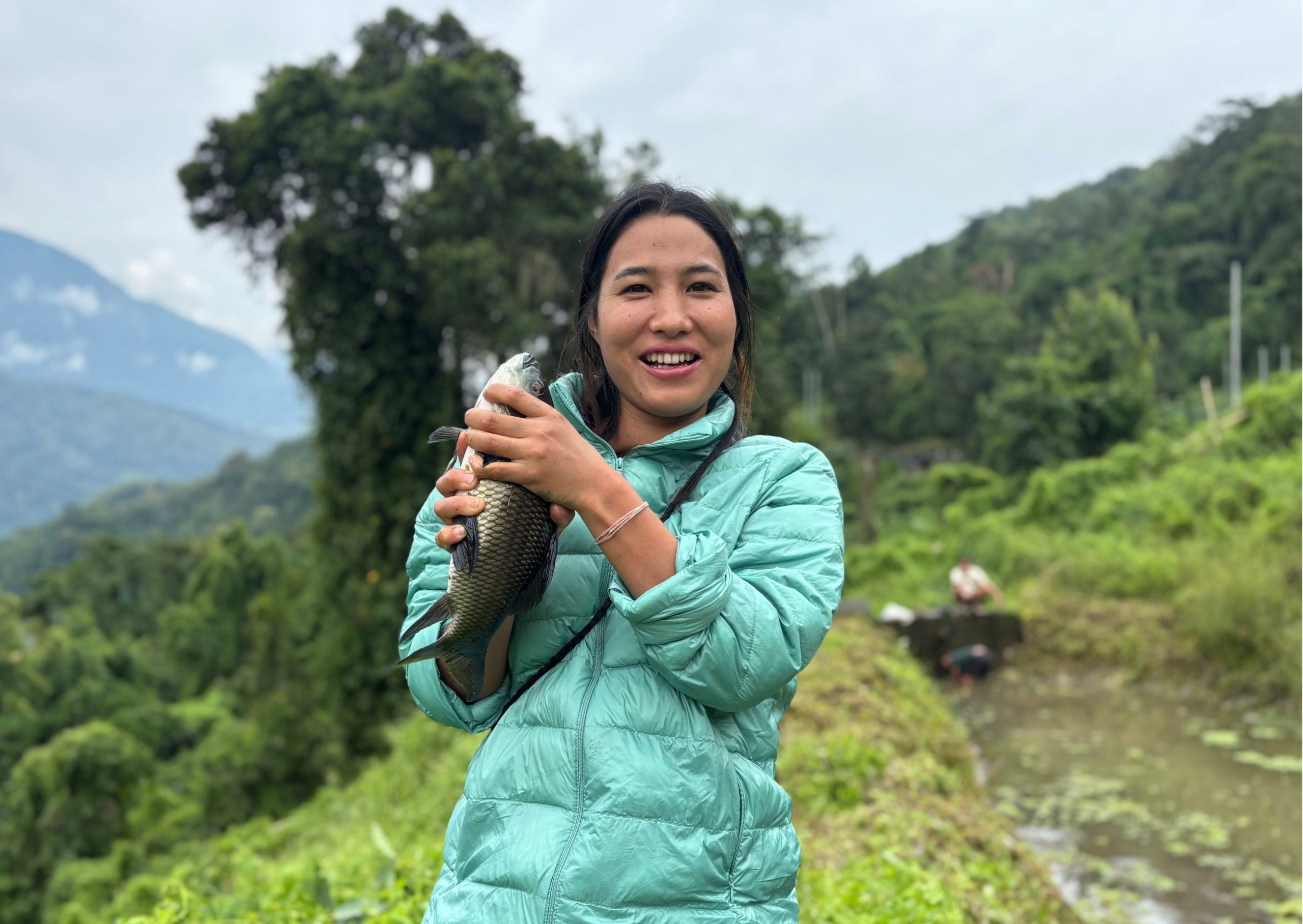
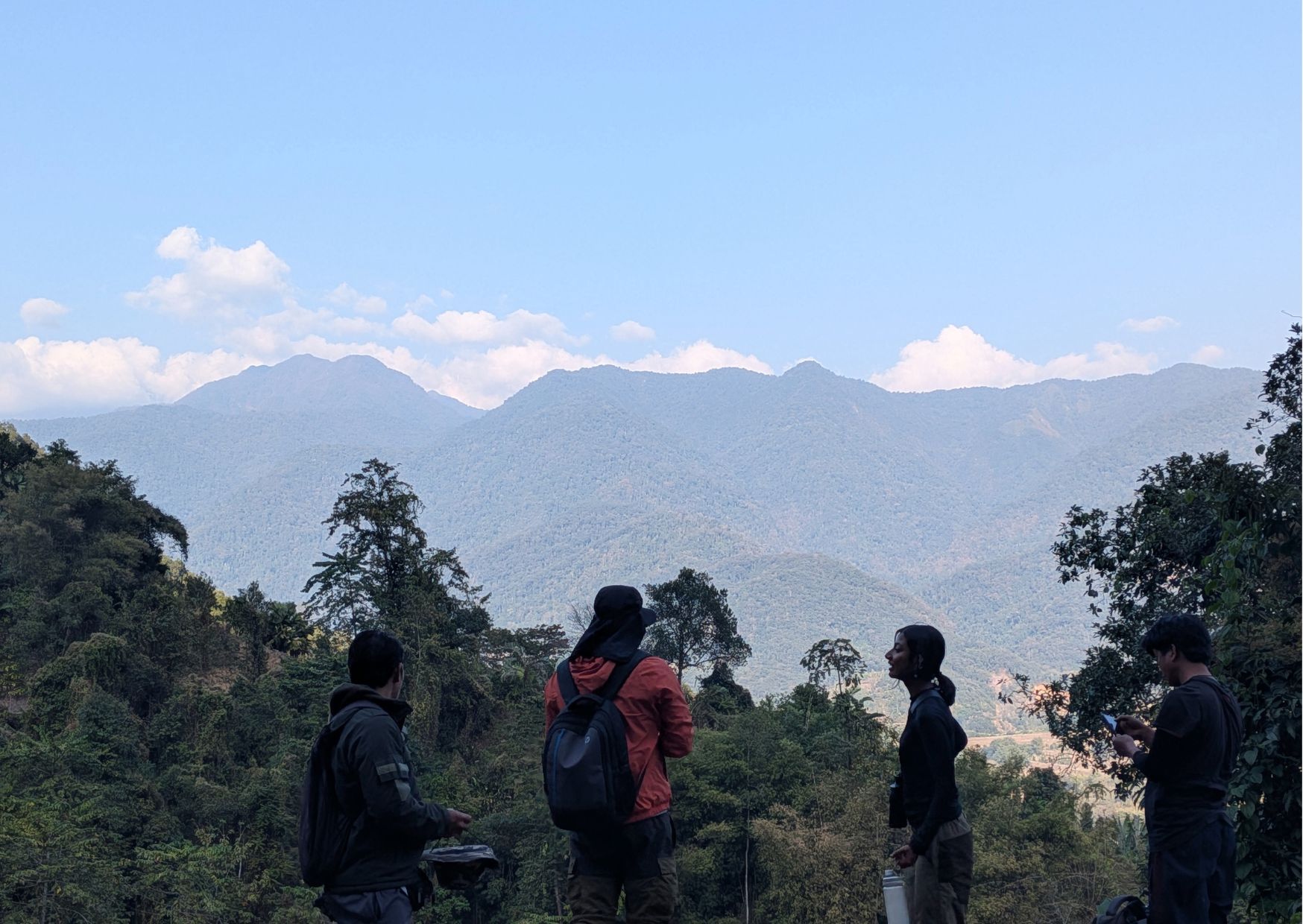
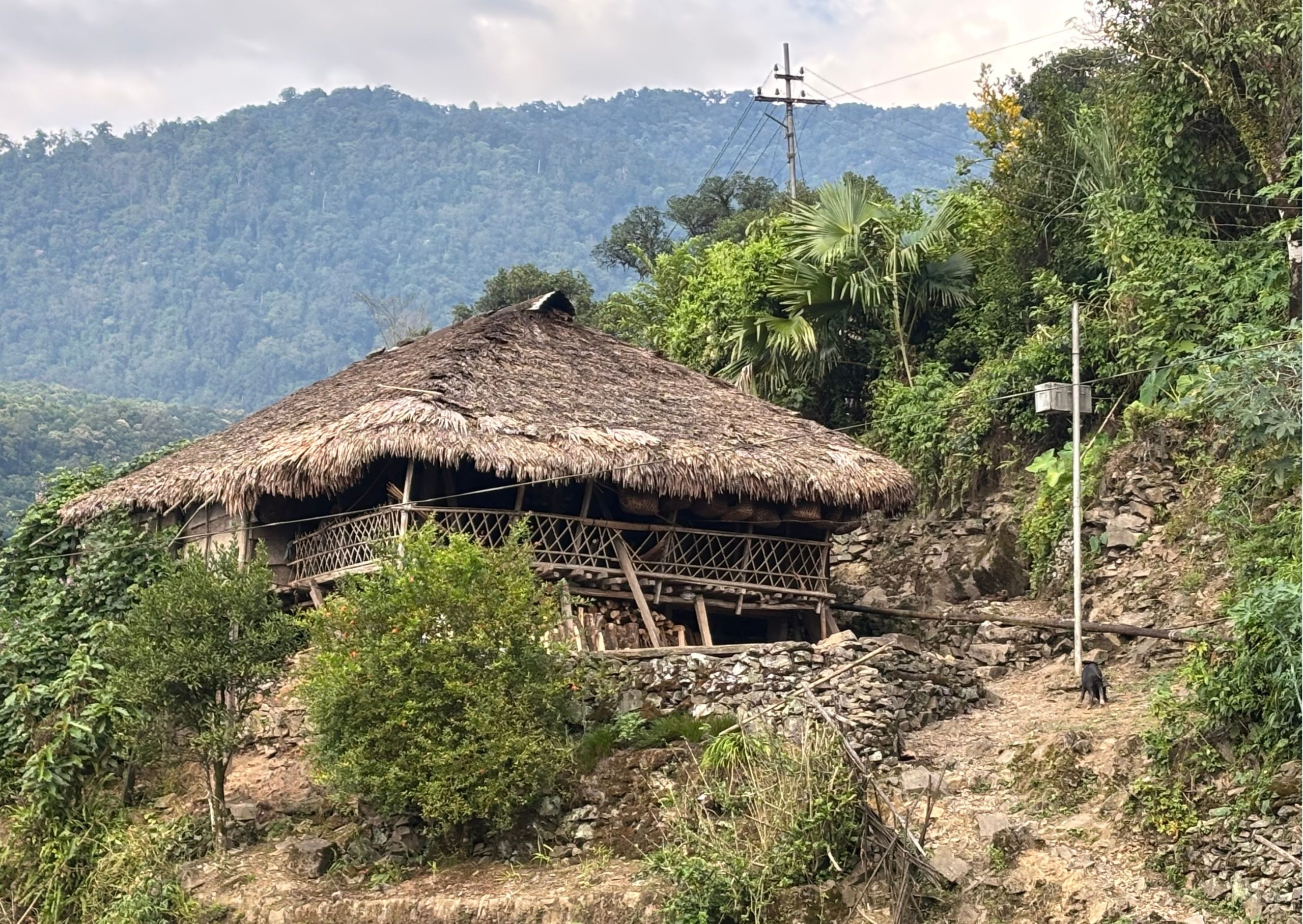
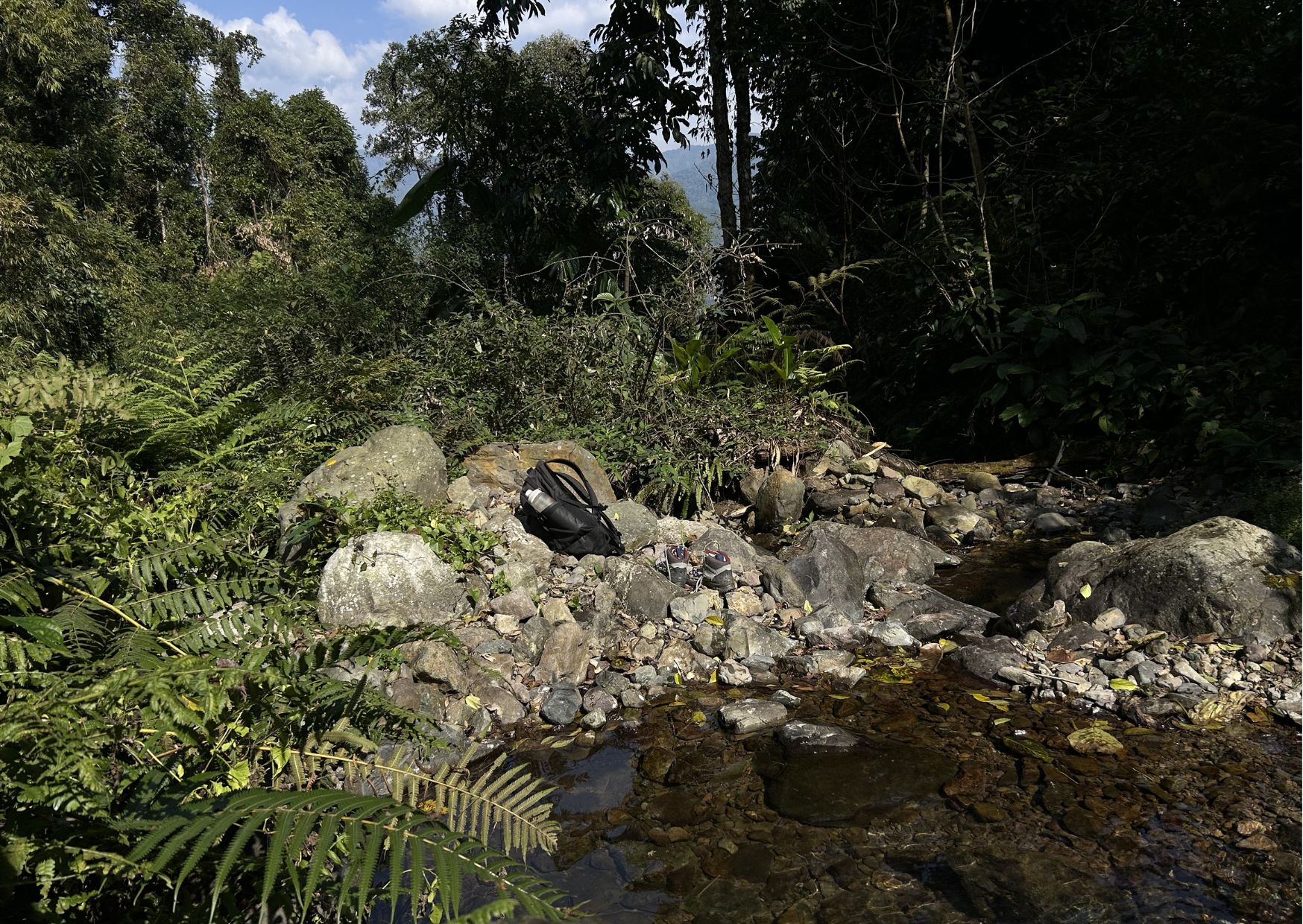
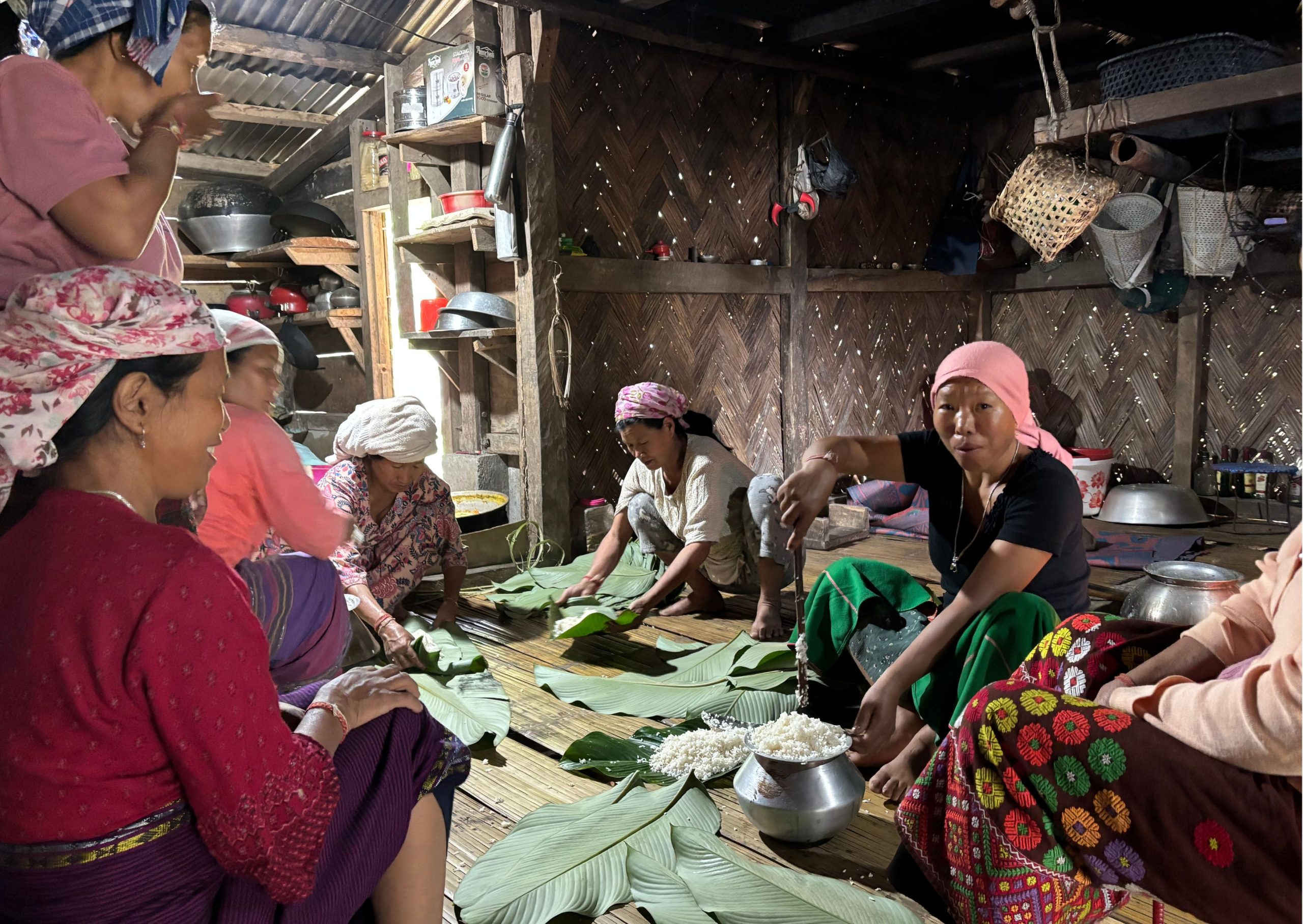
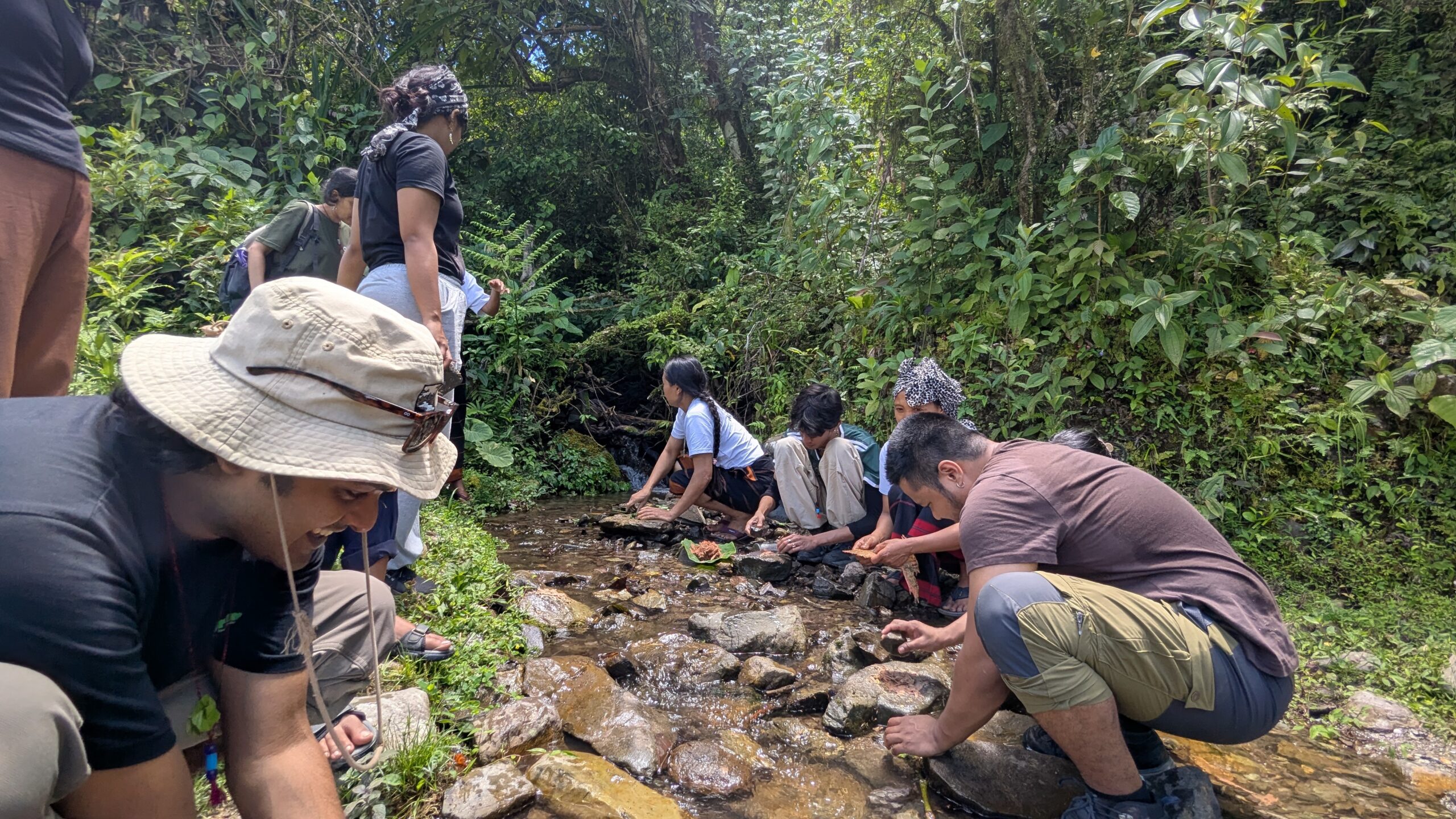
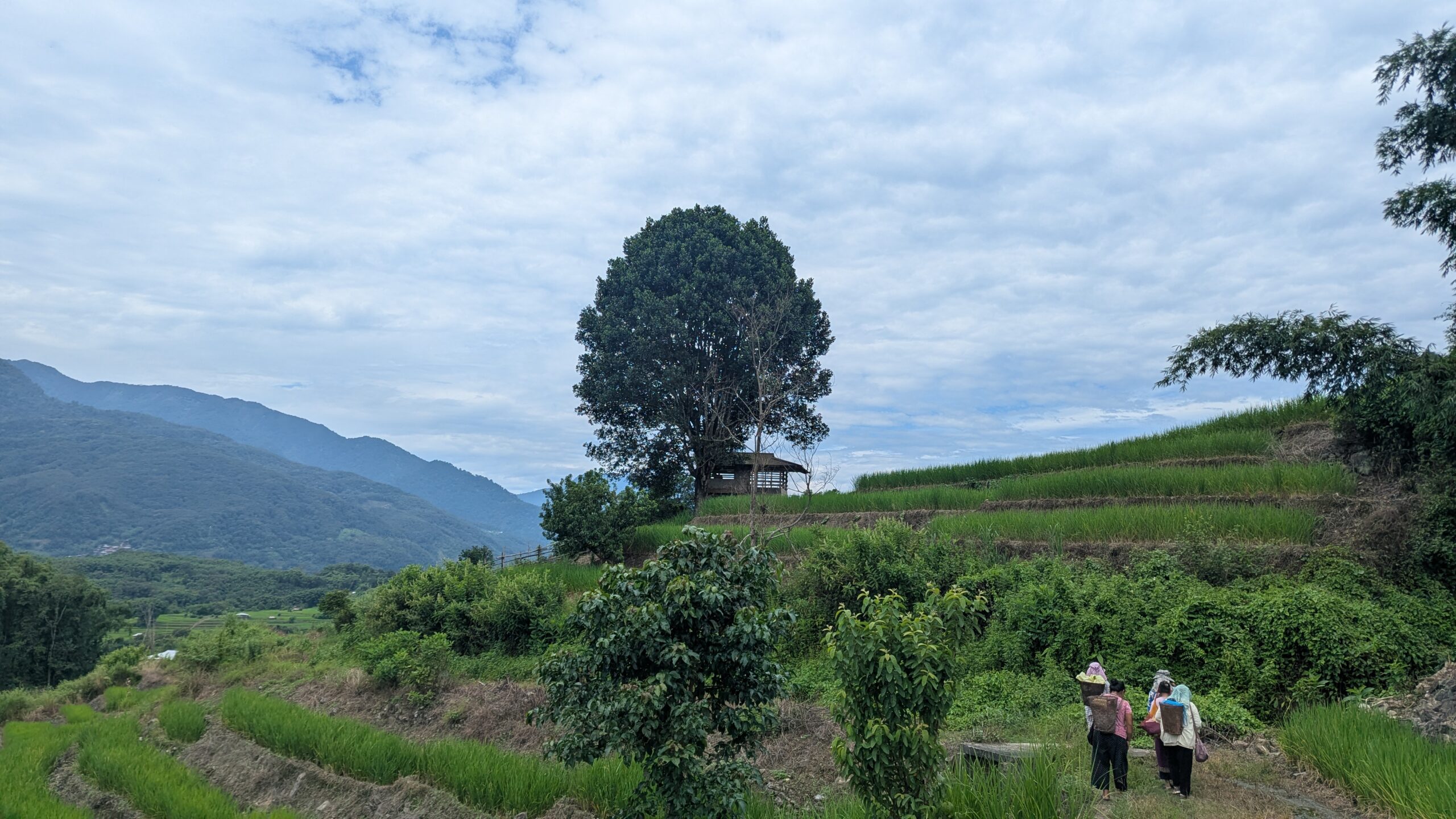
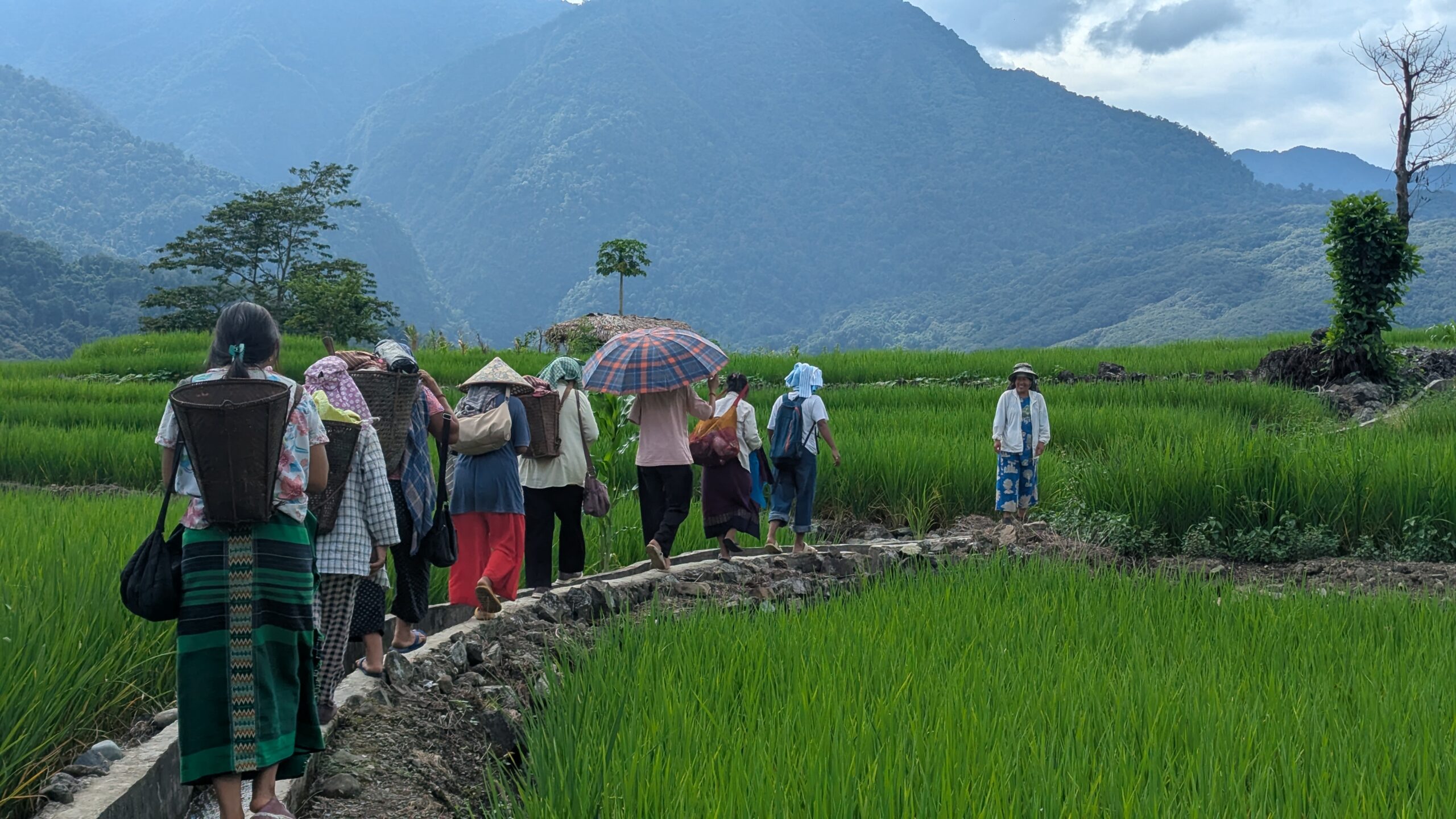
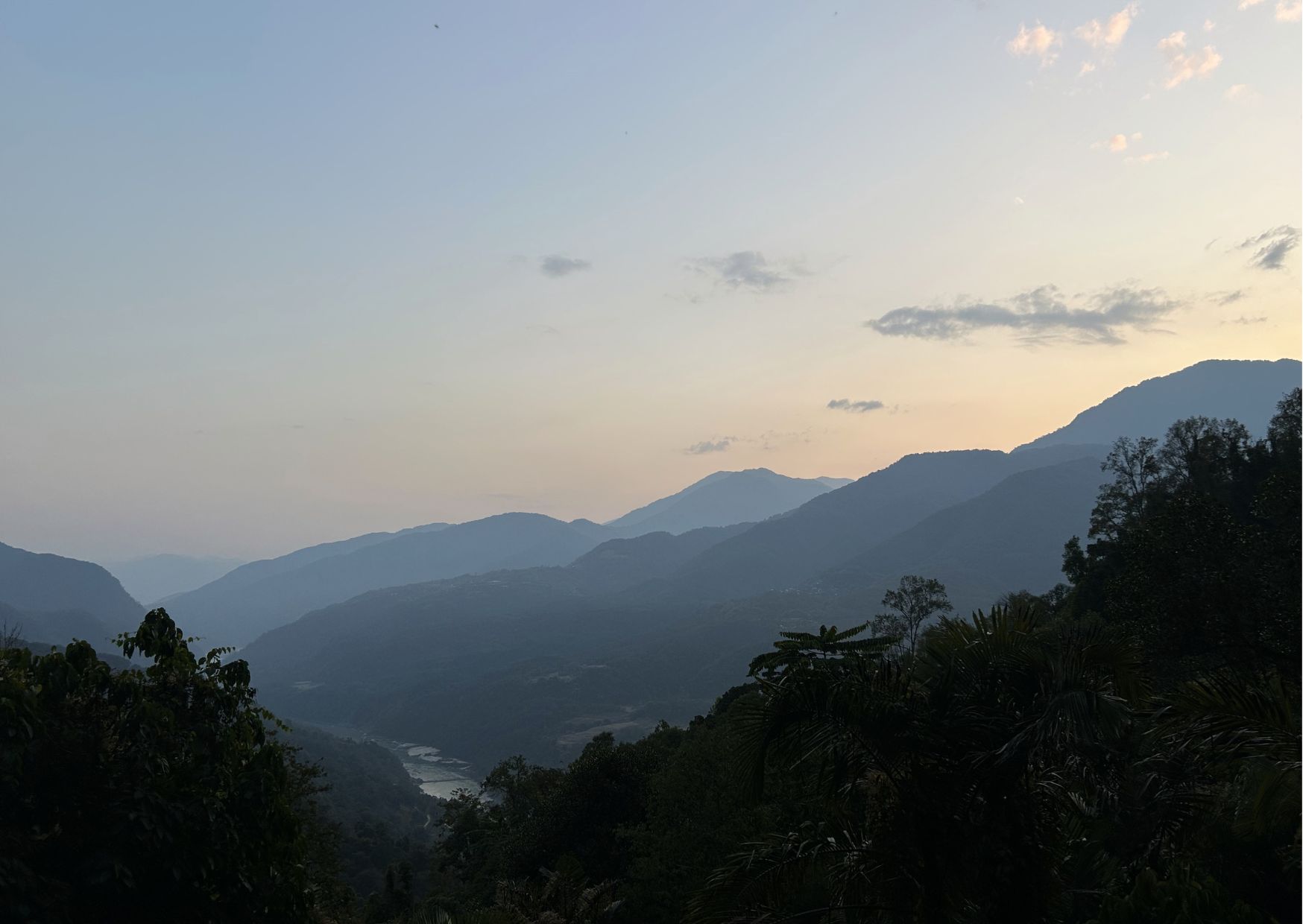
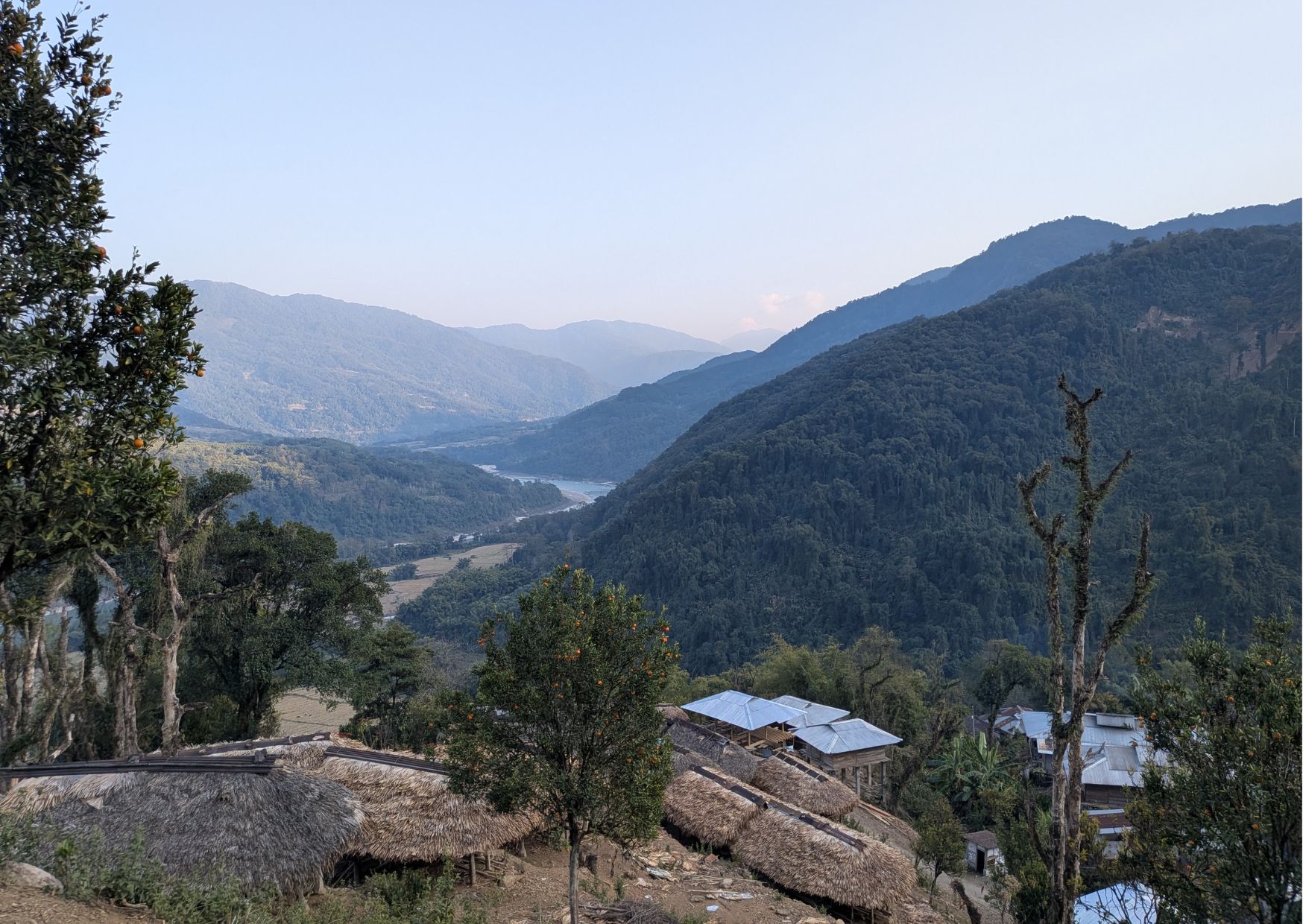
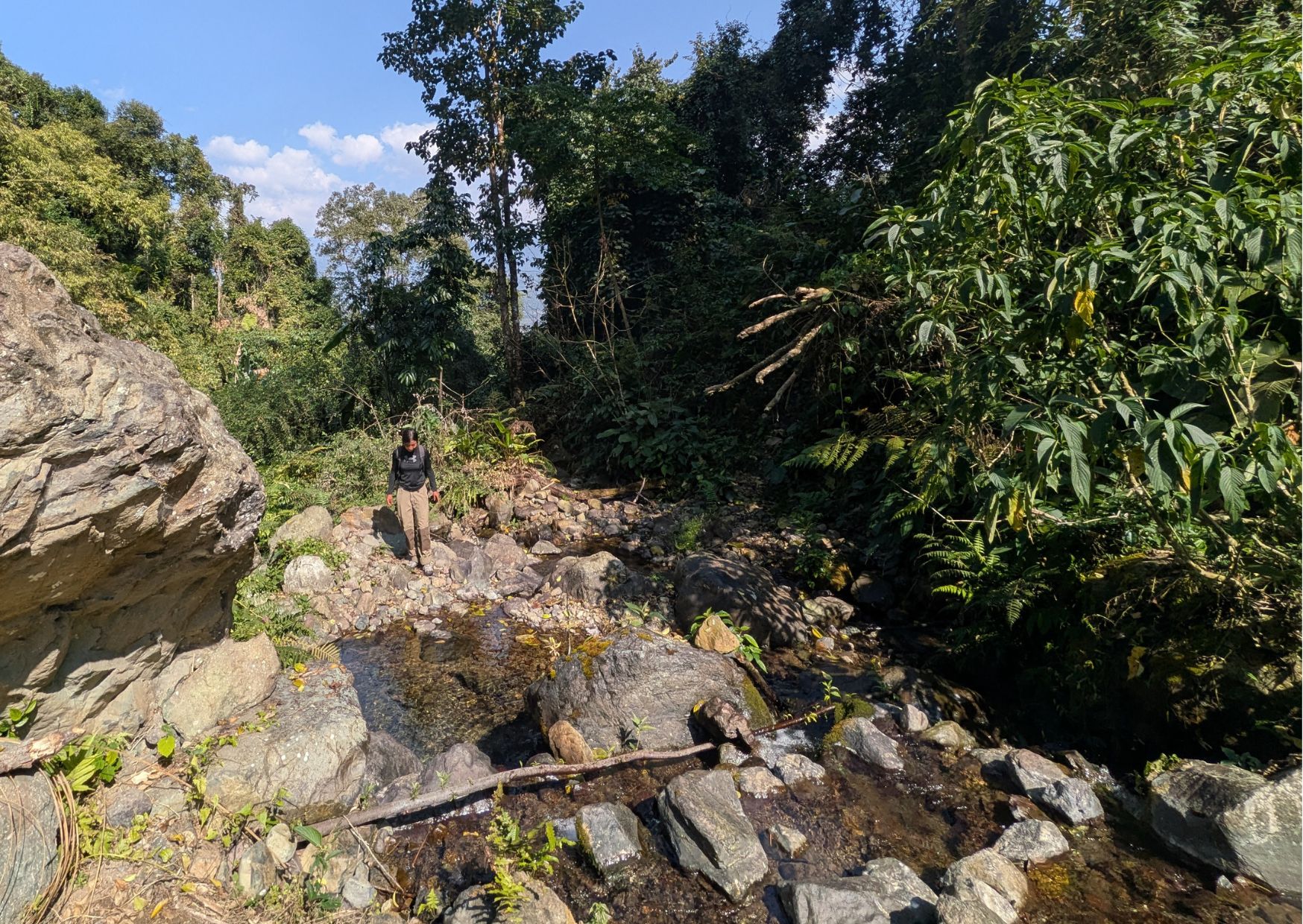
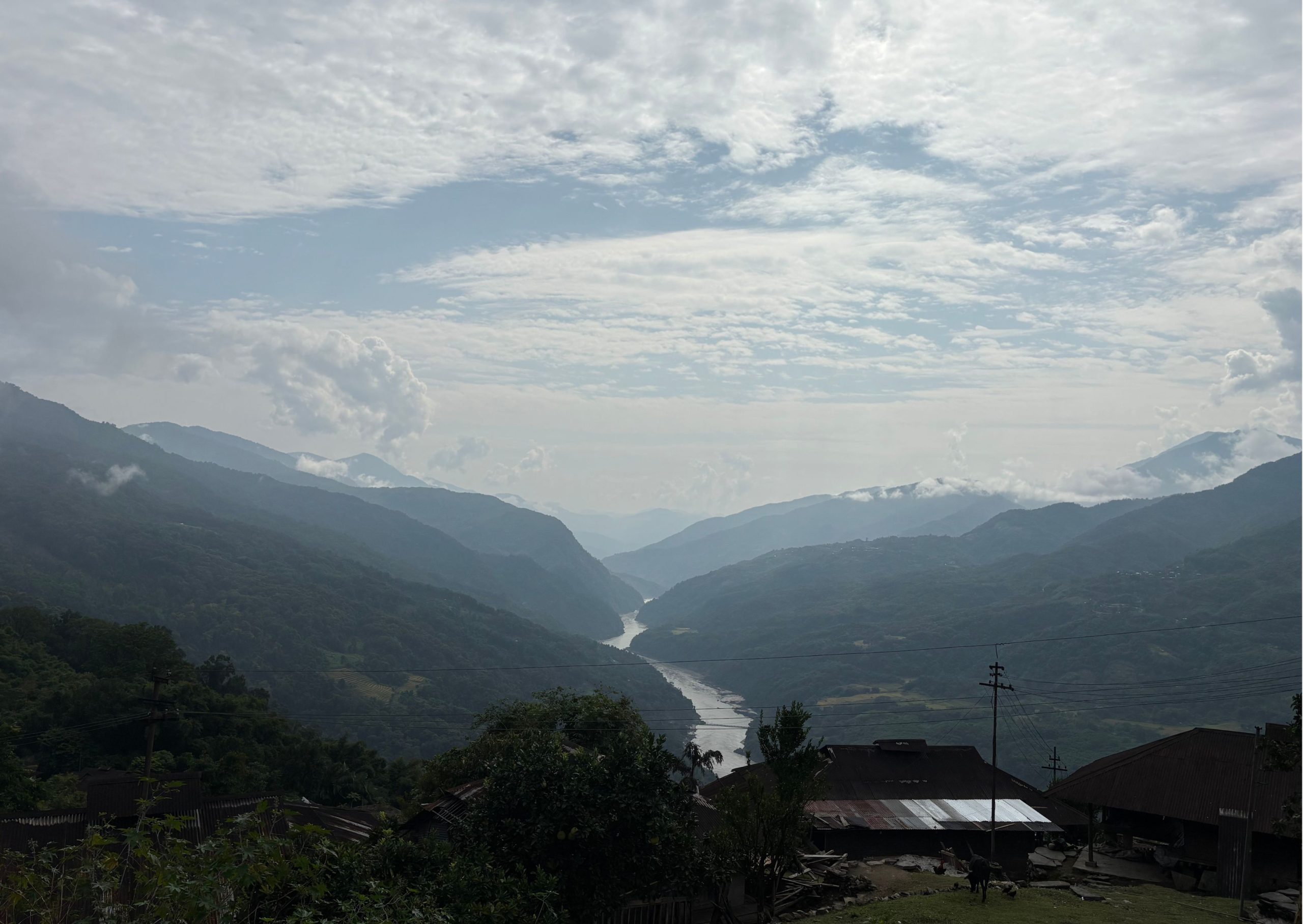
The Upper Siang region lies in the easternmost reaches of the Indian Himalaya, where dense evergreen forests, cascading waterfalls, crystal-clear rivers, and remote mountain villages are tucked away in one of the richest cultural and ecological landscapes in the country. Home to the indigenous Adi communities, these valleys have long been sustained by a deep understanding of forests, rivers, and the seasons. Flowing through the heart of the valley is the Siang—the principal channel of the Brahmaputra.
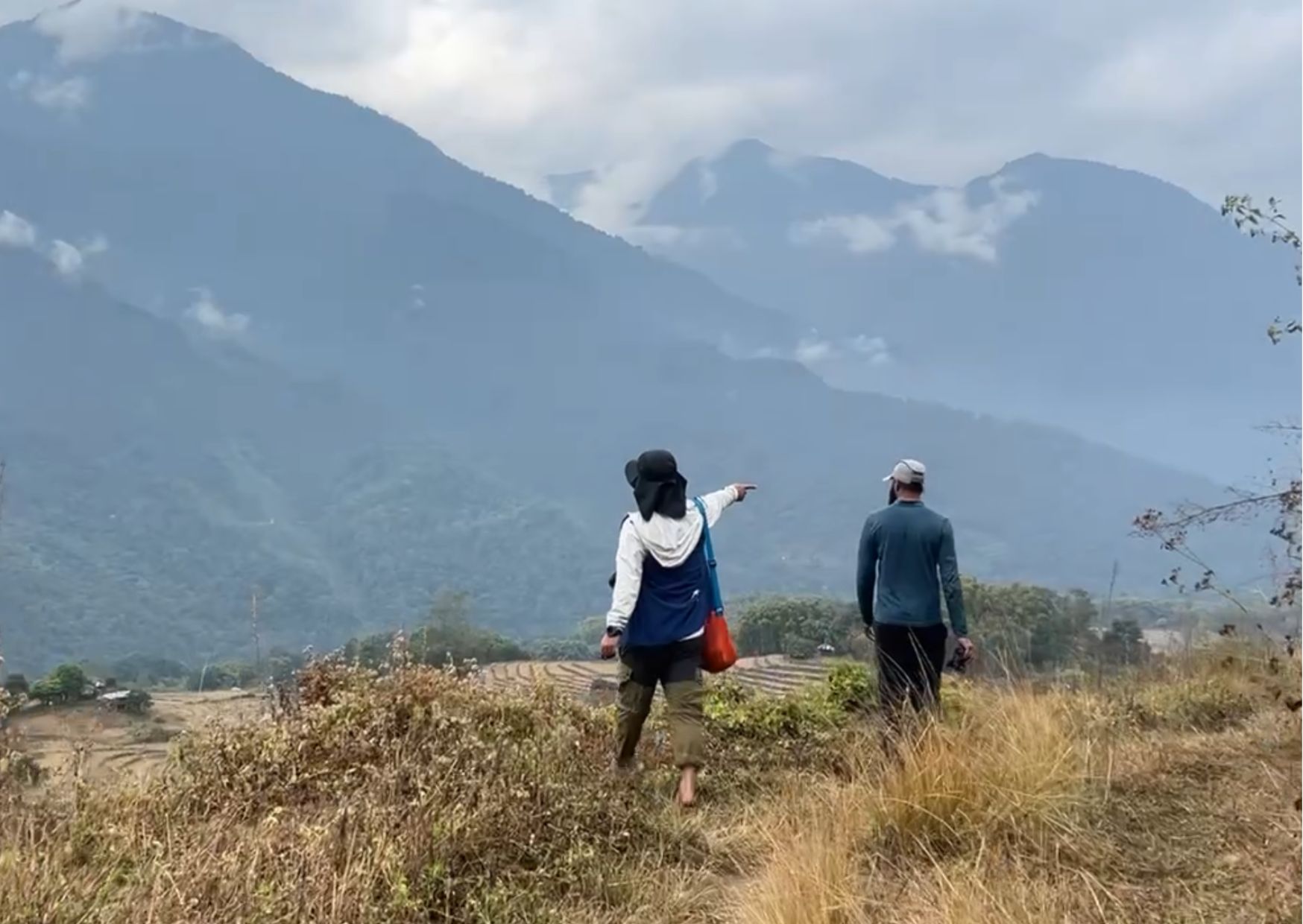
Over the course of this walking holiday, journey from village to village starting from one of the sub valleys, gradually descending towards the mighty Siang River. Stay in family village homes, walk ancient forest trails, learn about local farming and foraging traditions, cook alongside your hosts, discovering local traditions, music, folklore, and the rhythms of life of the Adi tribe.
The forests of Upper Siang form part of the Eastern Himalayan biodiversity hotspot, supporting remarkable plant and bird diversity alongside countless endemic species. Throughout the journey, local guides and community members interpret these landscapes through stories, traditional ecological knowledge, and lived experience, offering perspectives that cannot be found in guidebooks.
This journey is built around meaningful exchanges with the communities who call these mountains home. This is a walking holiday that allows you to explore one of India’s most remarkable mountain landscapes while directly supporting locally led tourism initiatives and community livelihoods.
lodging and stay
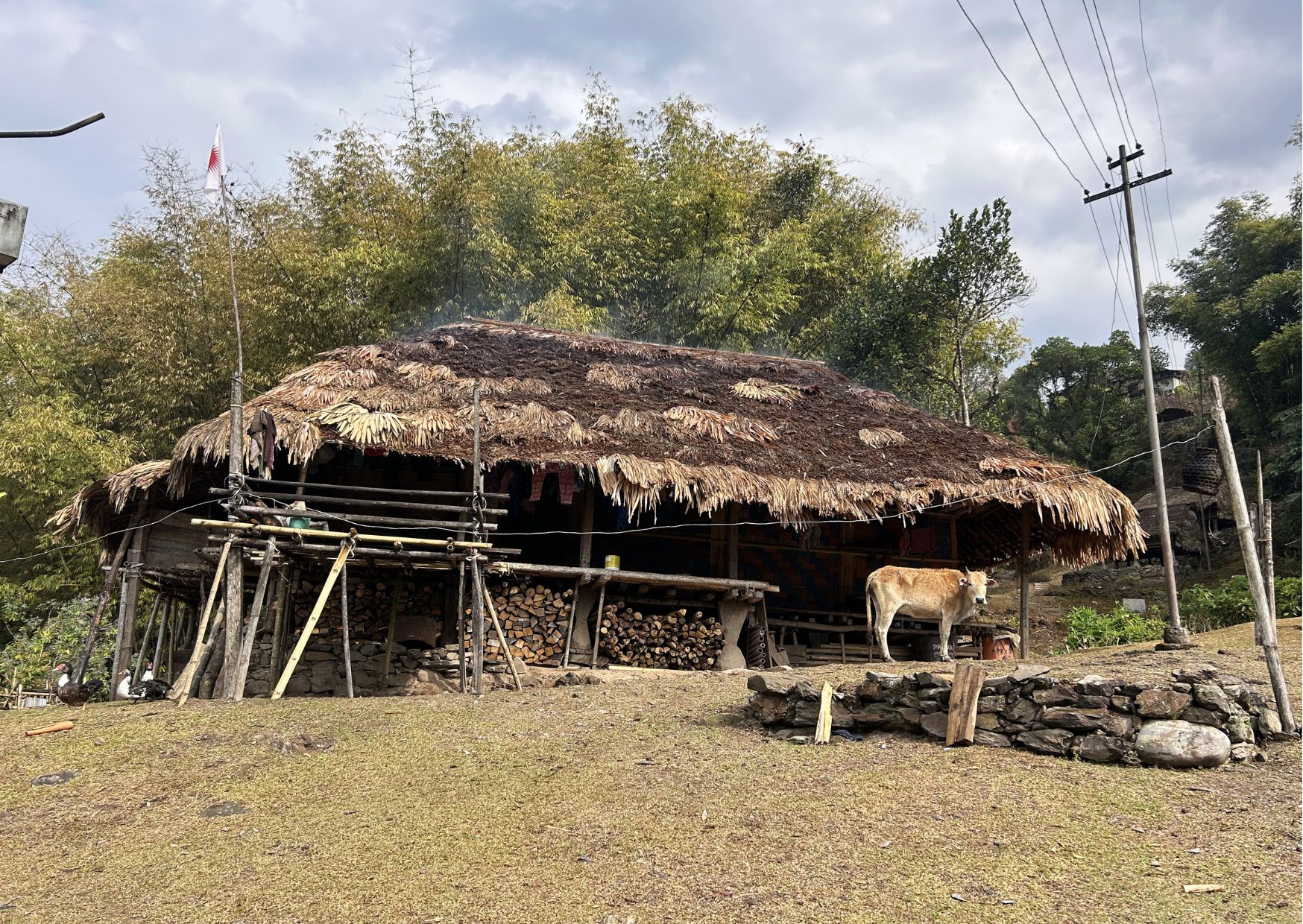
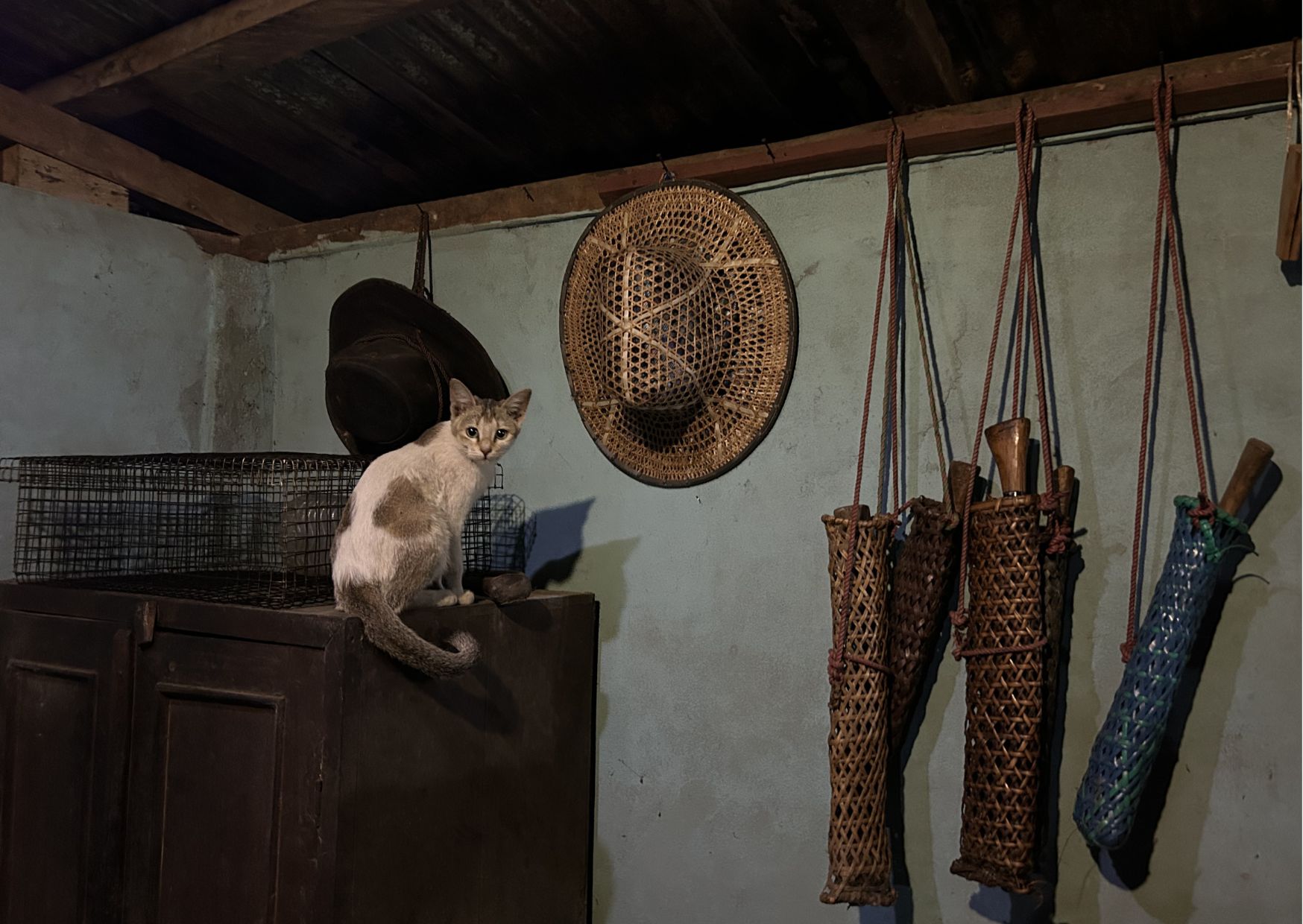
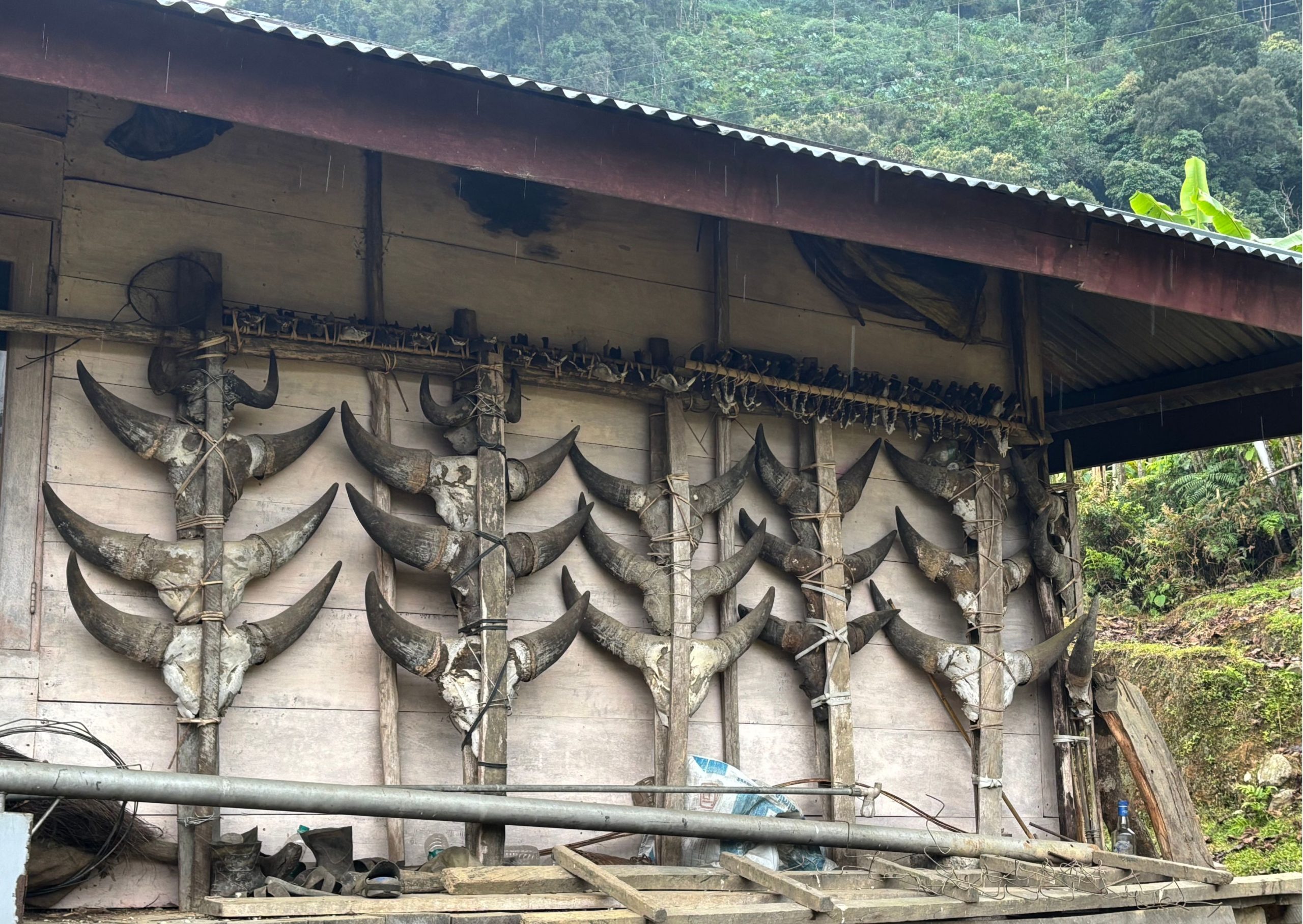
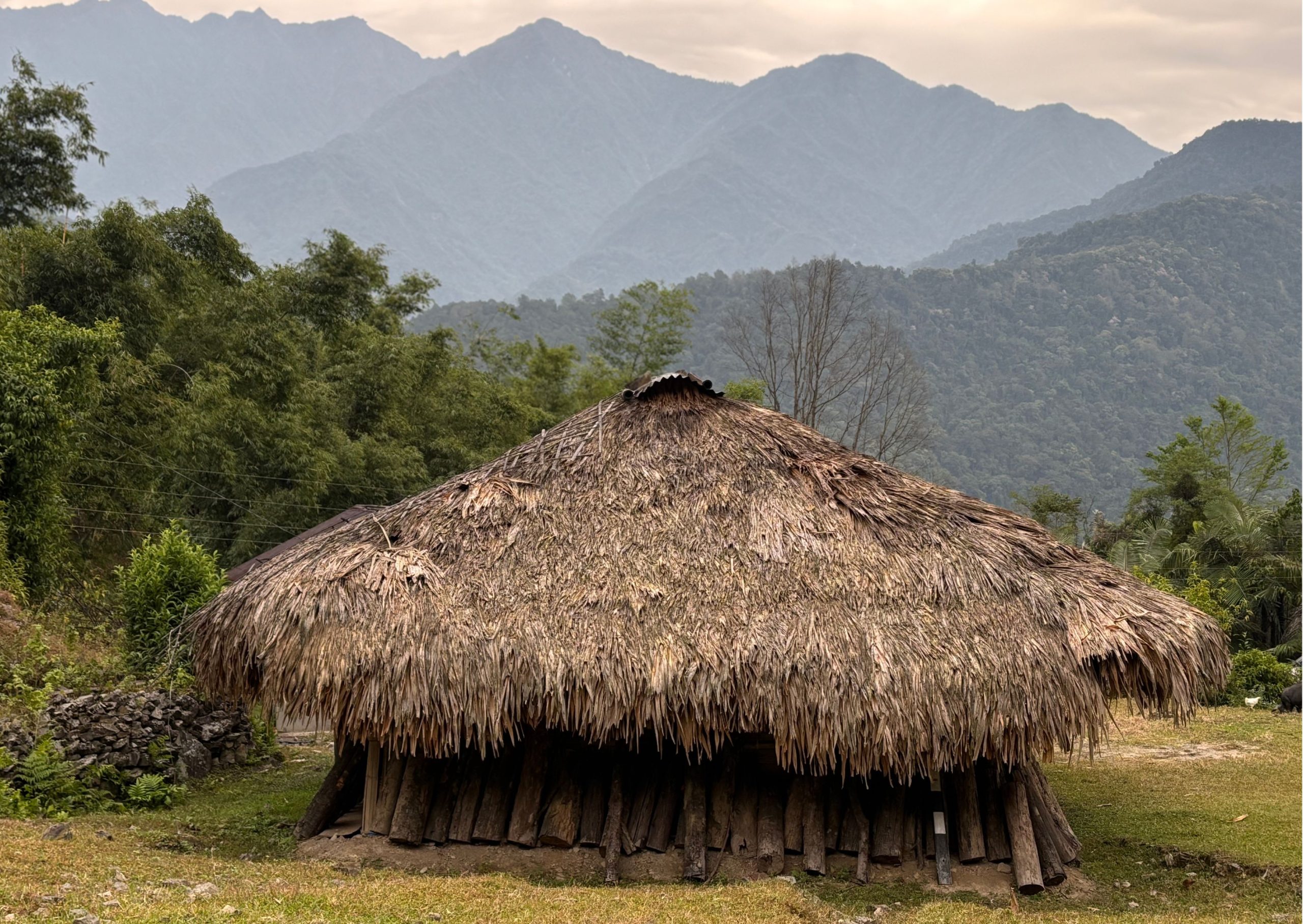
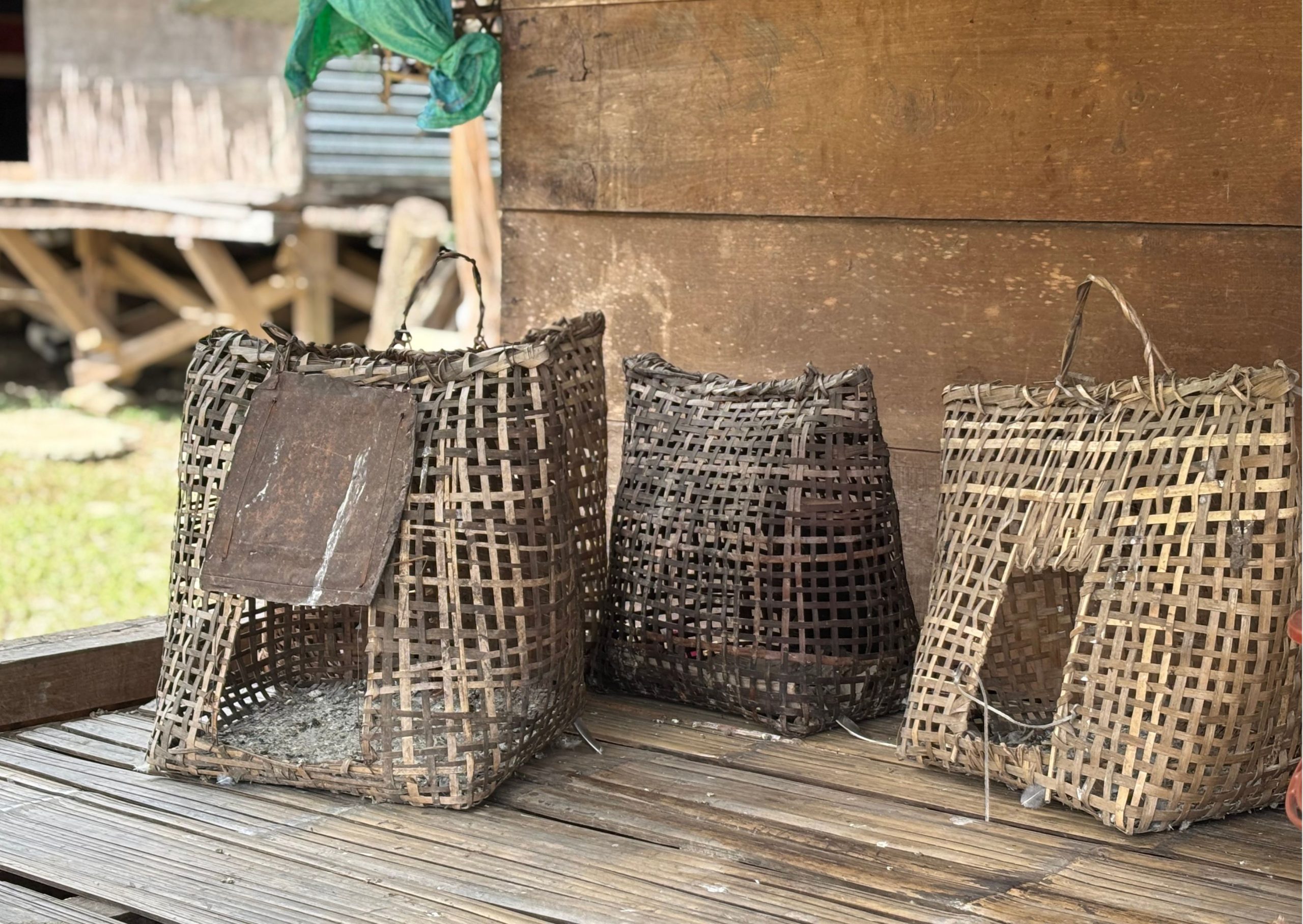
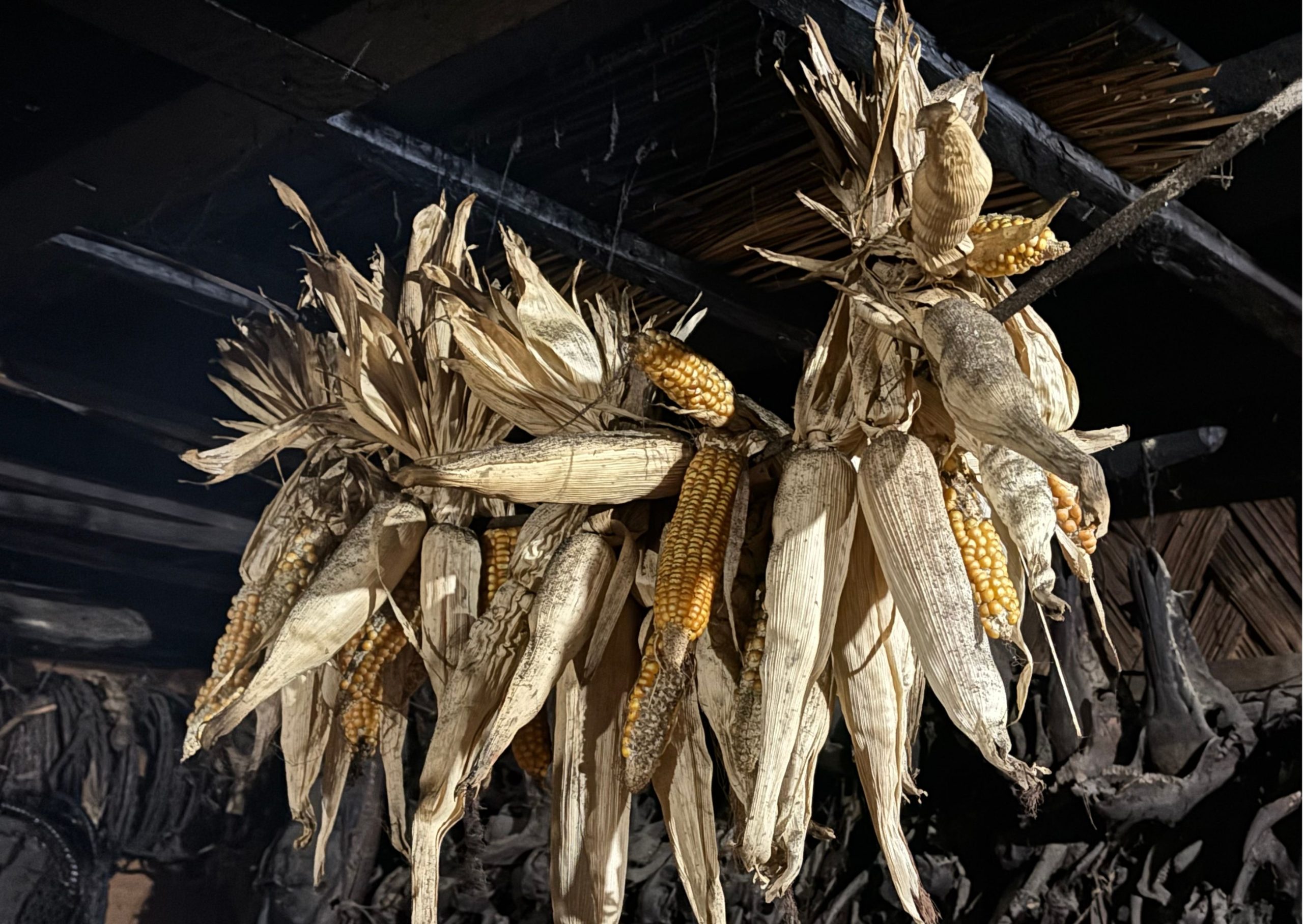
The journey offers the experience of staying in traditional village homes, bamboo farmhouses, and a fully equipped campsite.
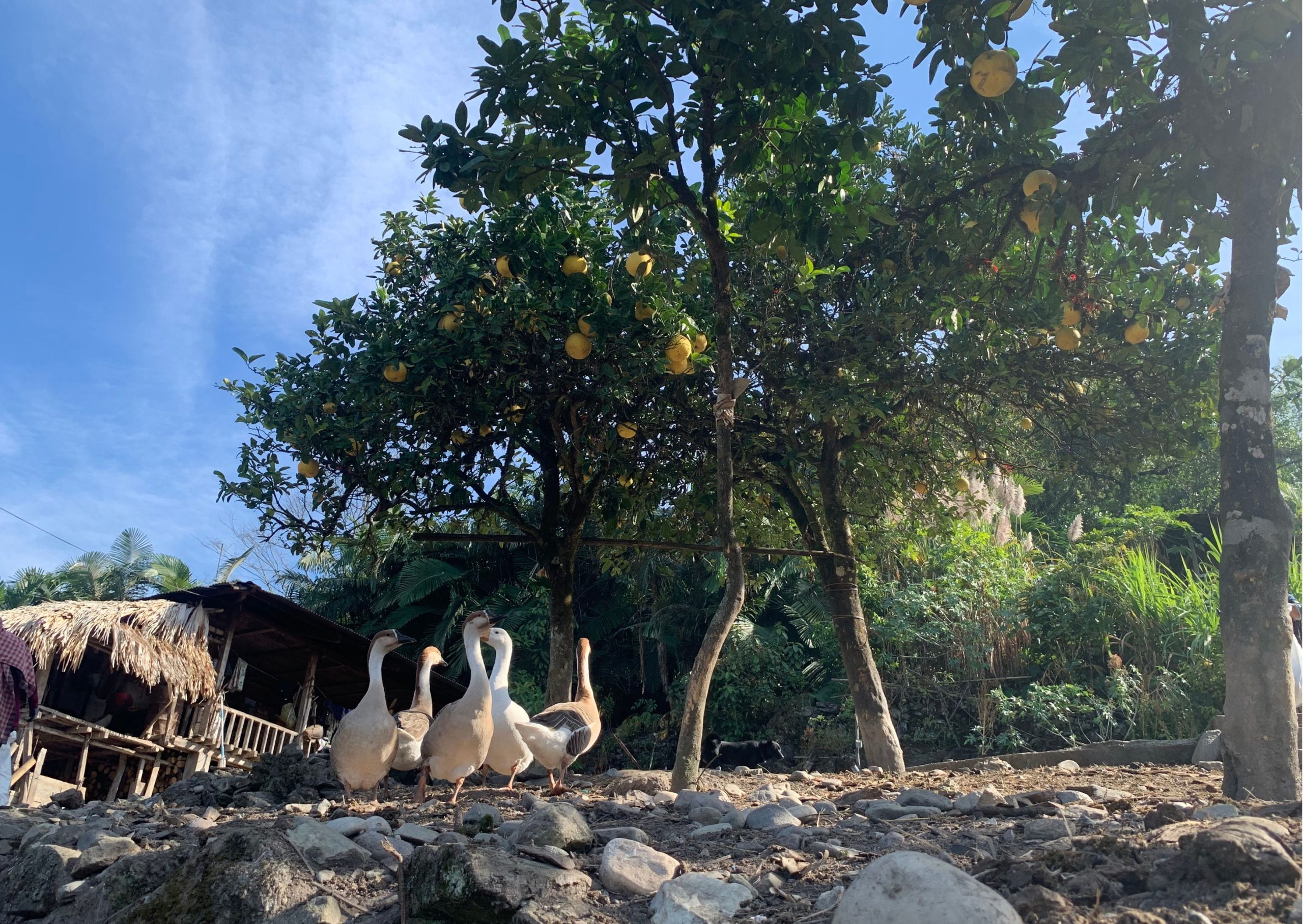
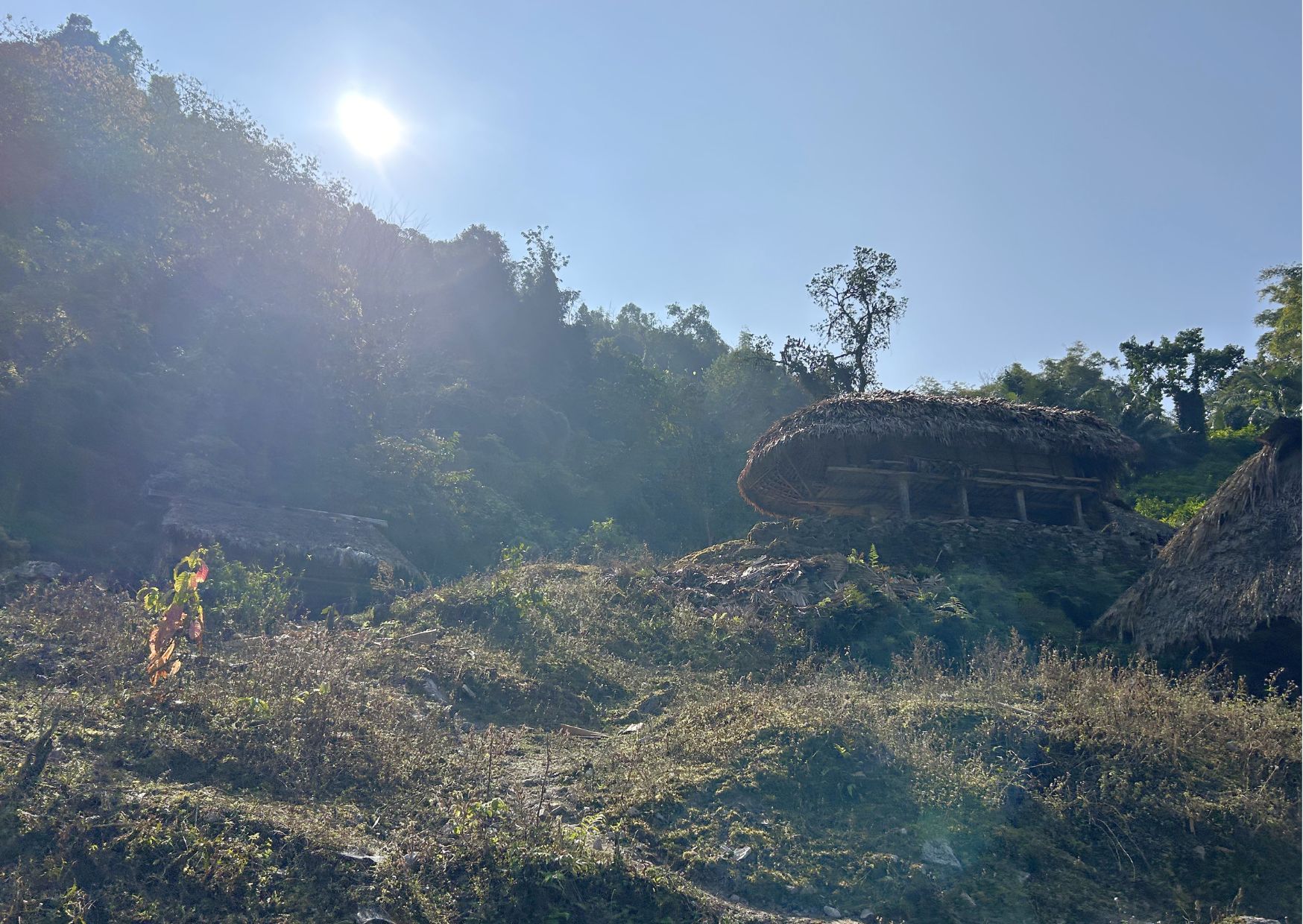
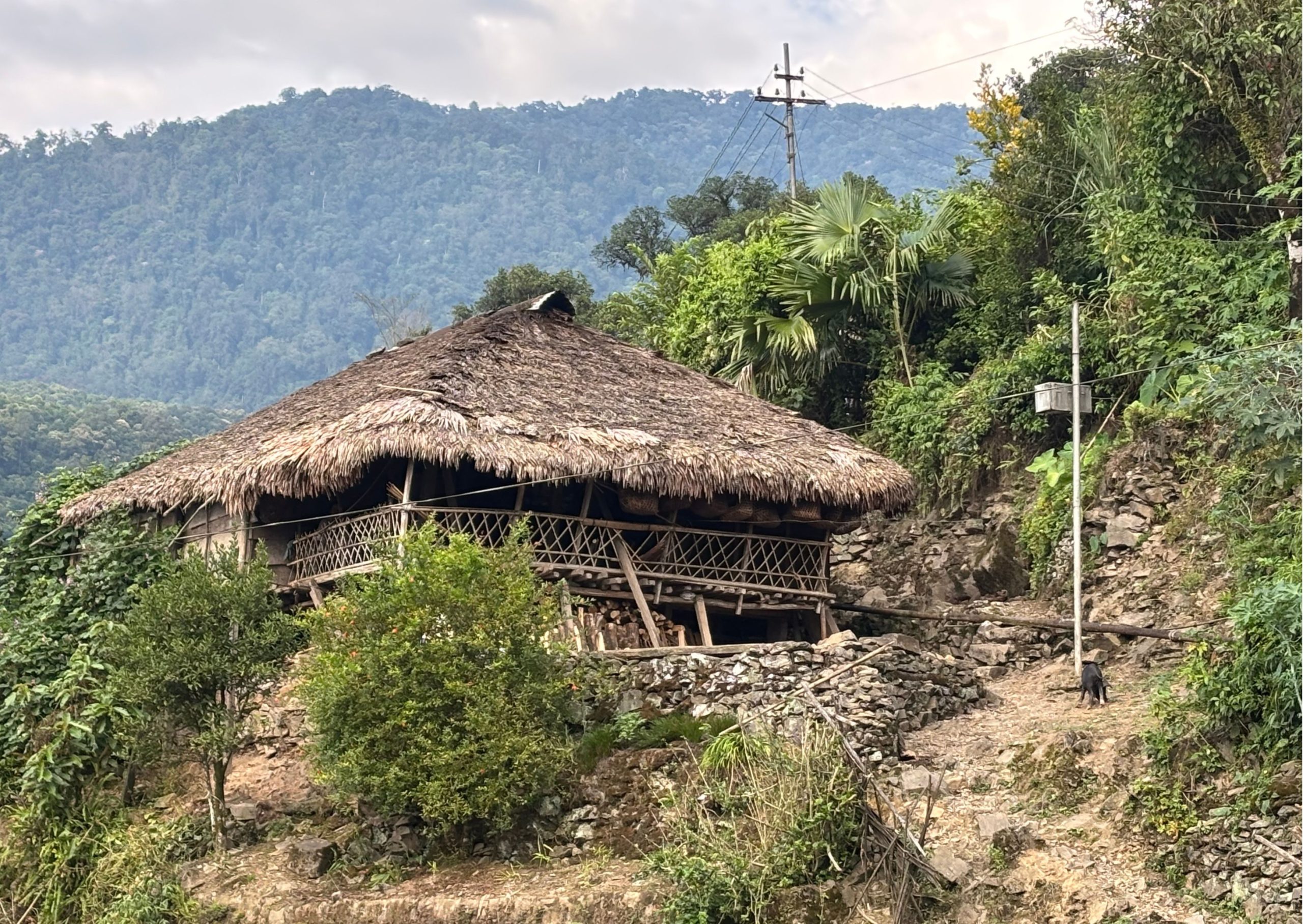
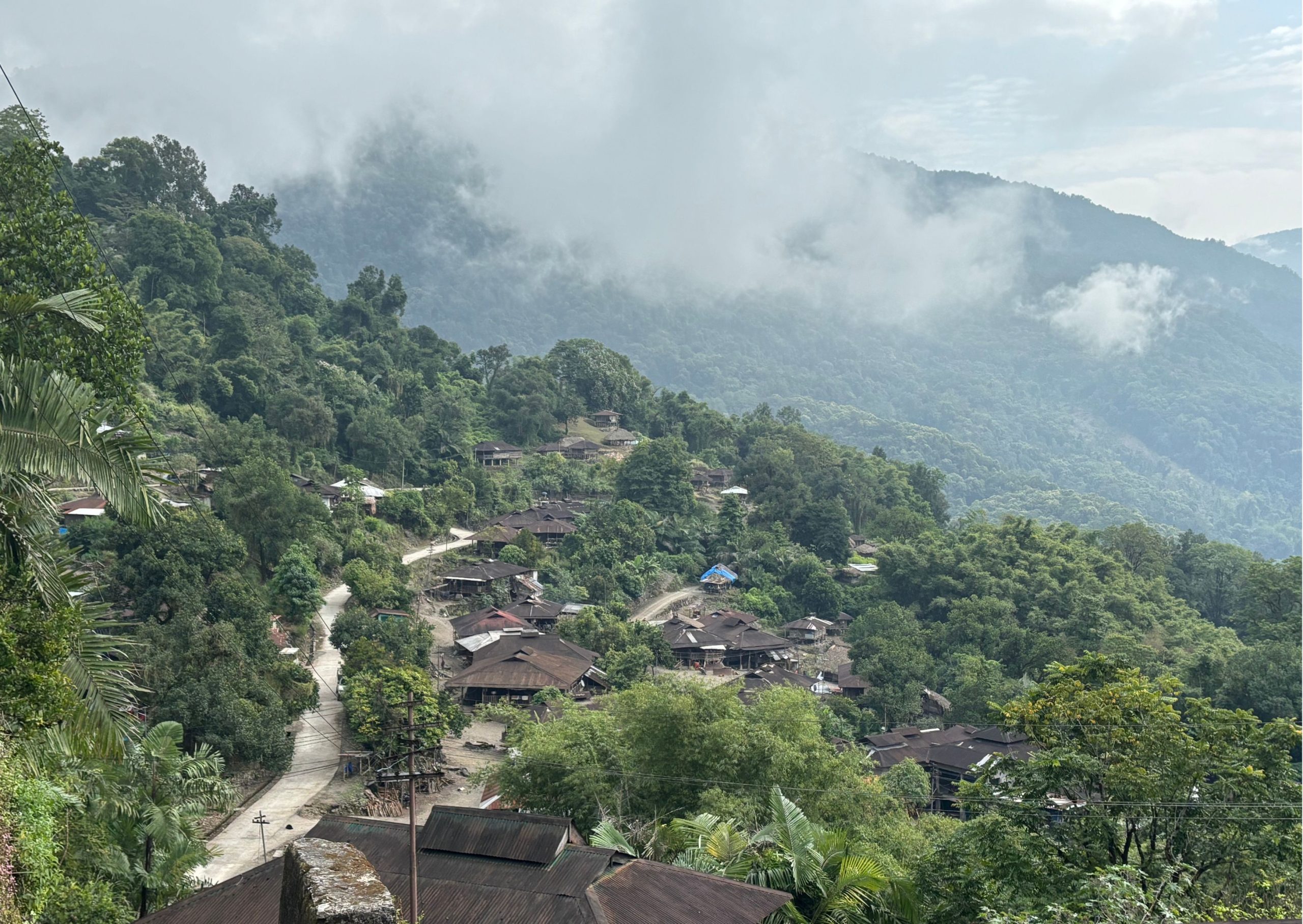
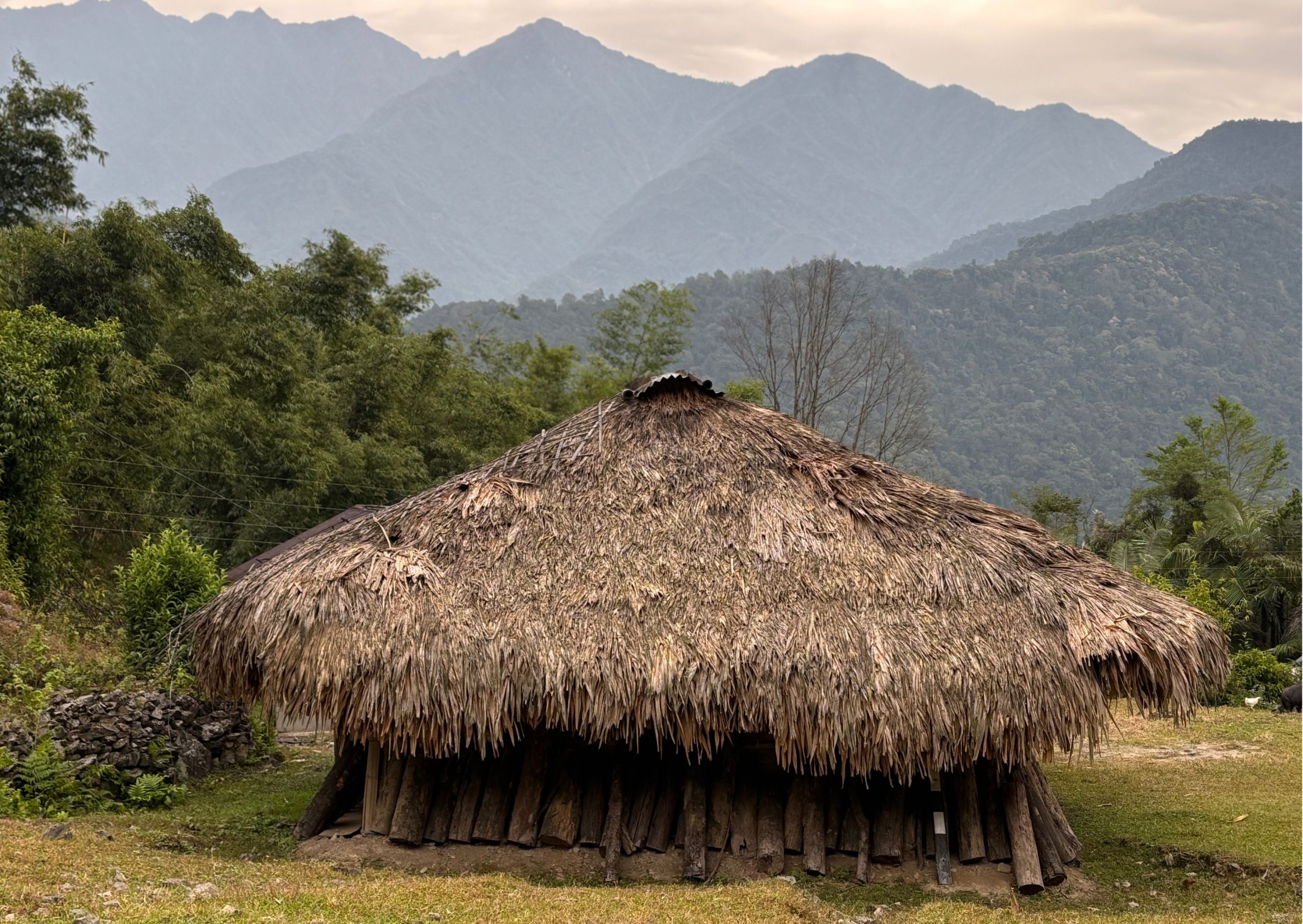
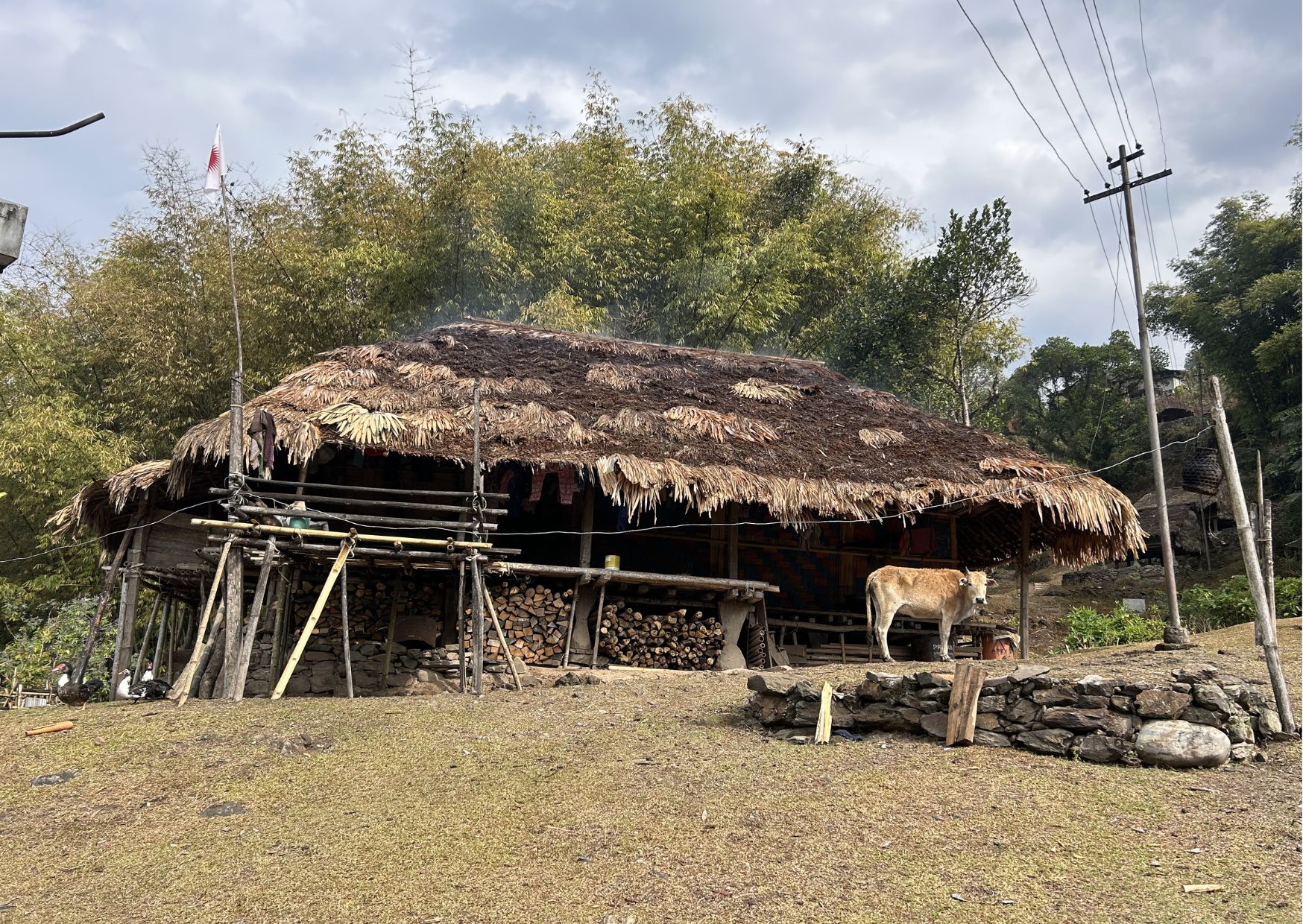
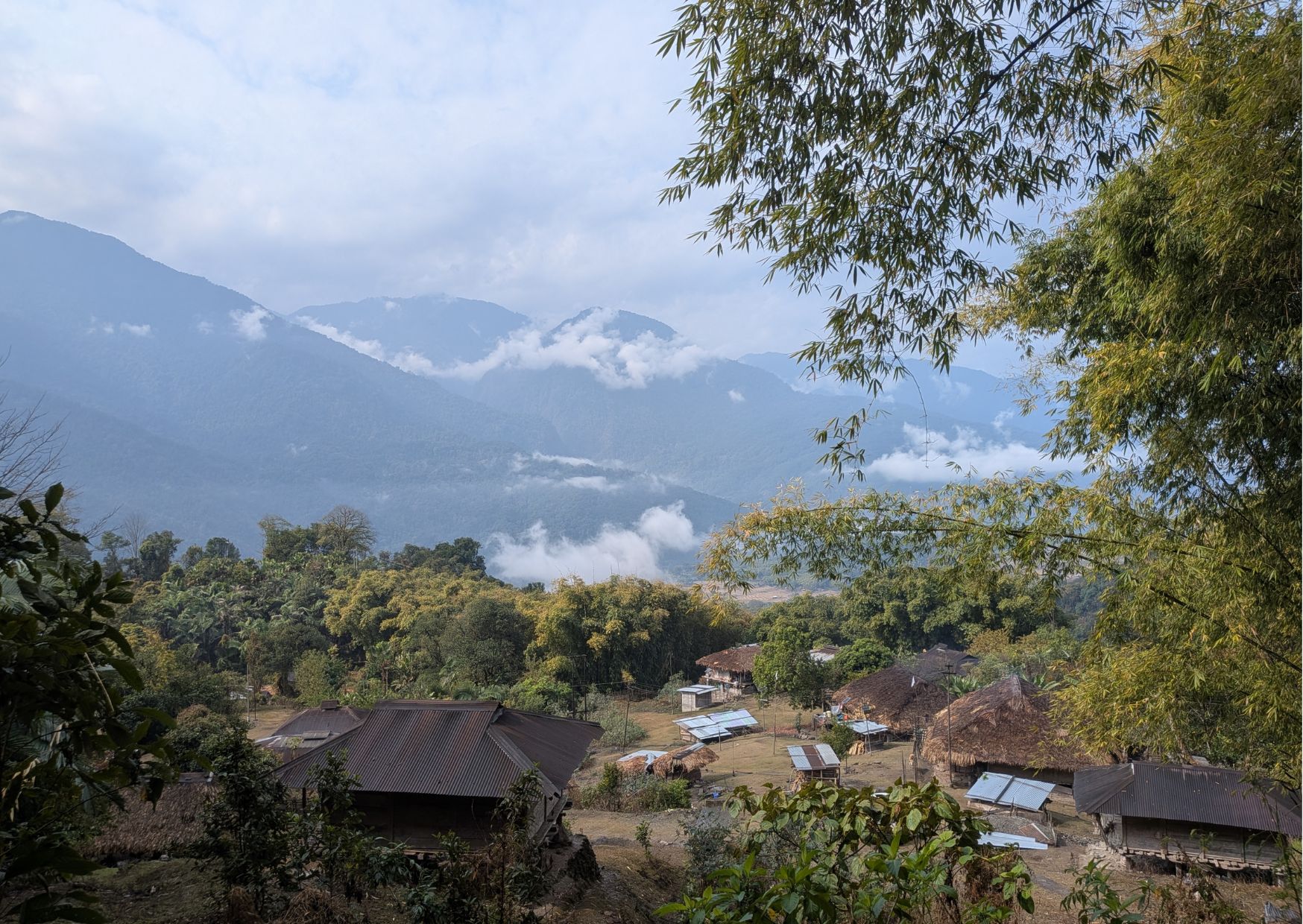
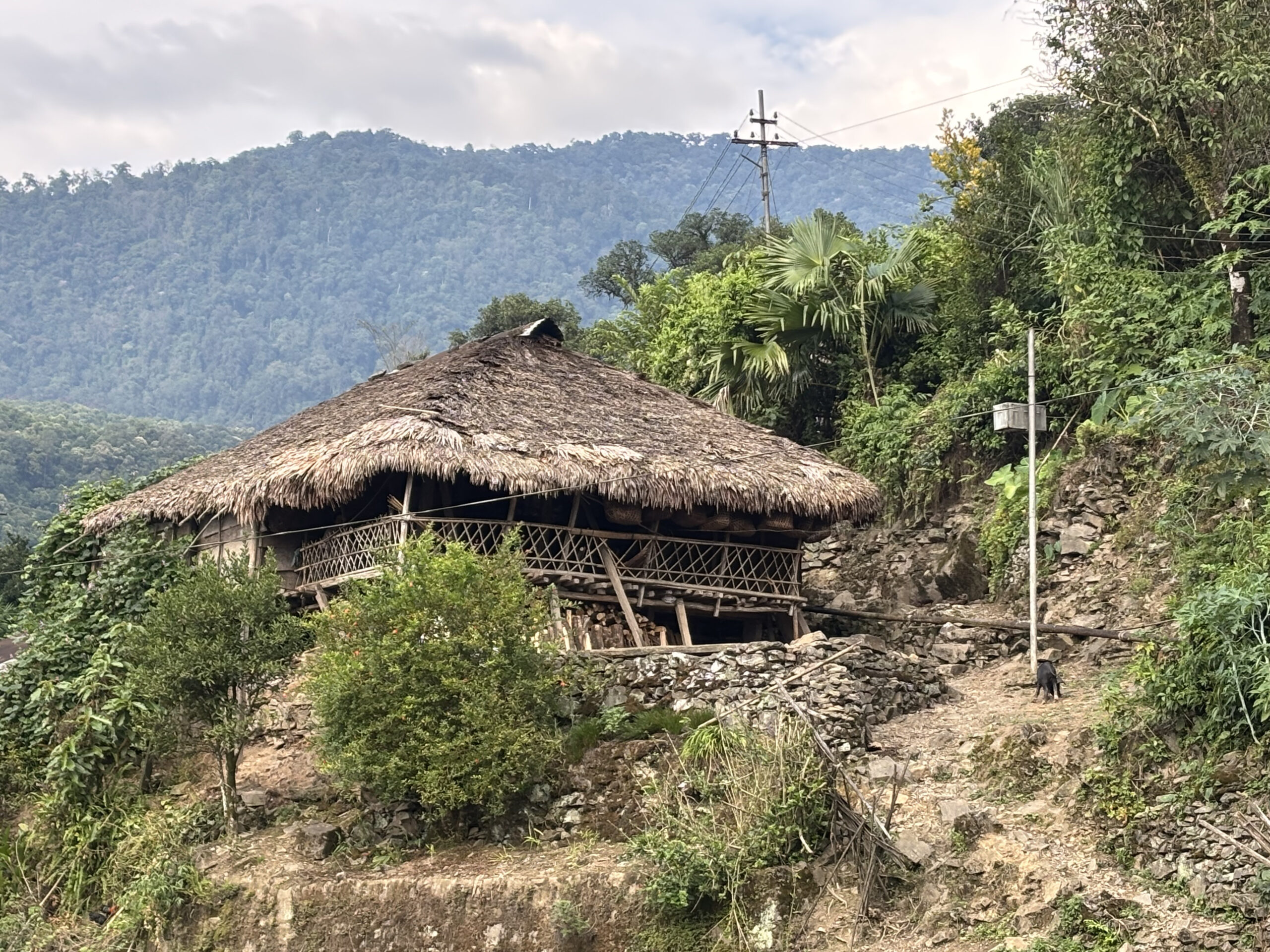
The village homes are built in the local style on short wooden stilts, with timber walls and palm-thatched roofs. At the heart of every home is a wood-fired hearth, where meals are prepared, and families gather together. Wide verandas overlook forests, fields, and village paths. Their interiors offer a glimpse into culture and heirlooms through handwoven textiles, ornaments, traditional tools, and symbols of ritual practices.
You’ll also spend two nights in semi-open bamboo field houses set amidst cultivated farms before camping beside the Siang River in twin-sharing tents.
Rather than altering these homes for tourism, we have chosen to preserve them as they are. Clean bedding, warm quilts, pillows, and thoughtful comforts are provided throughout the journey, while toilet tents and bathing facilities are set up alongside the homes wherever required.
nourishment
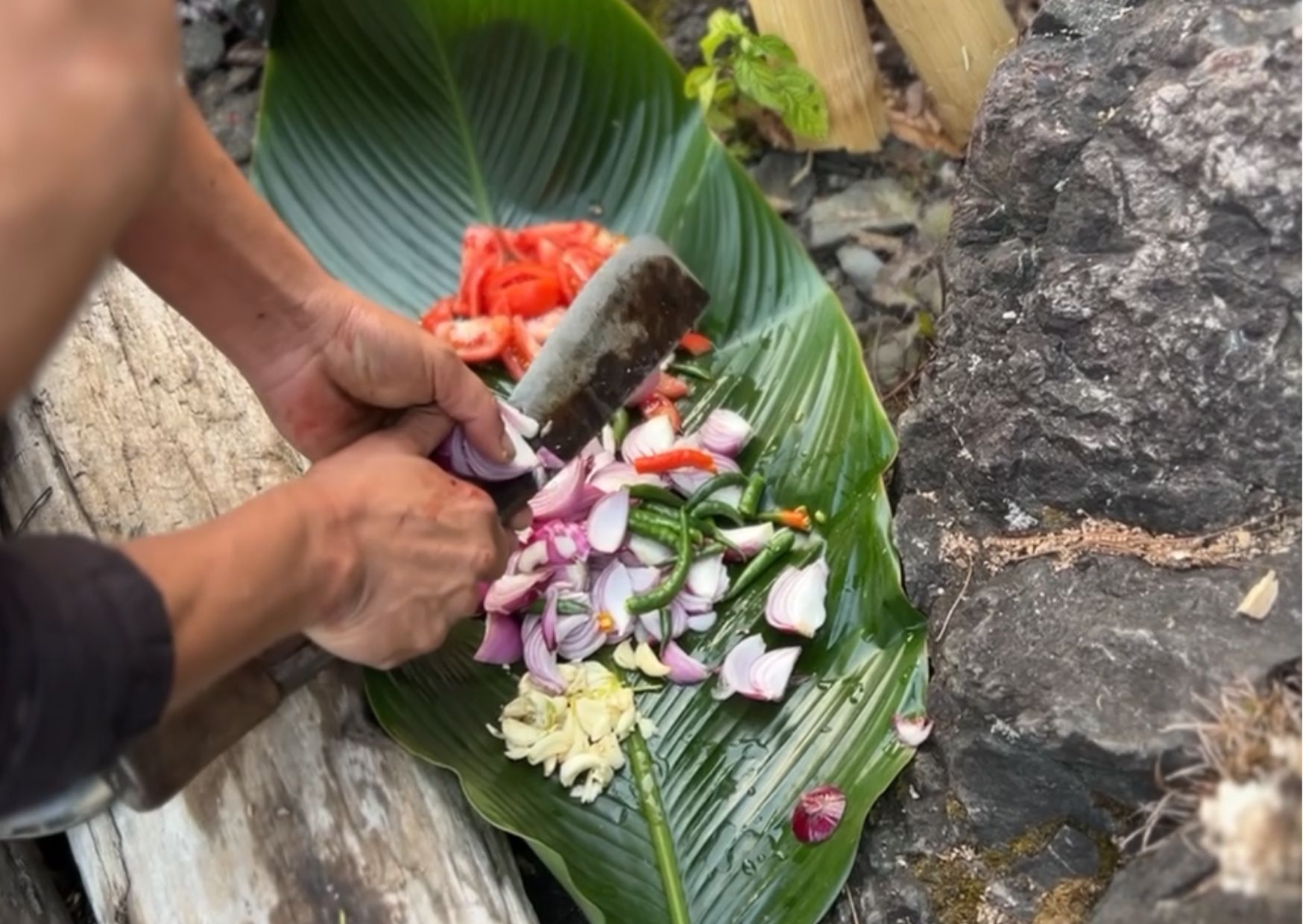
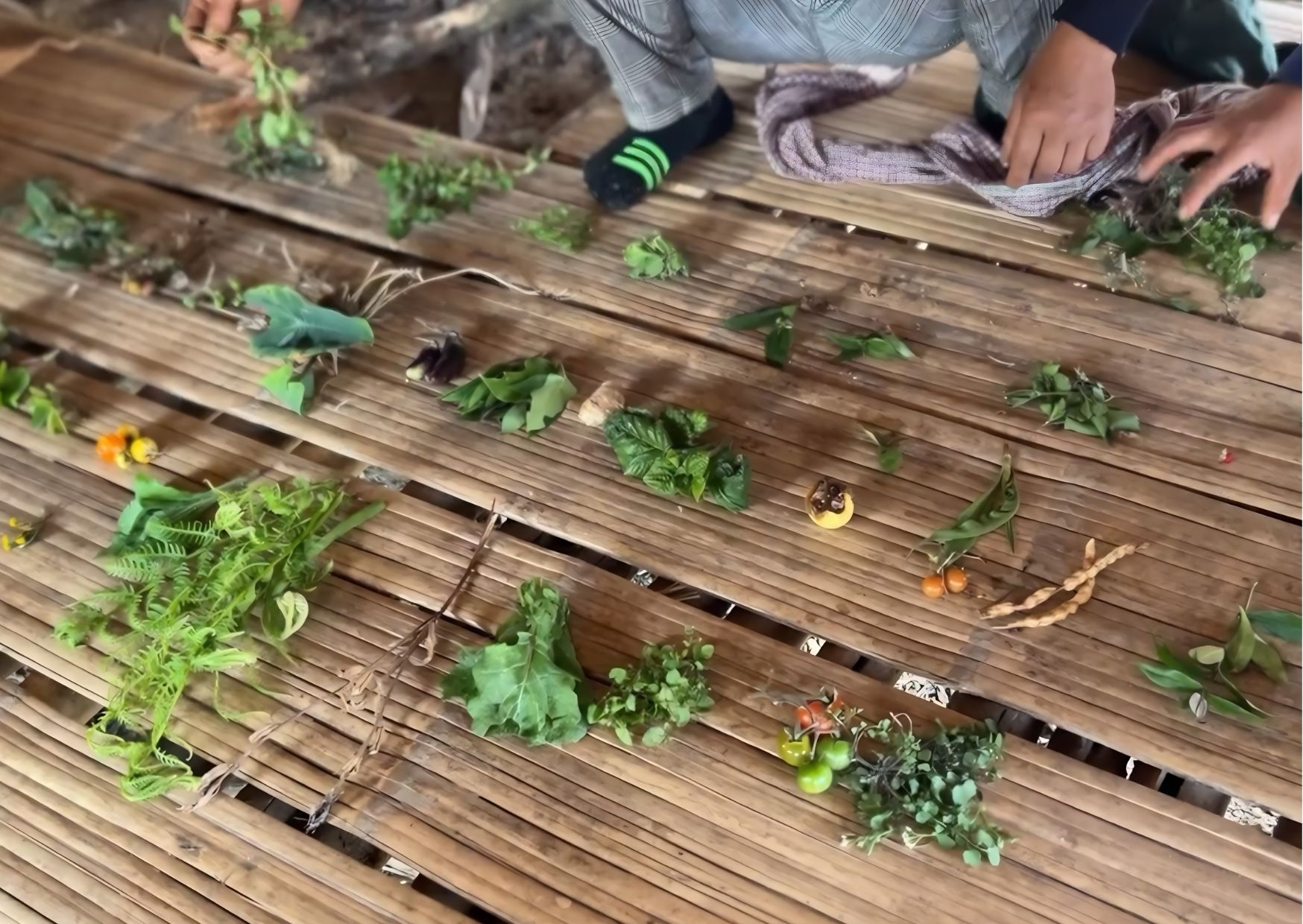
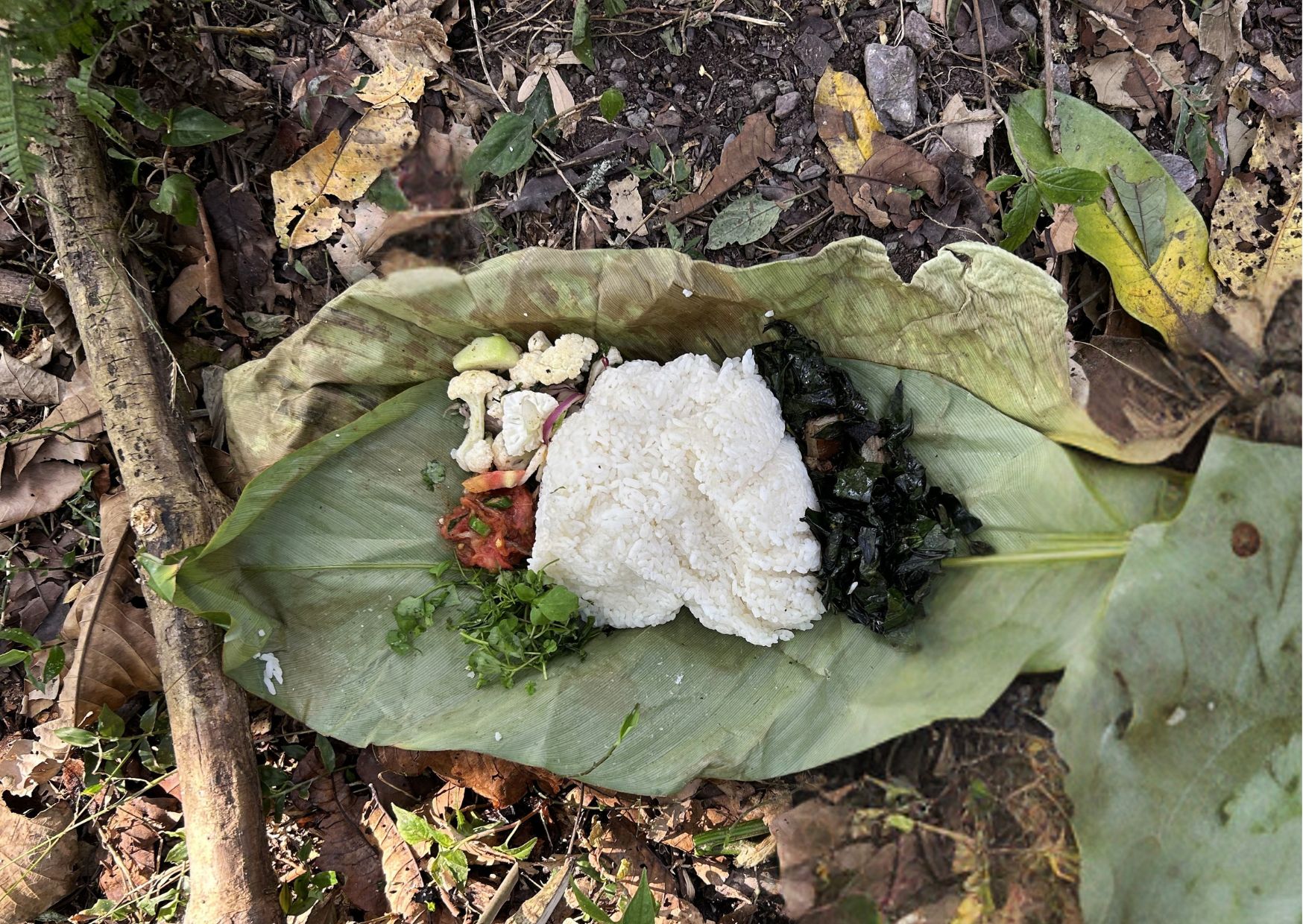
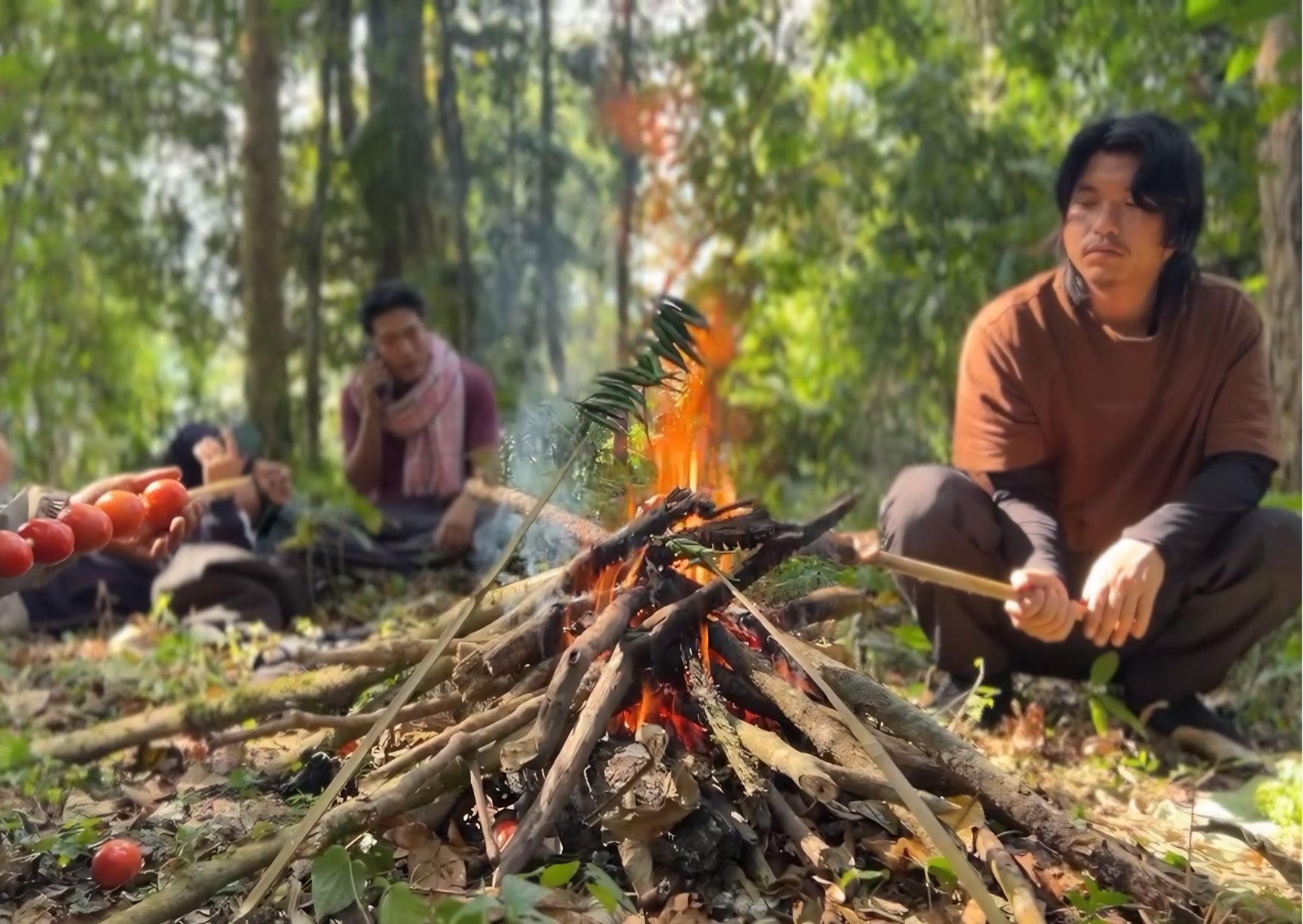
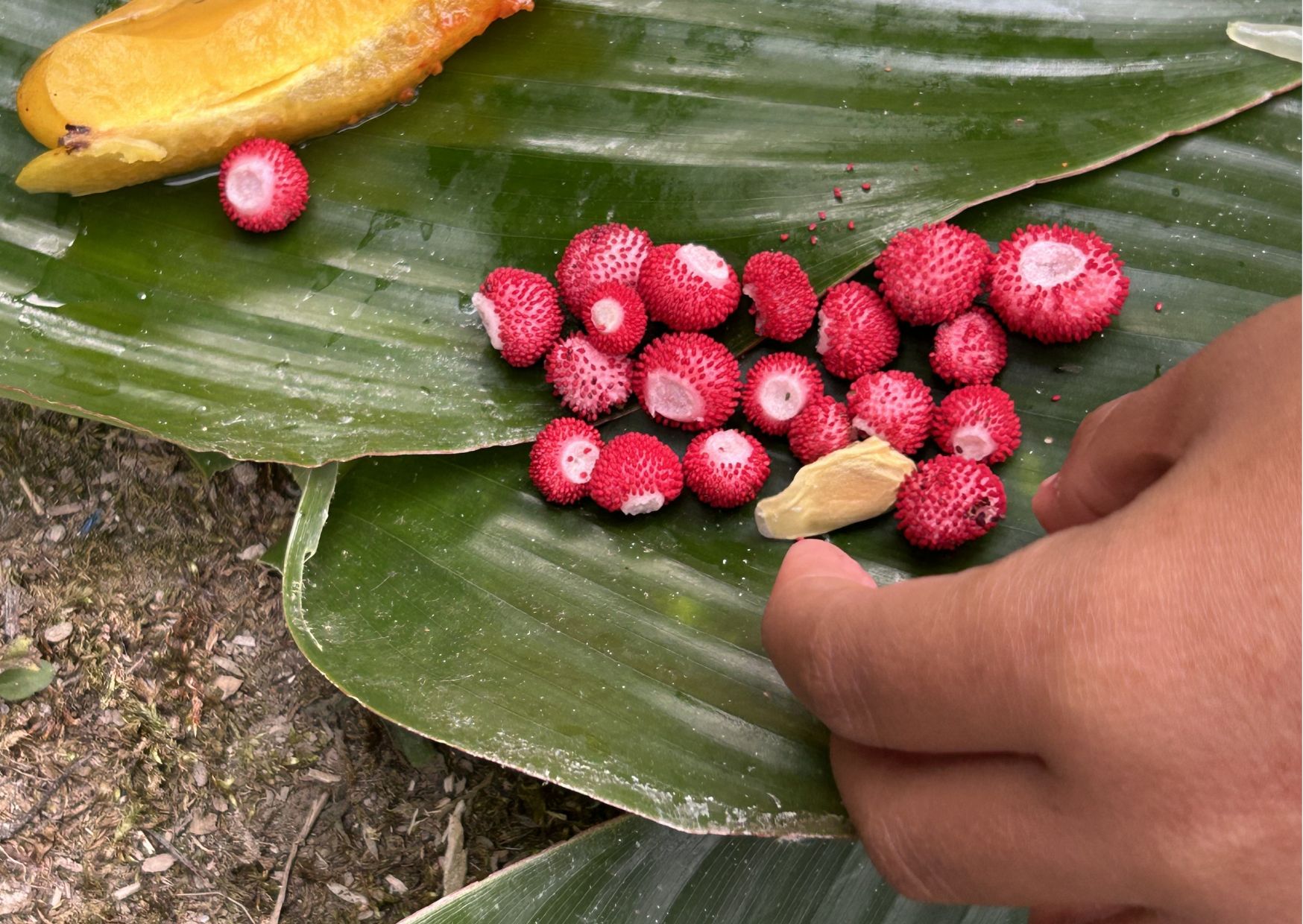
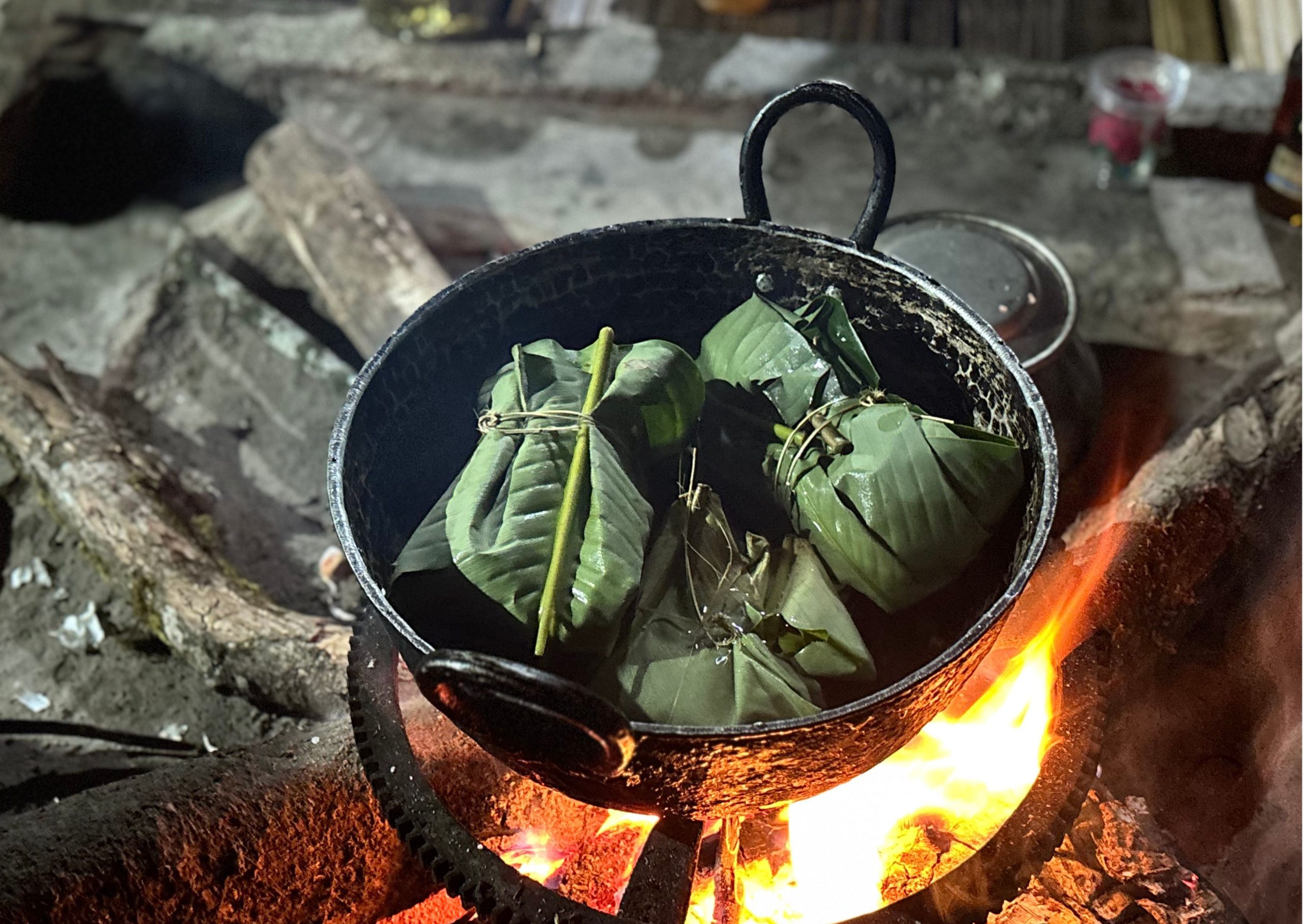
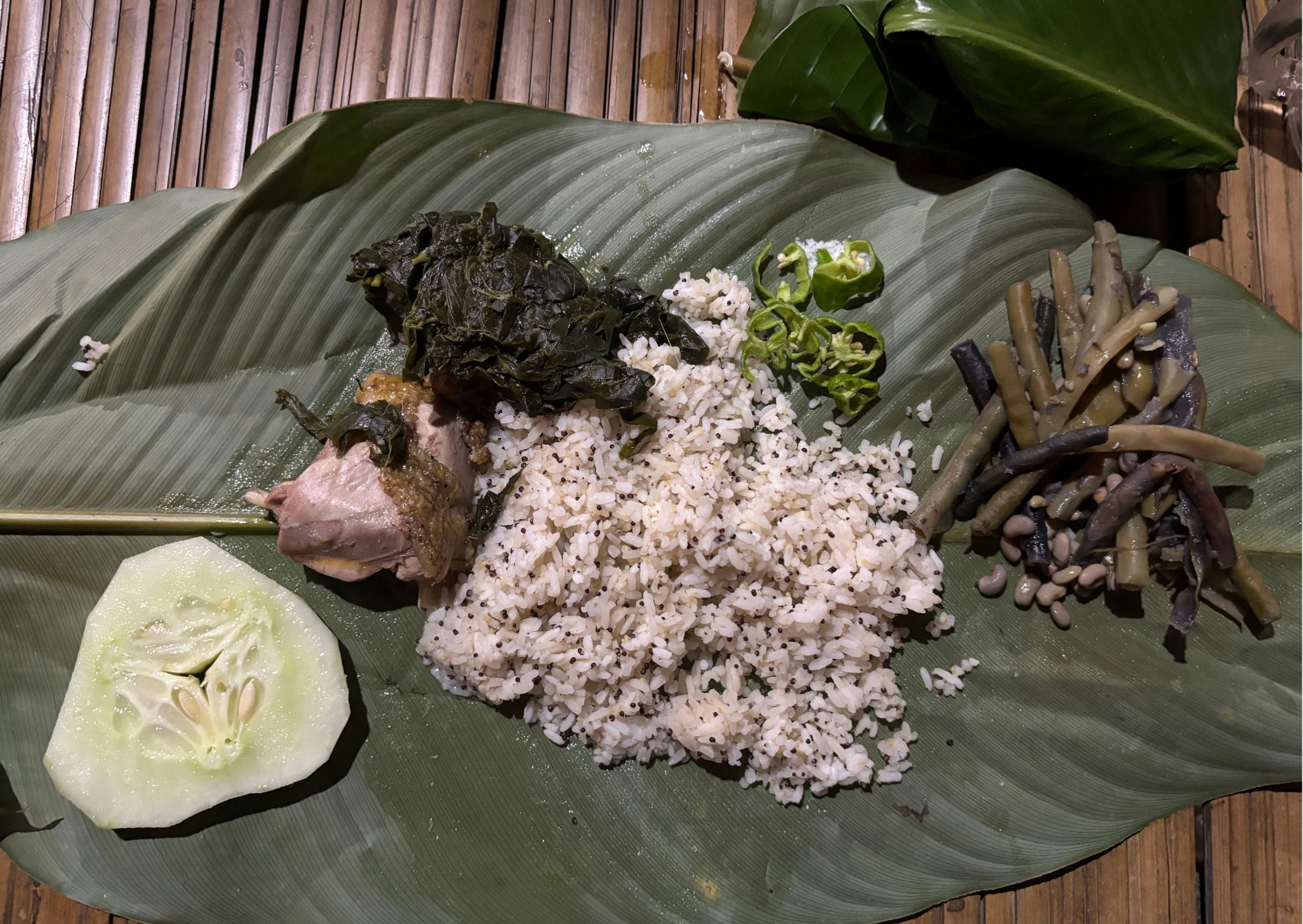
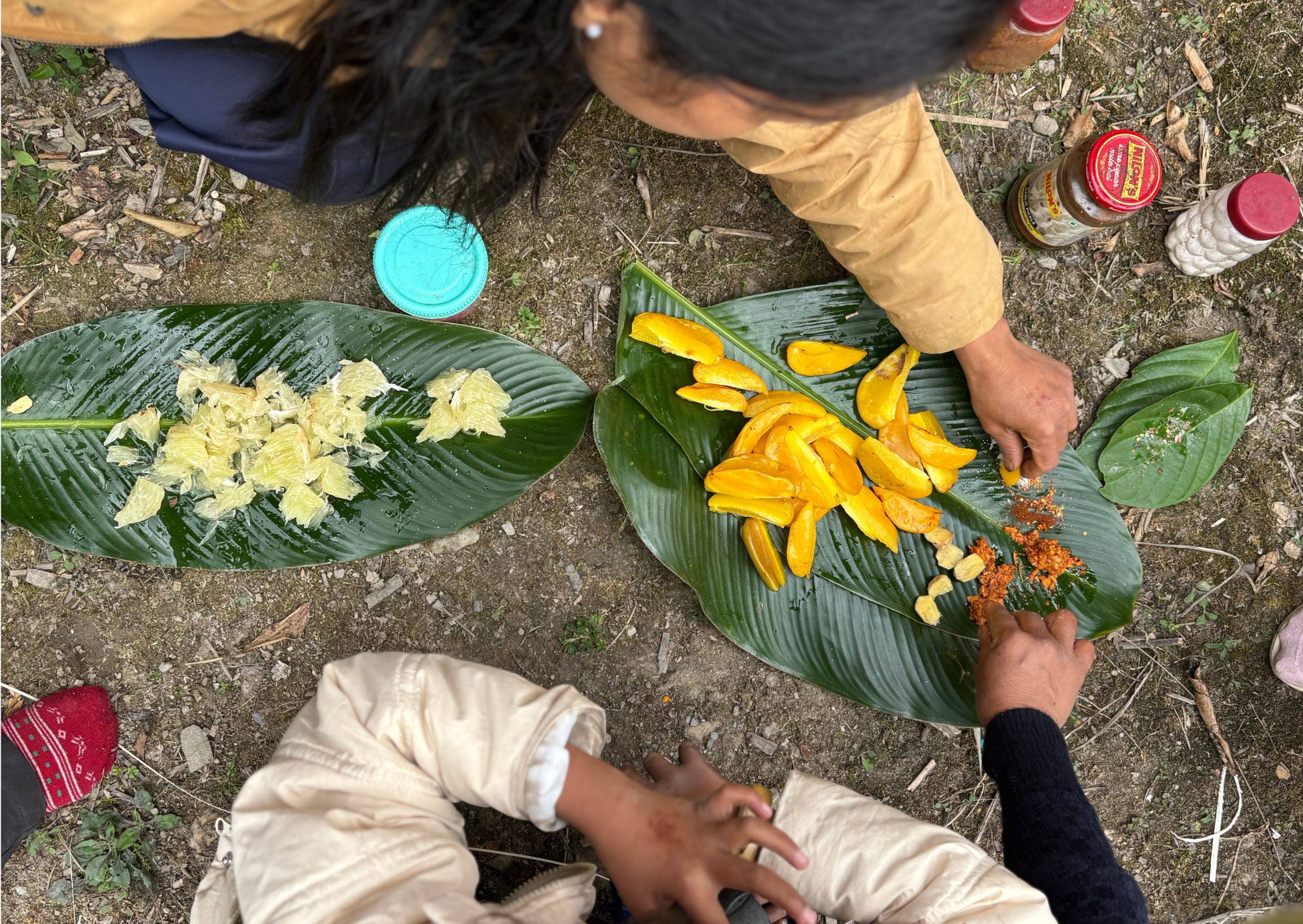
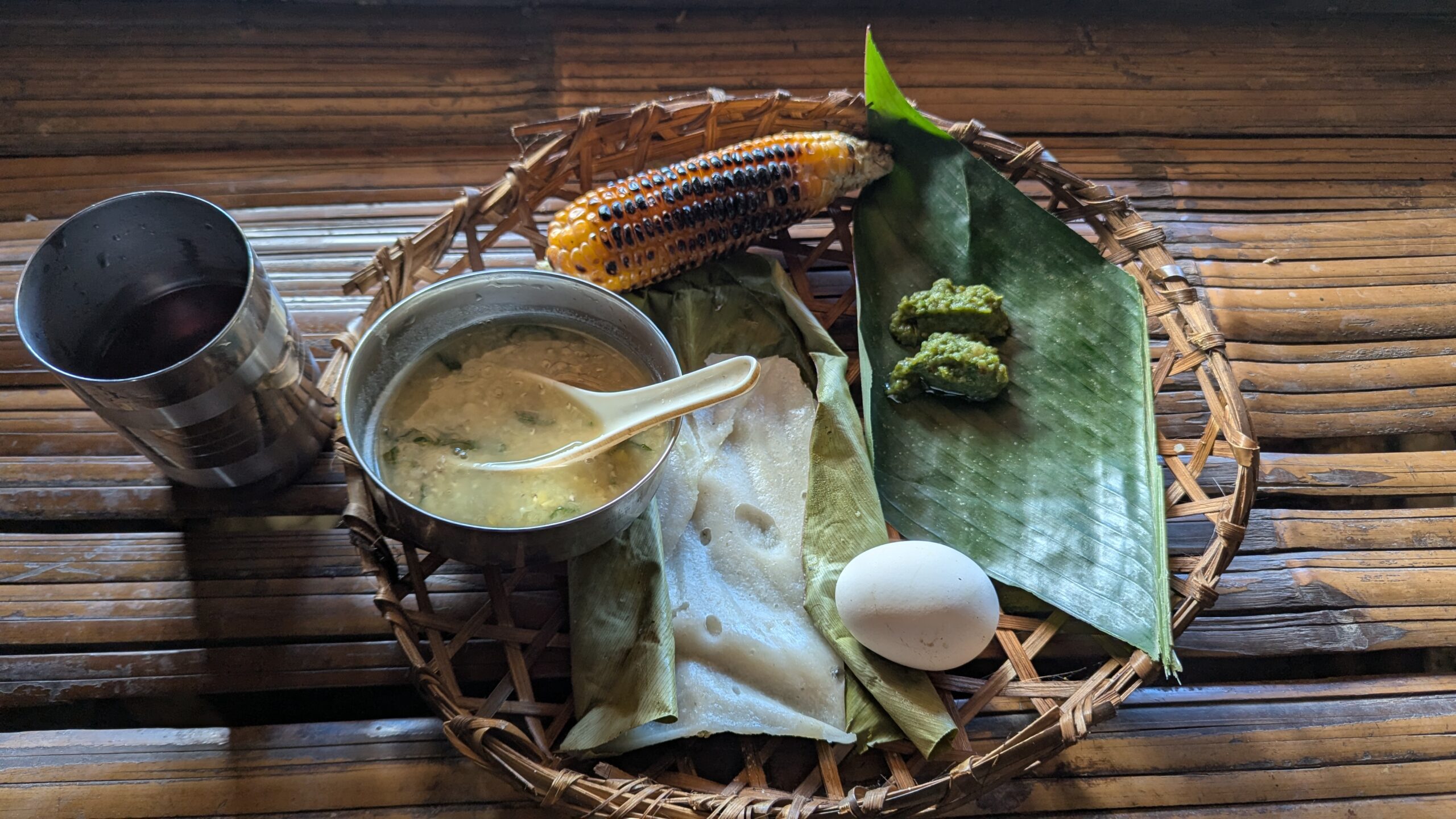
Food in the Upper Siang is far more than nourishment, it is one of the most remarkable ways of understanding the region’s culture, ecology, and one of the country’s most formidable indigenous knowledge systems.
Meals are prepared over wood fires using ingredients grown, reared, foraged, and harvested by the communities themselves. Fragrant local rice is slow-cooked in bamboo and wrapped in aromatic leaves, meats come from small household farms, freshwater fish from nearby rivers, while wild greens, herbs, ferns, mushrooms, and edible plants are foraged from the surrounding forests. Local chillies and spices are hand-ground after being charred over the fire, giving every meal its distinctive flavour.
Throughout the journey, you’ll have opportunities to forage alongside your hosts, learn about the remarkable diversity of edible and medicinal plants, and experience the traditions, songs, and rituals that accompany farming and harvest seasons.
Meals are shared together around a fire, where food naturally becomes a conversation about the landscape, its seasons, myths and legends and the generations of knowledge that continue to shape life in the Upper Siang.
villages & camps
village one
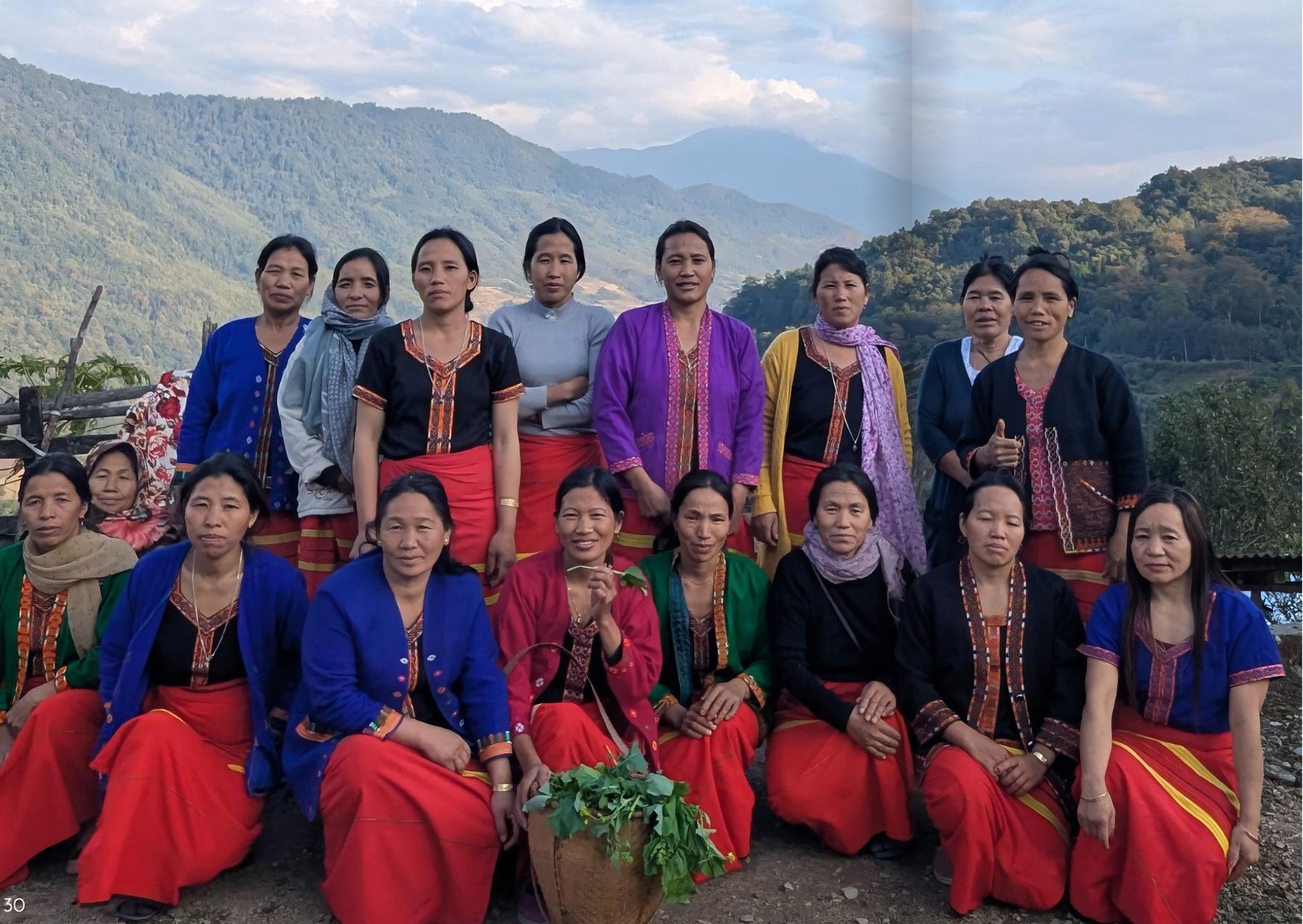
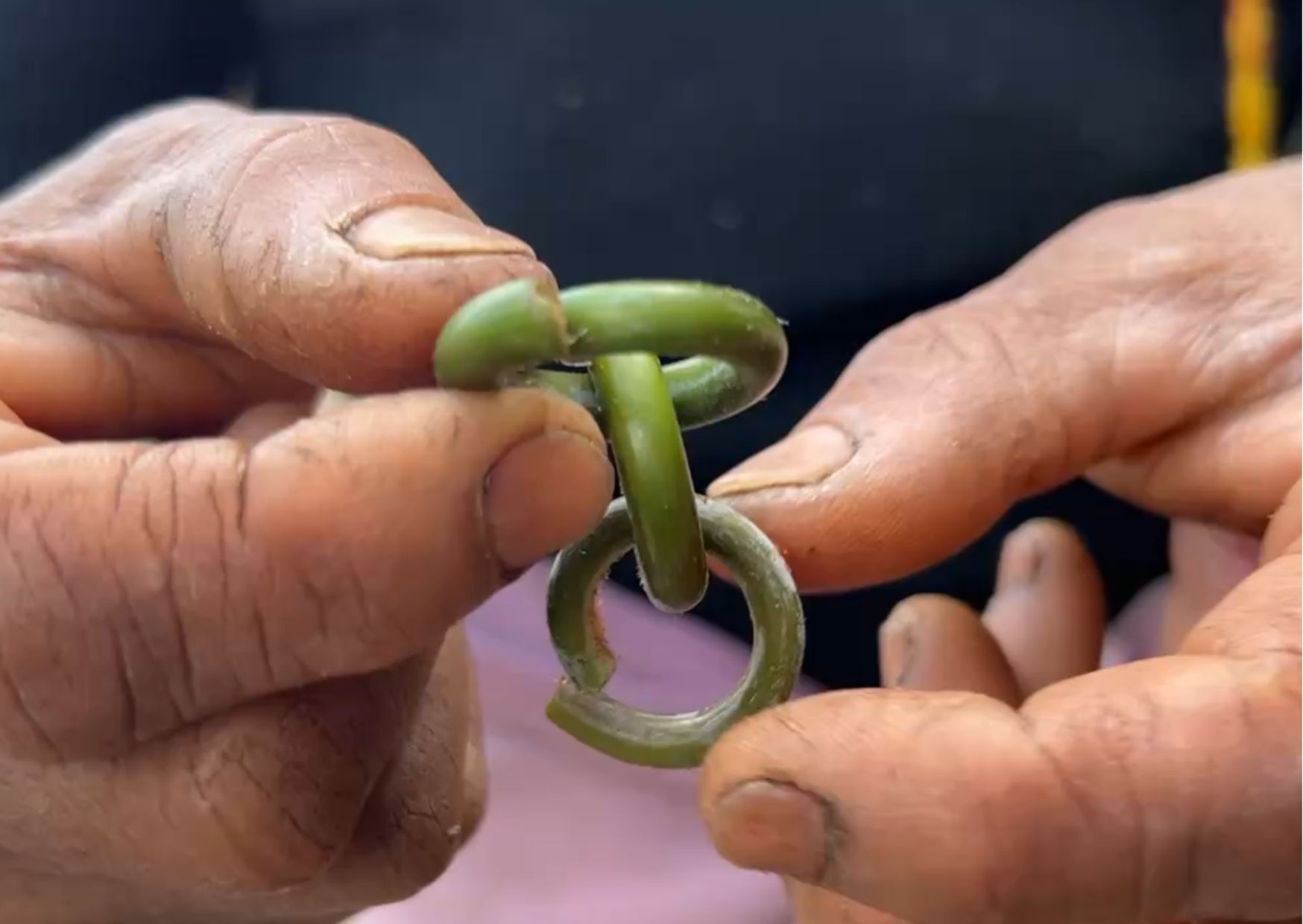
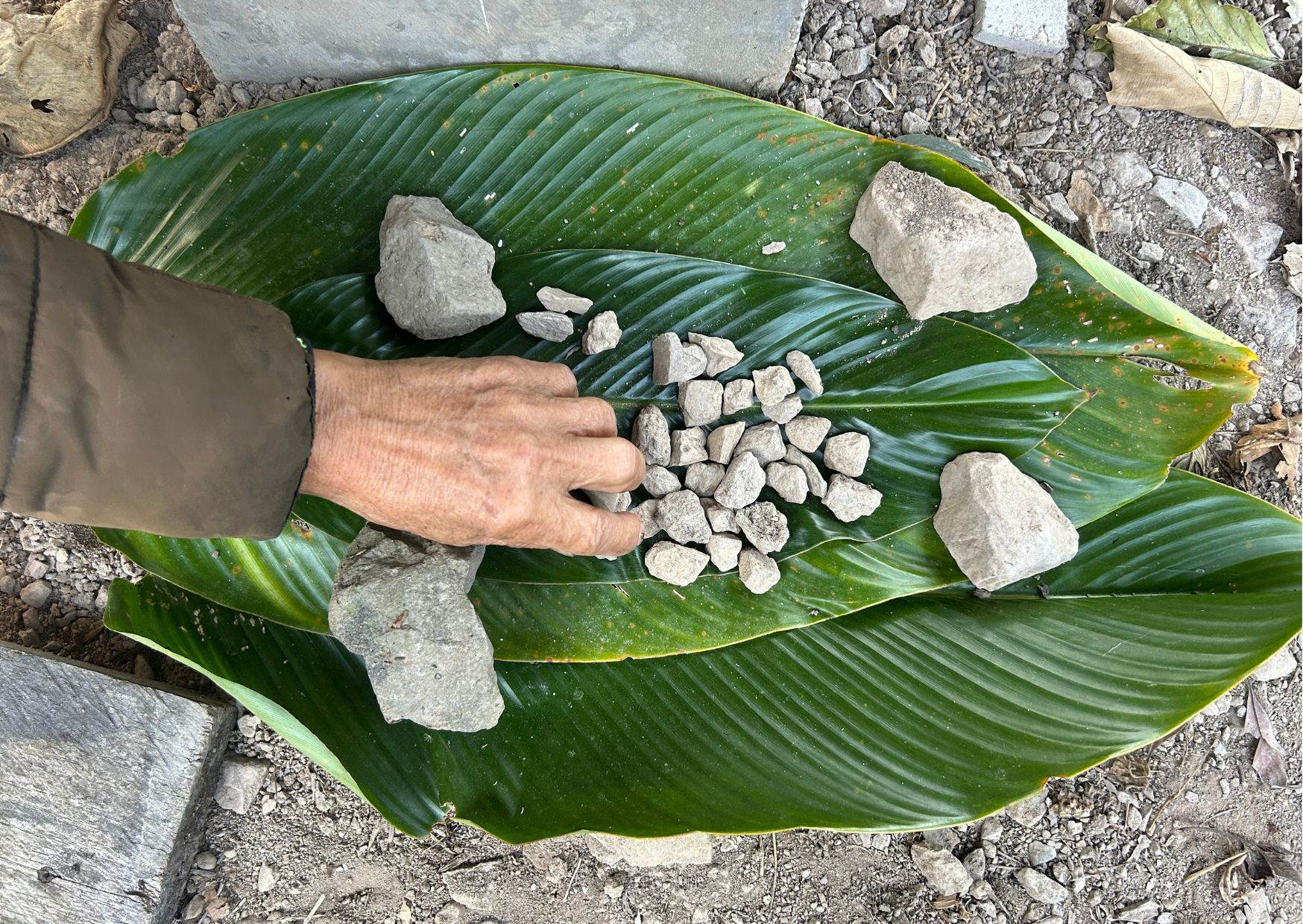
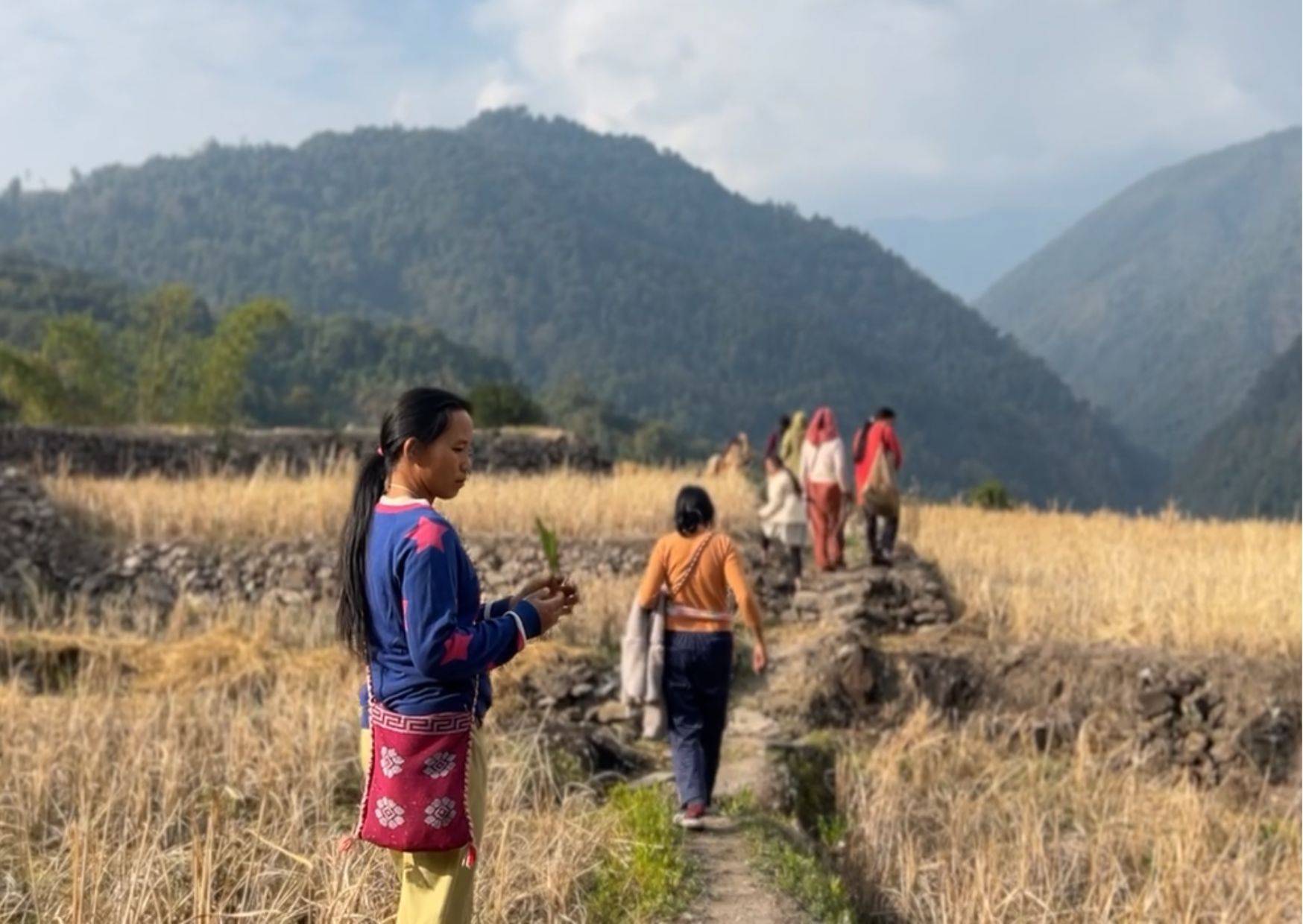
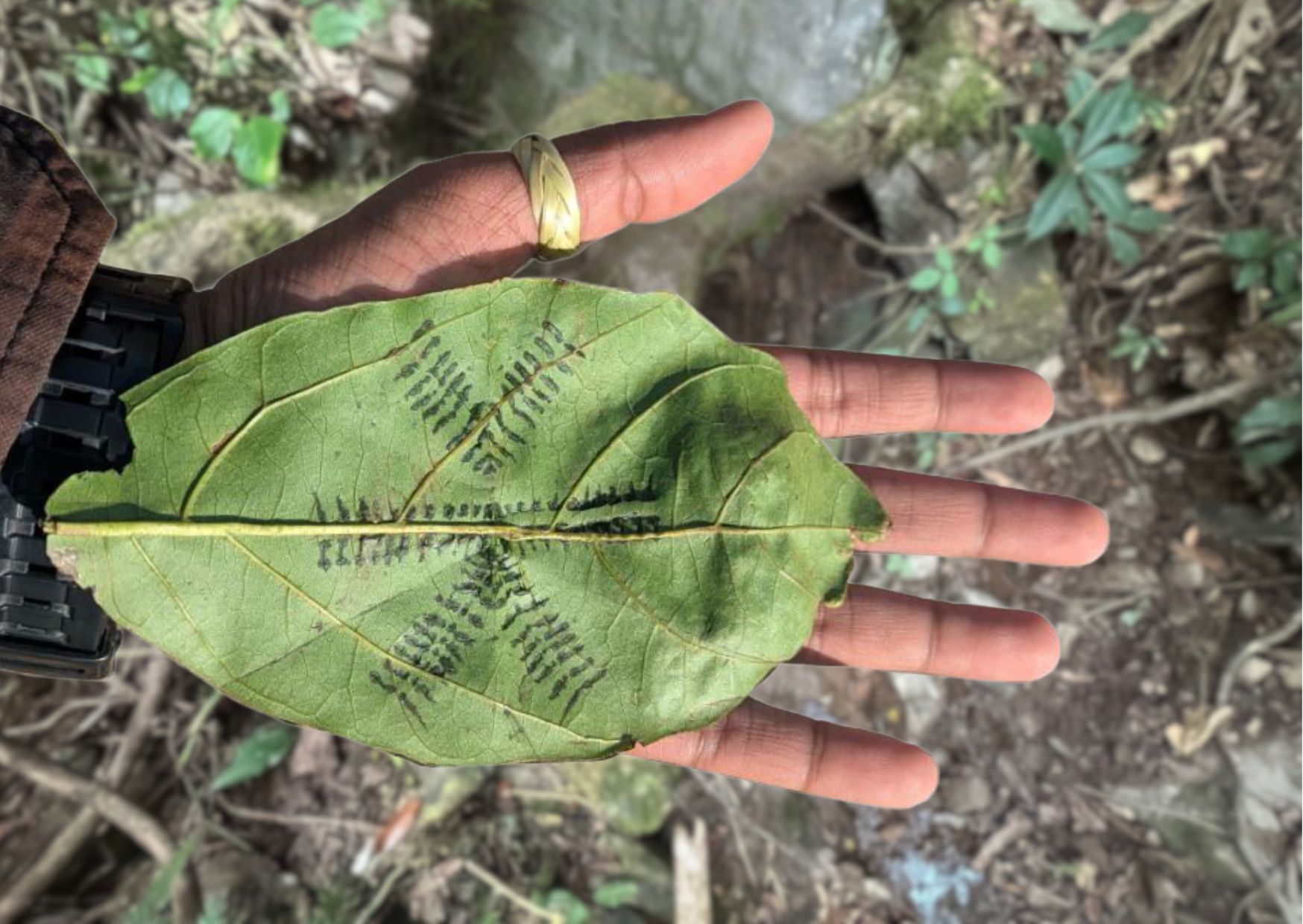
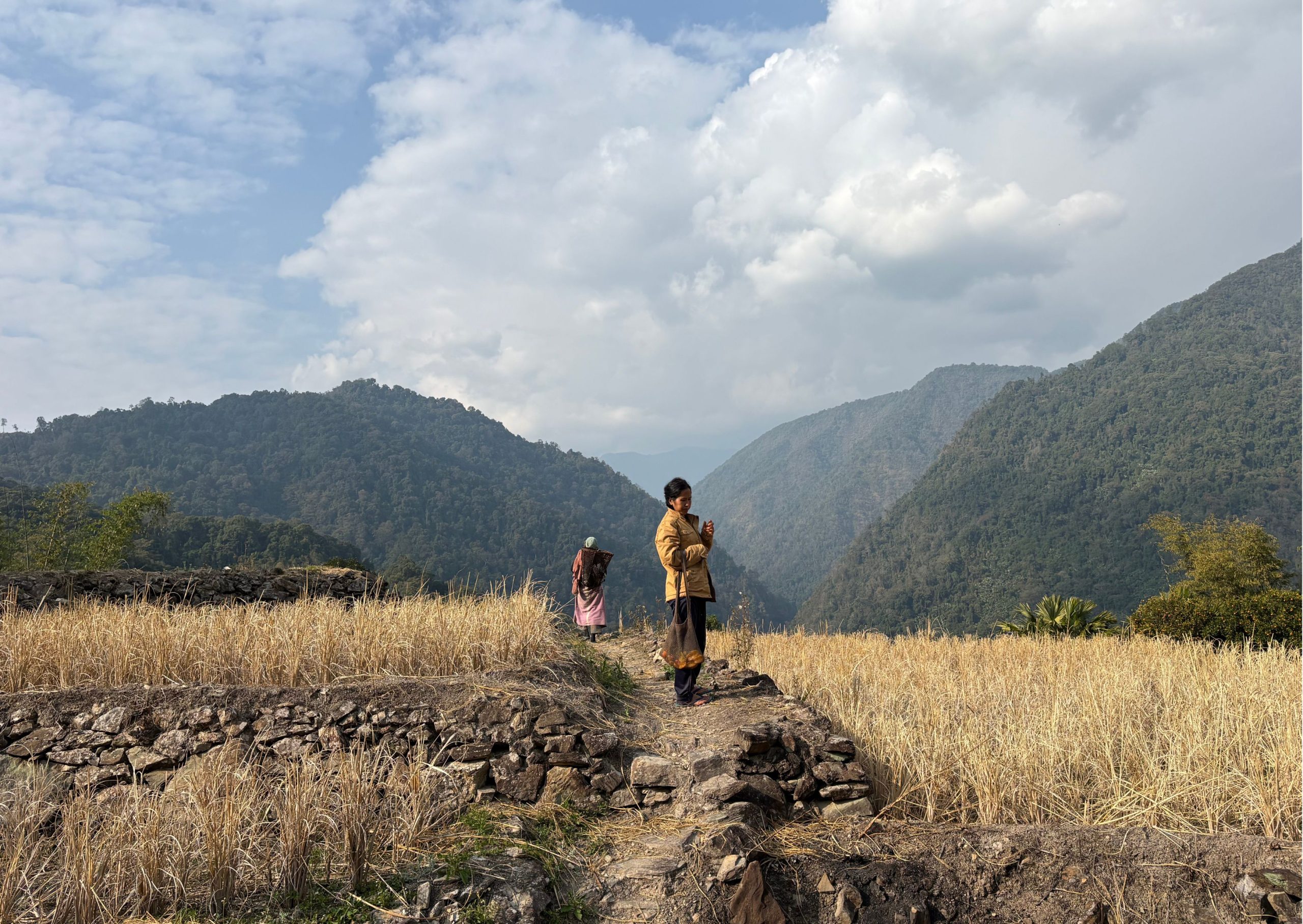
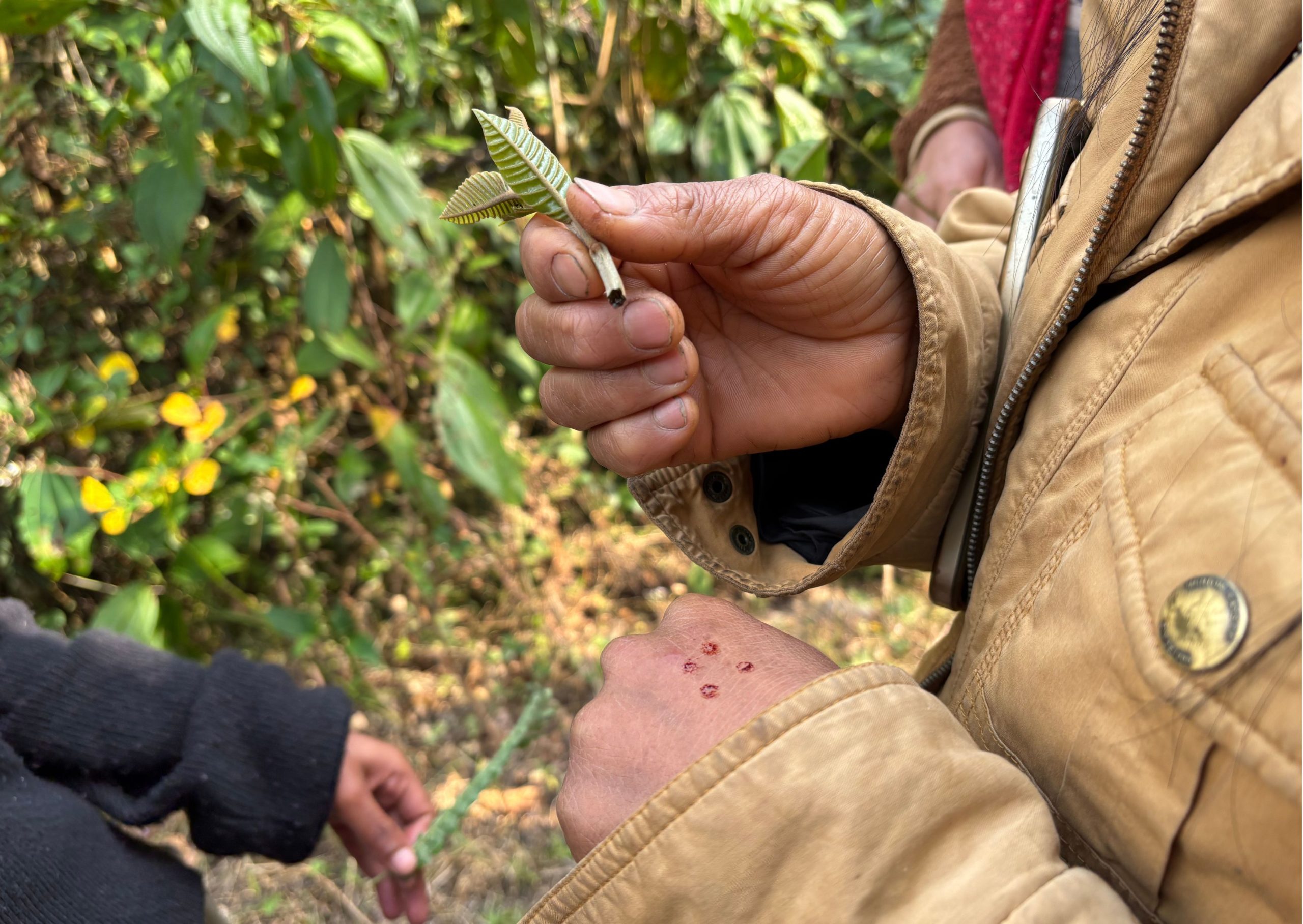
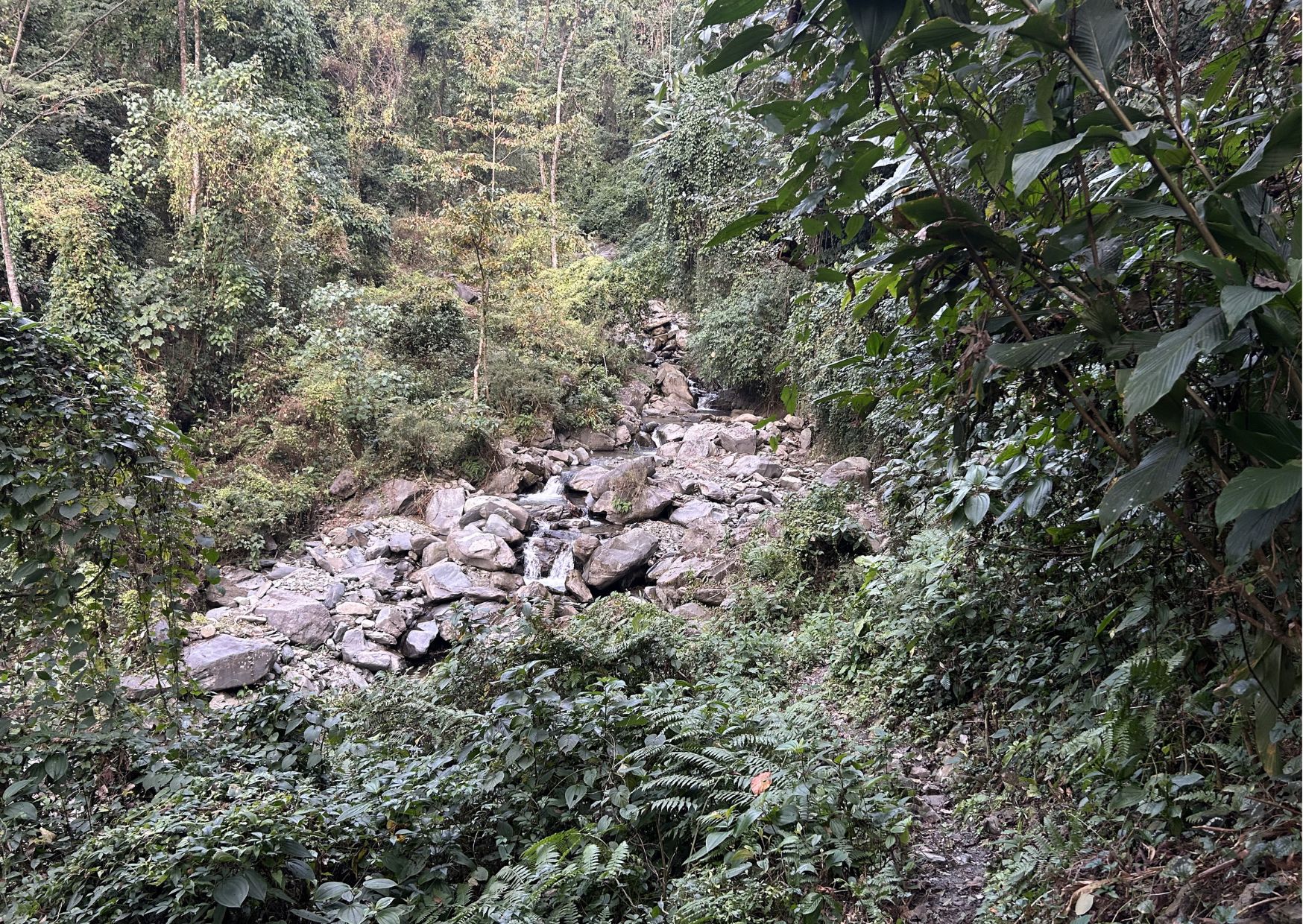
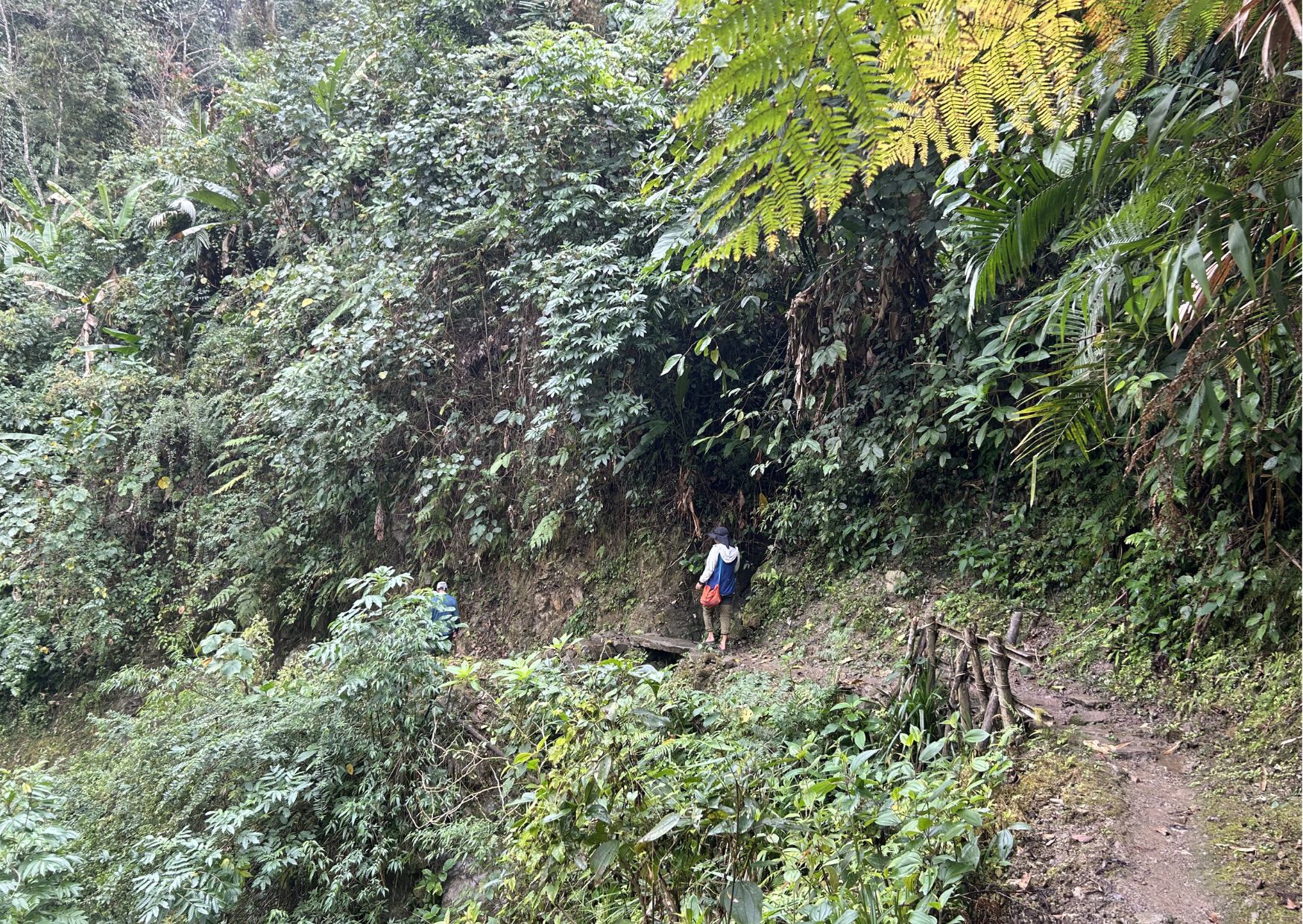
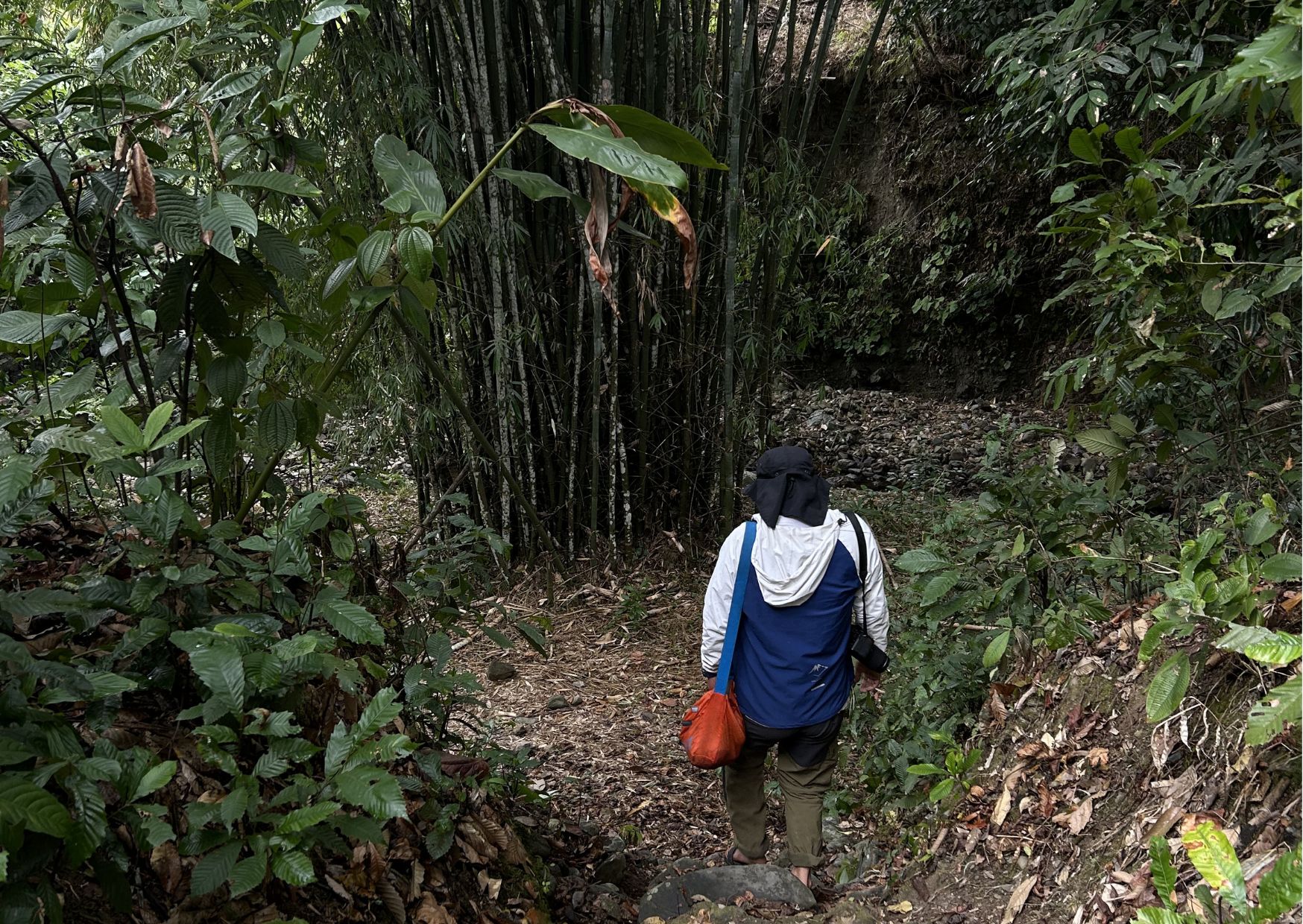
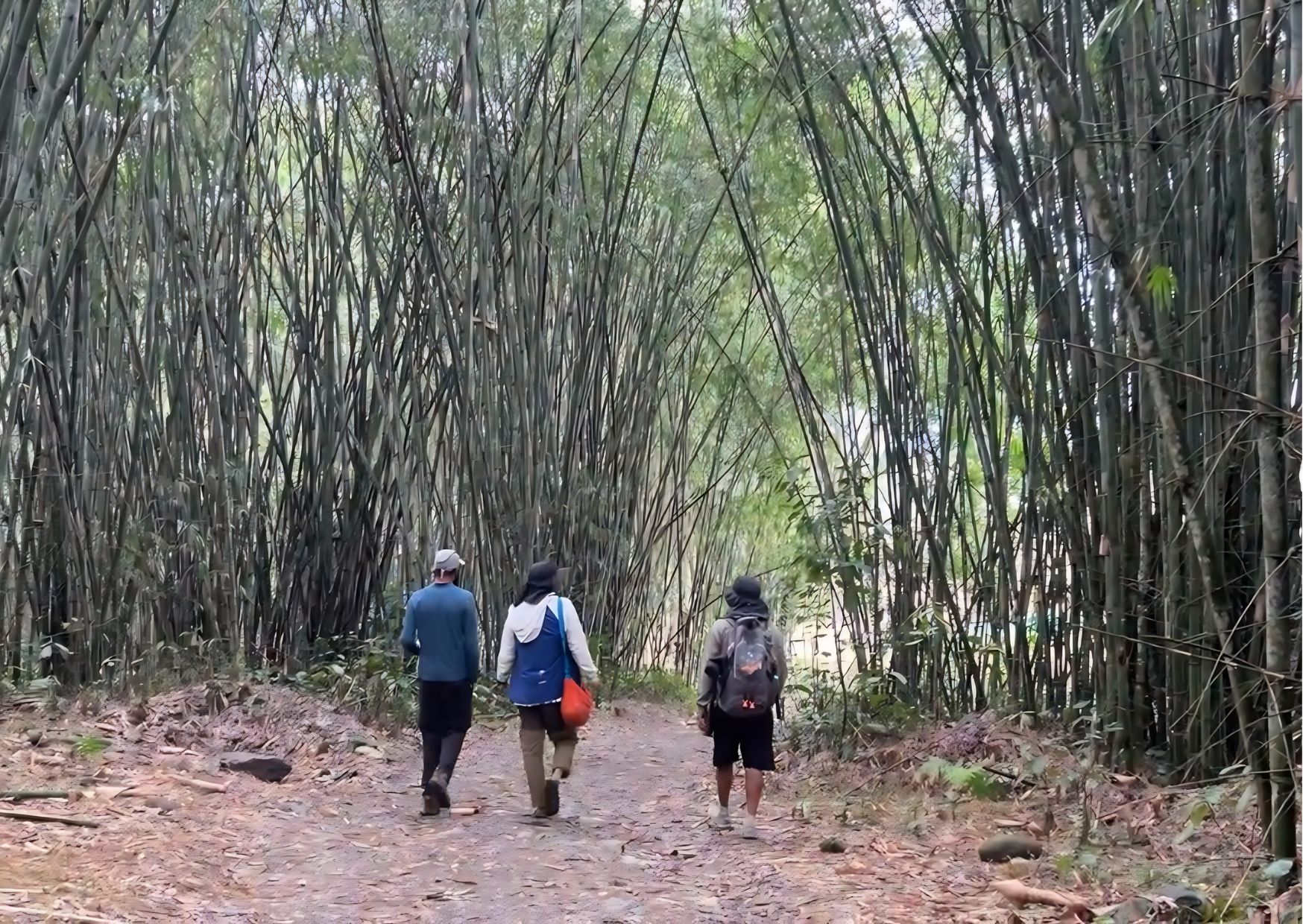
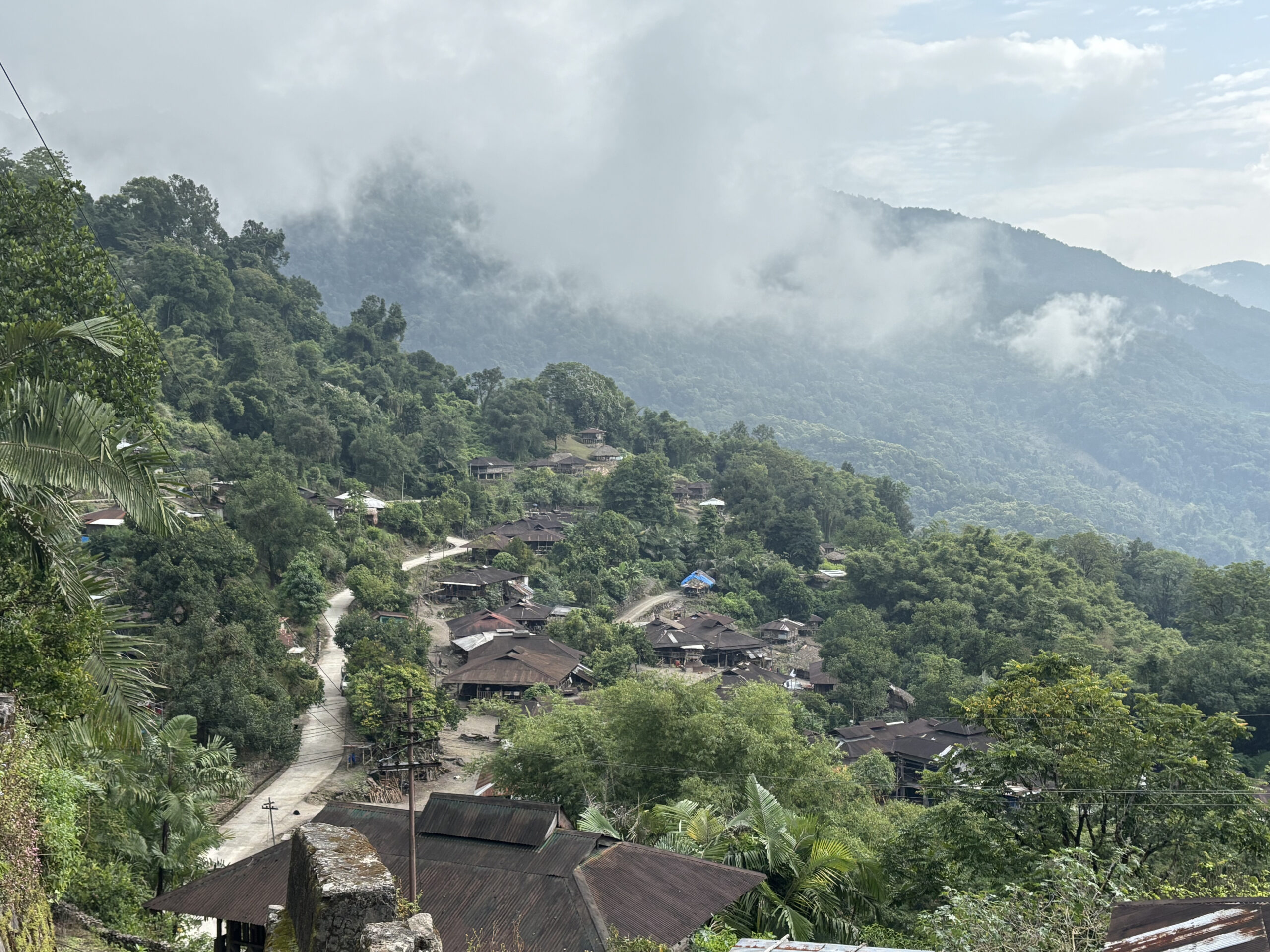
Surrounded by forests and terraced fields, in the first village, you’ll walk with the Mei-meis (elder sisters), following paths that generations of women have walked in search of greens, firewood, medicinal plants, and one another’s company. Along the way, discover a way of relating to the forest through songs, stories, adornment, traditional ornamentation and dance, that reveal a relationship built on intimacy, observation, beauty, and play. Return carrying foraged greens, handmade ornaments, and connection to forests based on memory, and belonging.
village two
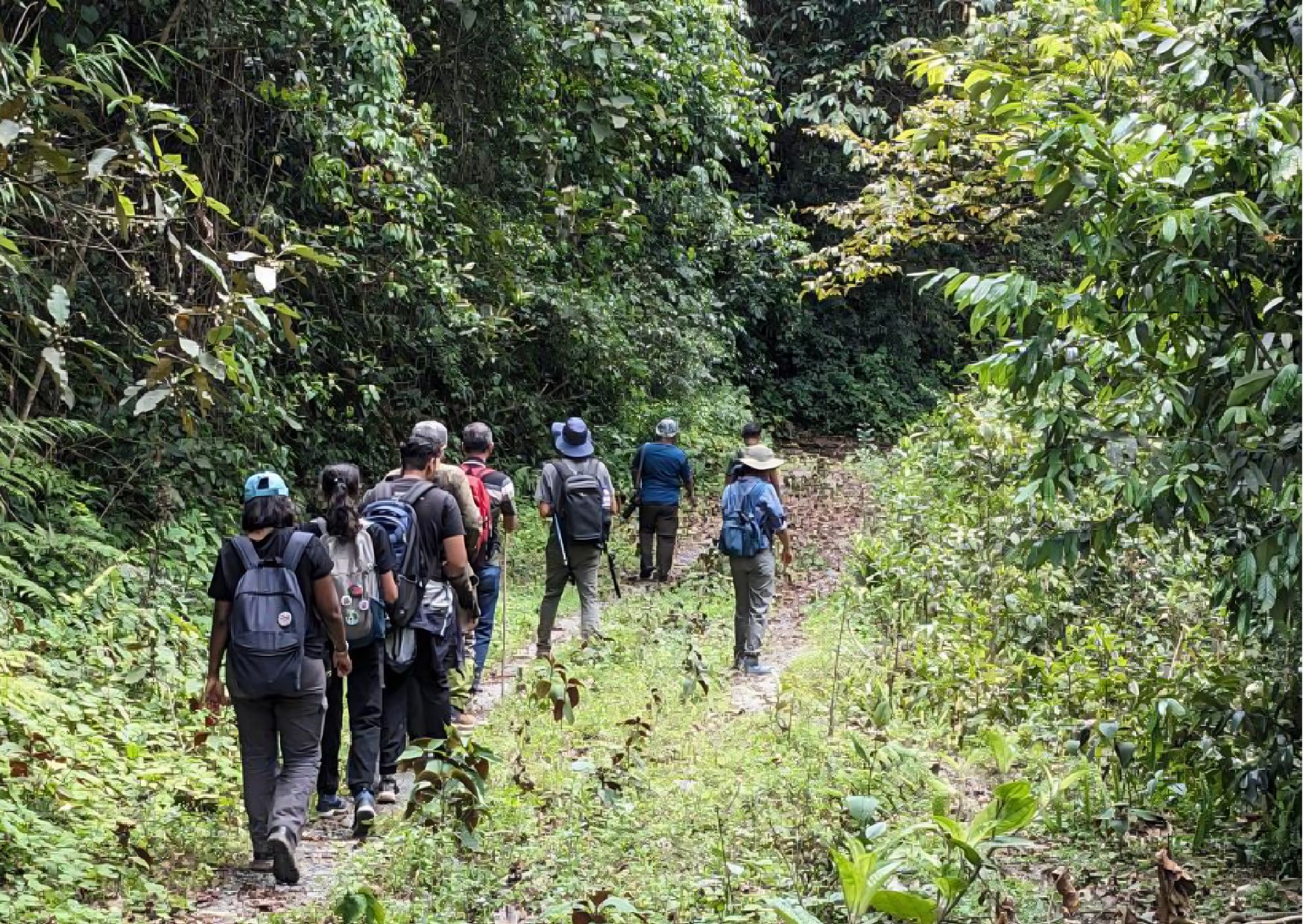
Dotted with preserved traditional homes, walk through the next village’s dense jungle trails as your guides introduce you to the birds, mammals, and rich wildlife of the Eastern Himalaya, interpreting the calls, tracks, signs, and stories that bring these forests to life.
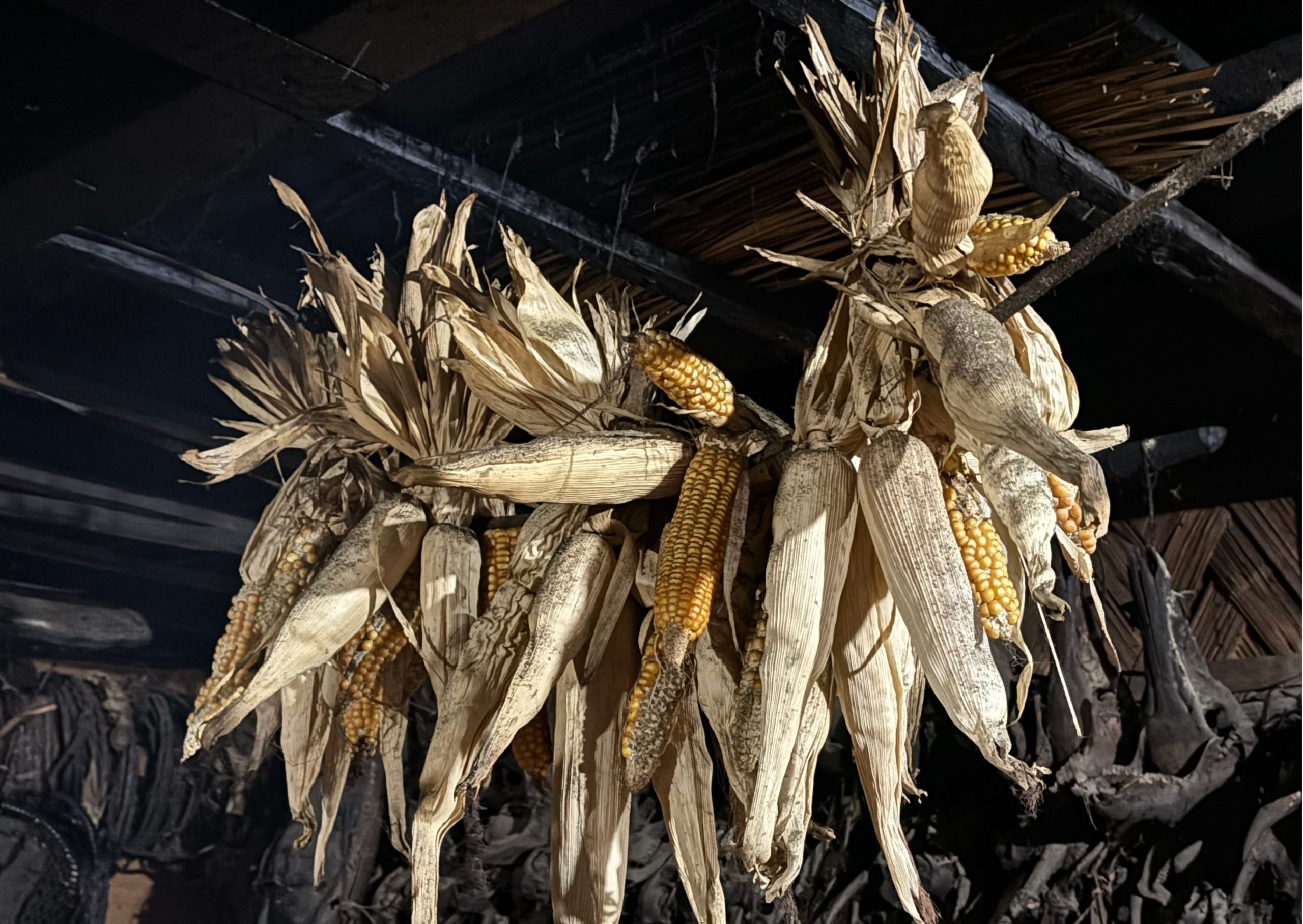
Back in the village, discover the traditions, ceremonies, and culture that have long shaped the community’s relationship with the wilderness from hunting lore and seasonal festivals to heirlooms and ceremonial trophies that continue to hold cultural significance today.
farmhouses
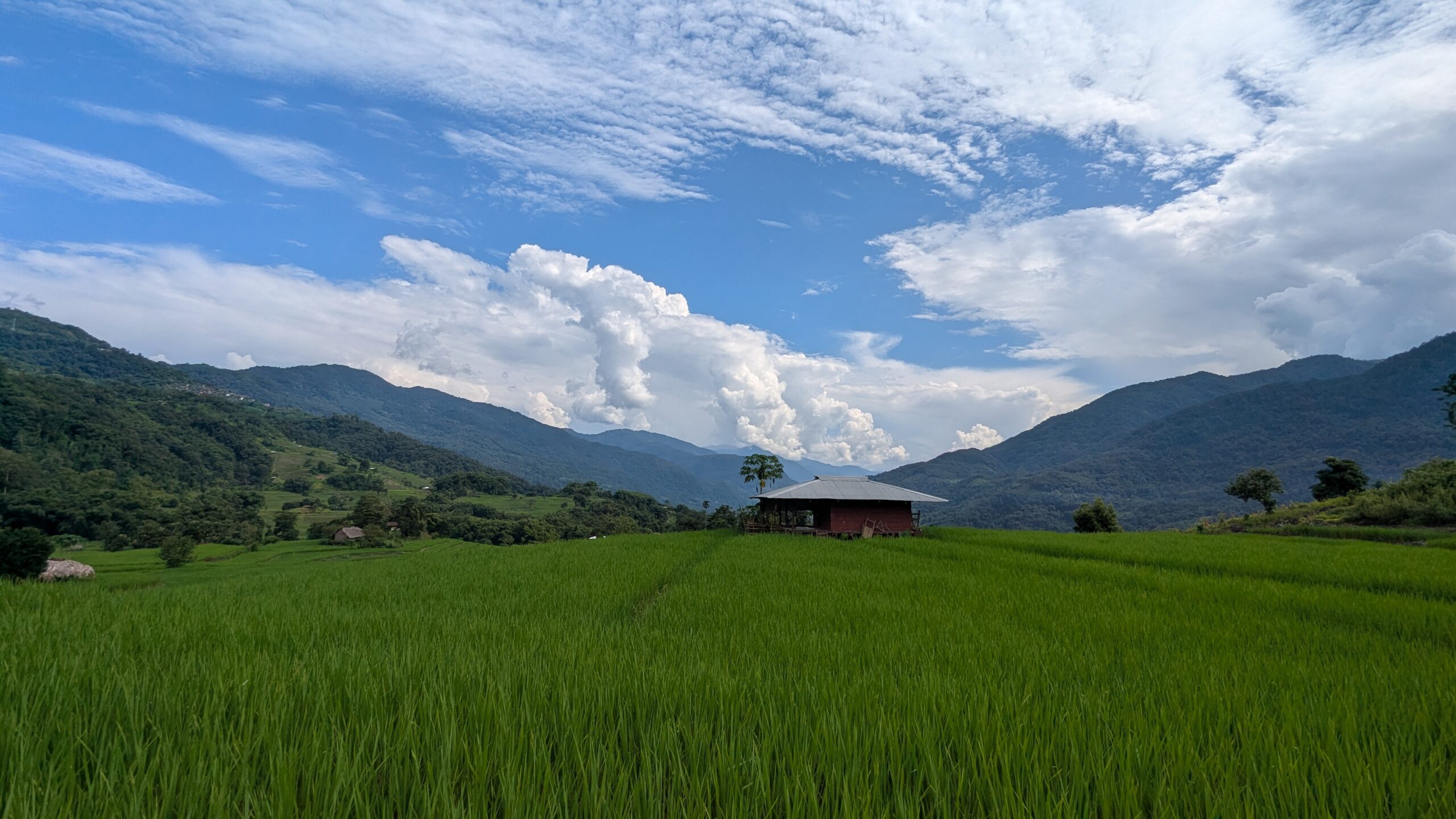
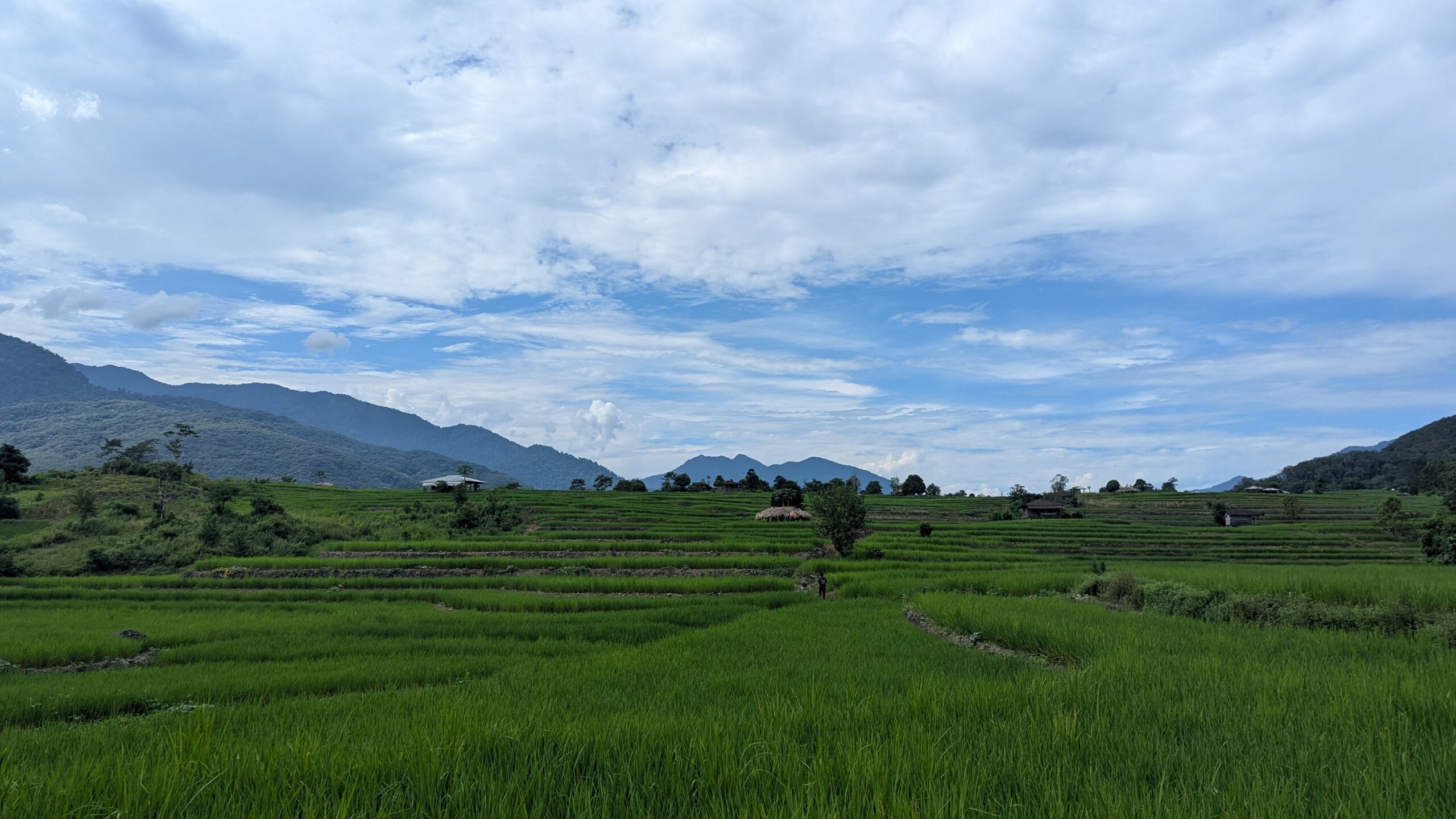
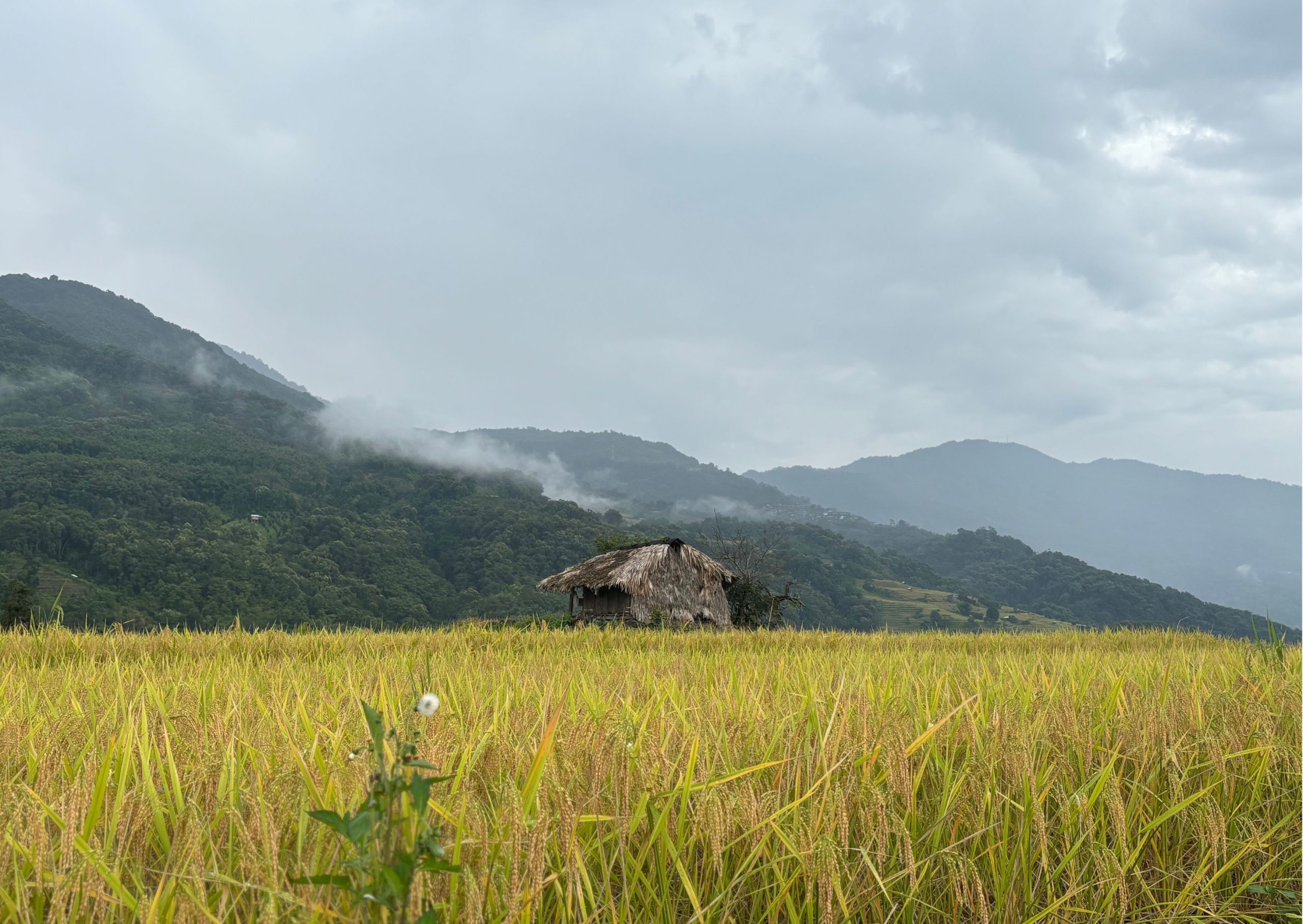
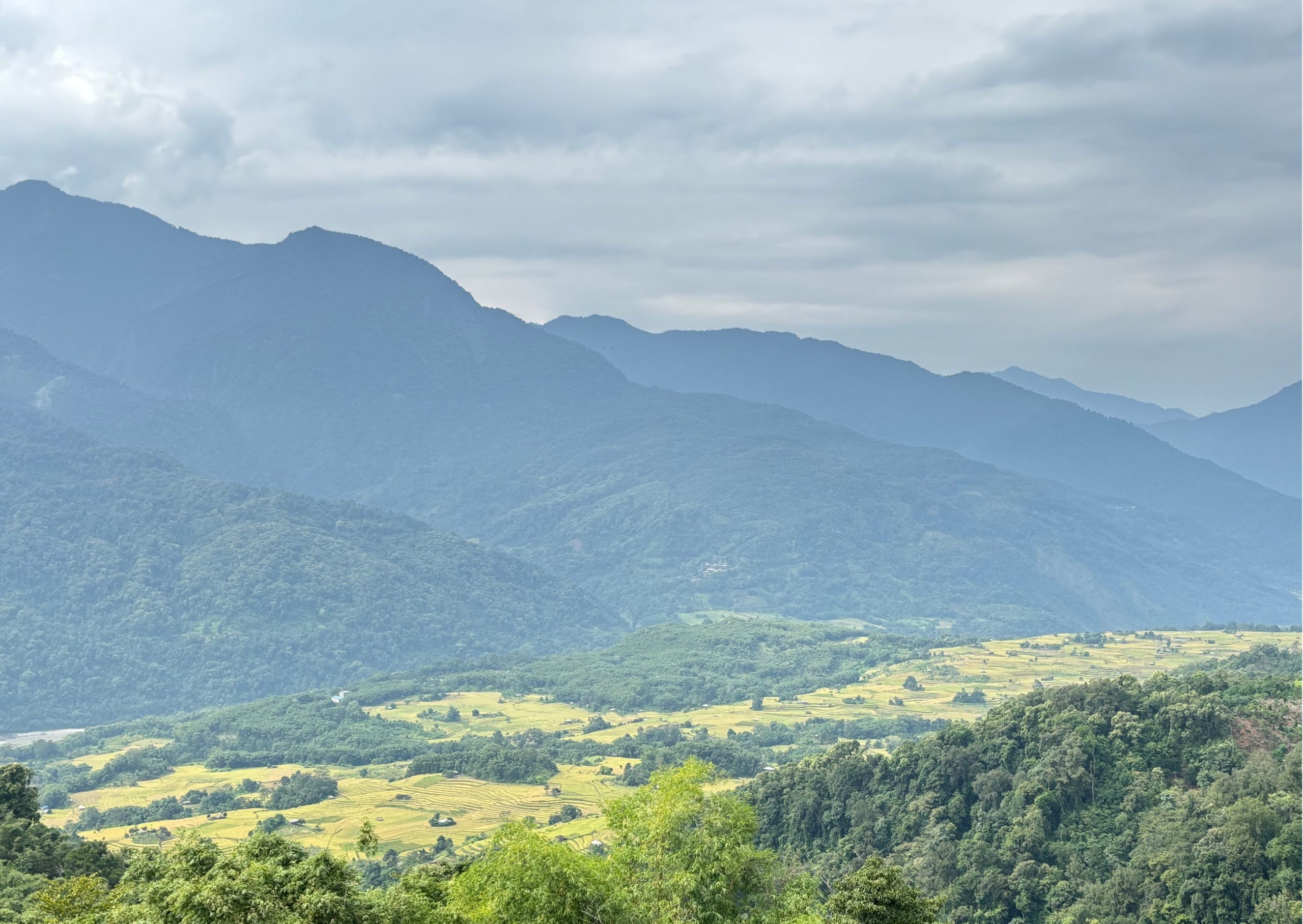
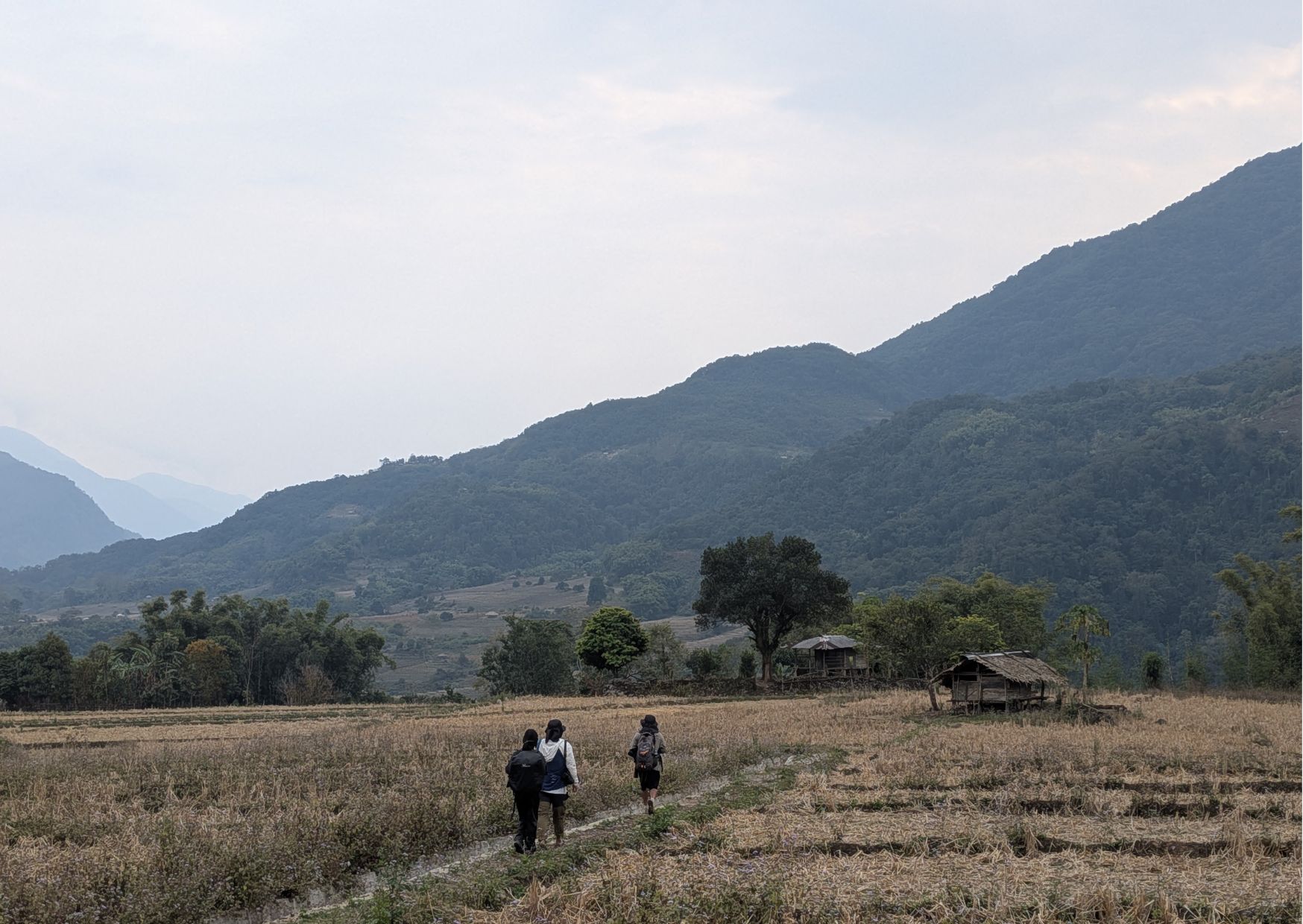
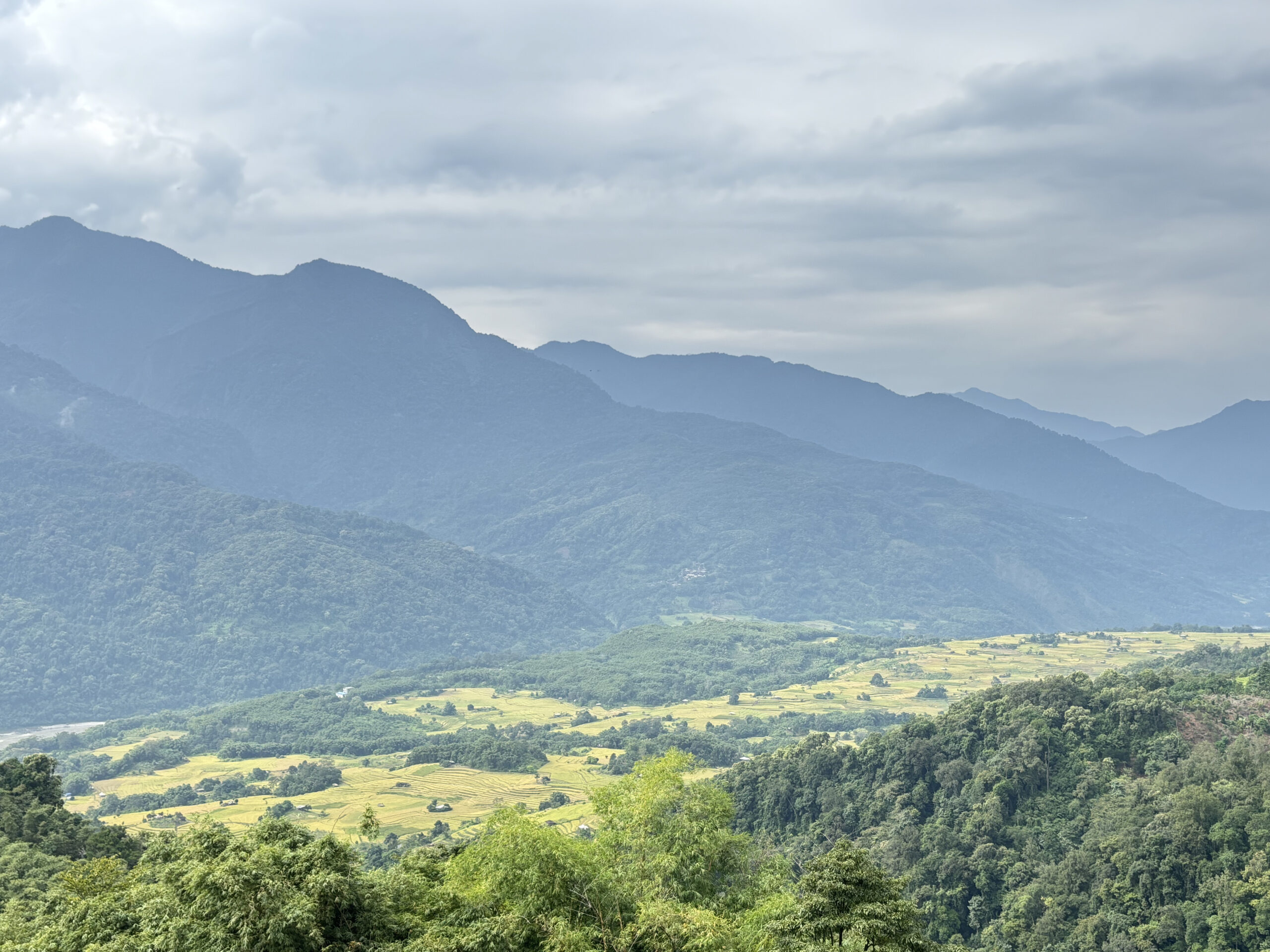
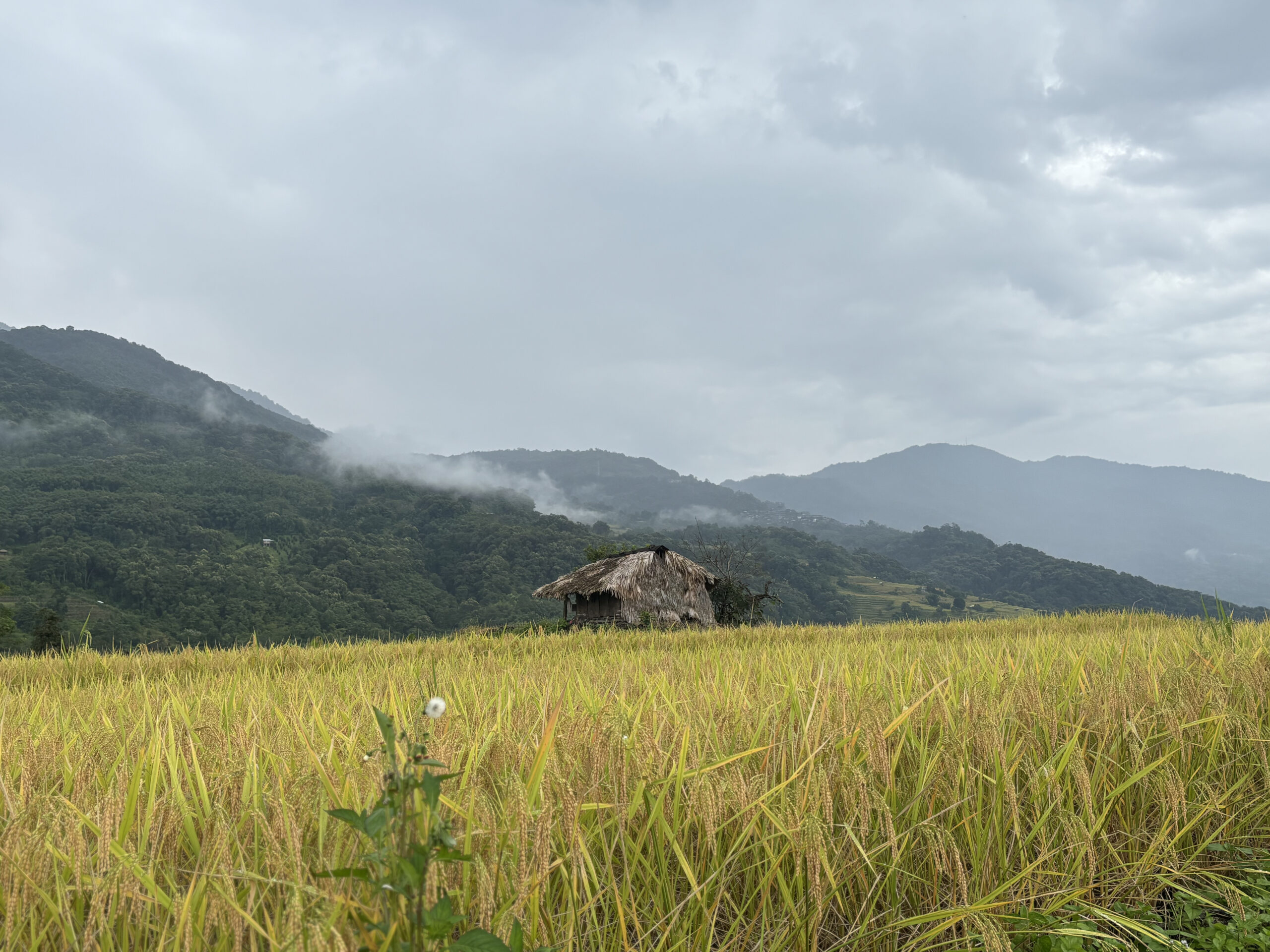
Perched amidst the terraced fields, spend two nights in simple bamboo field shelters with thatched roofs, surrounded by sweeping views of the valley, forests, and clouds that drift through the hills.
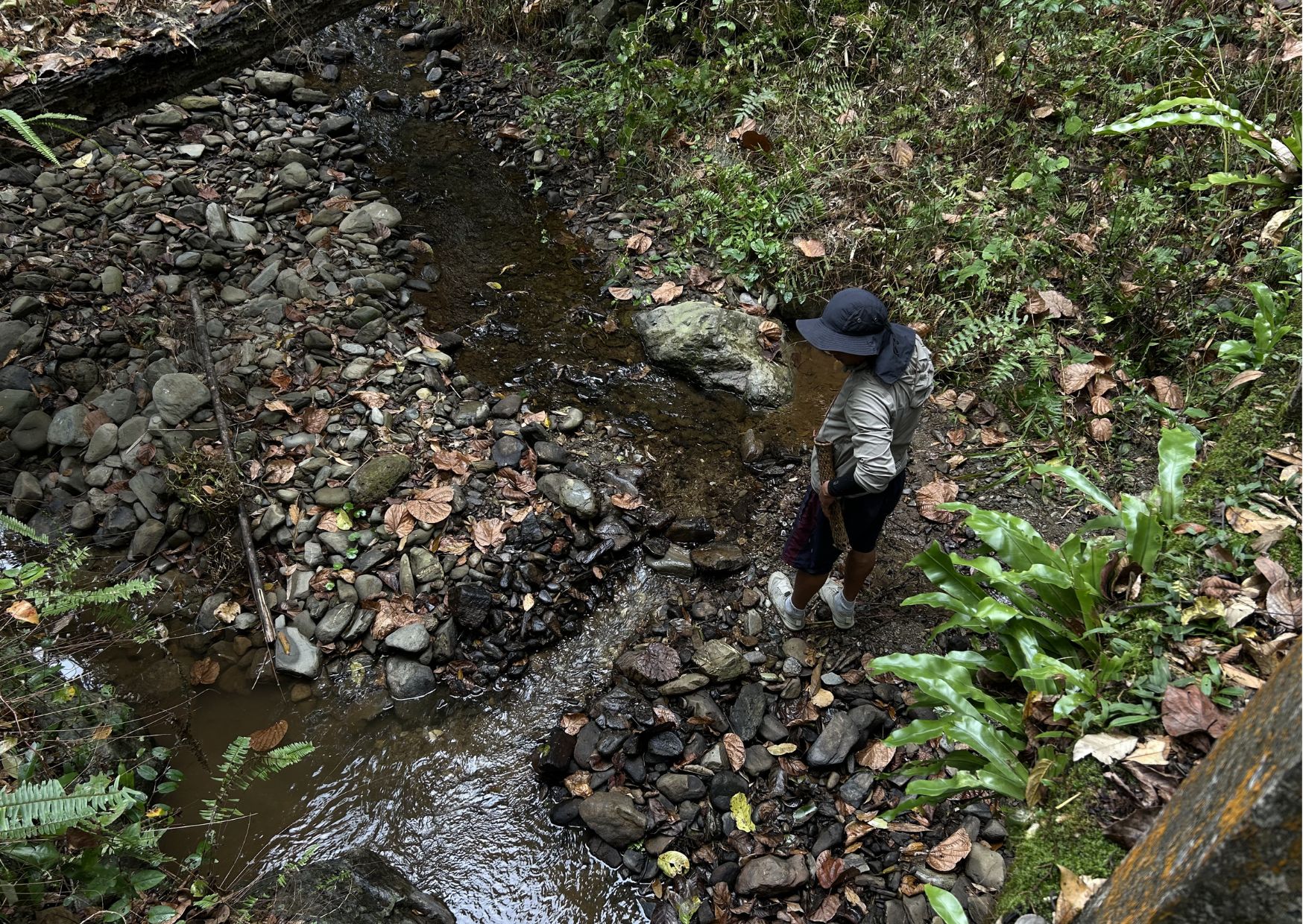
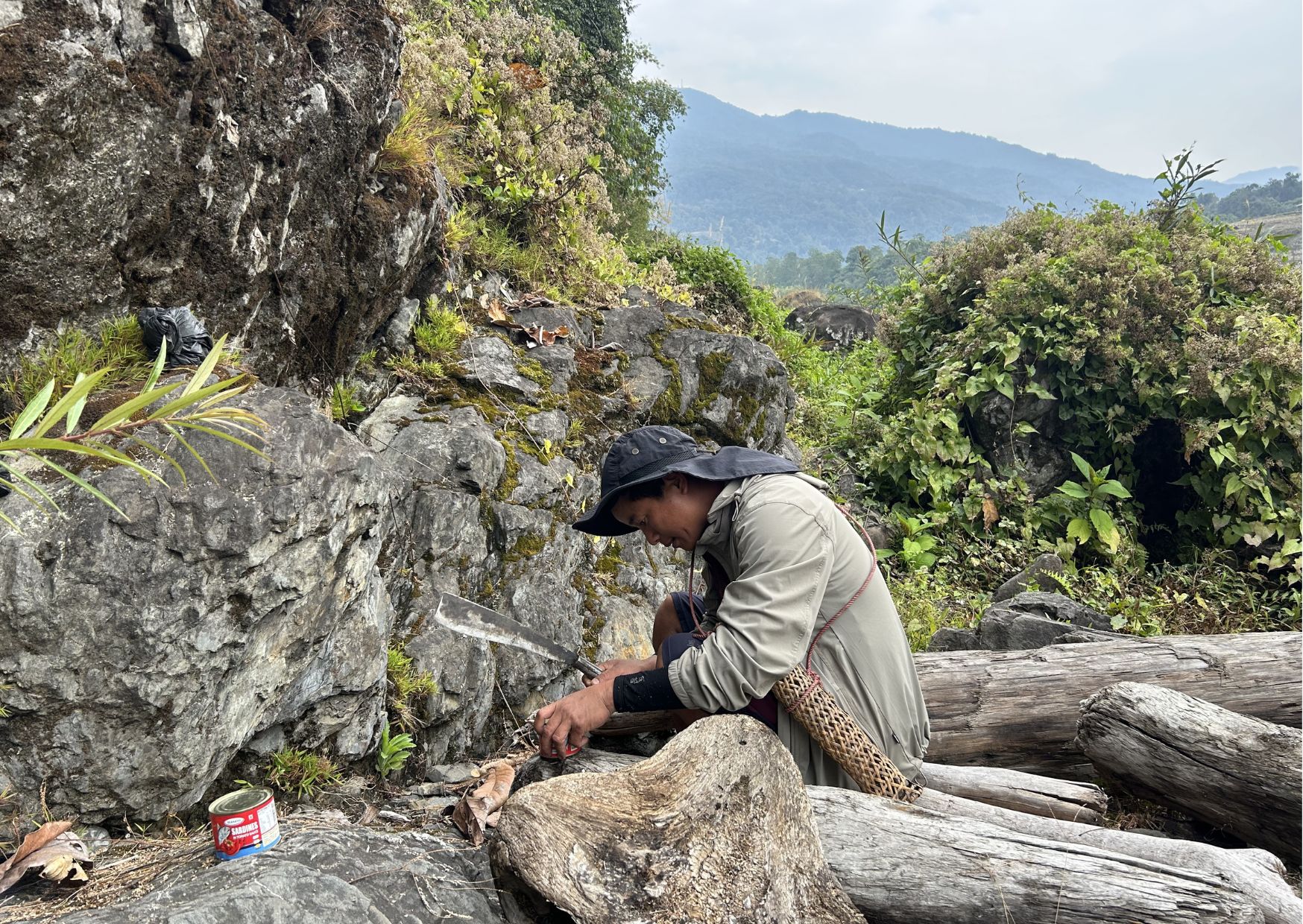
Take part in harvest rituals, cook over wood fires, fish in nearby streams, and share the songs, stories, and traditions that accompany life on these farms. Wander through the terraces and surrounding forest trails, picking fruit along the way, before gathering for slow evenings beneath star-filled skies.
riverside camp
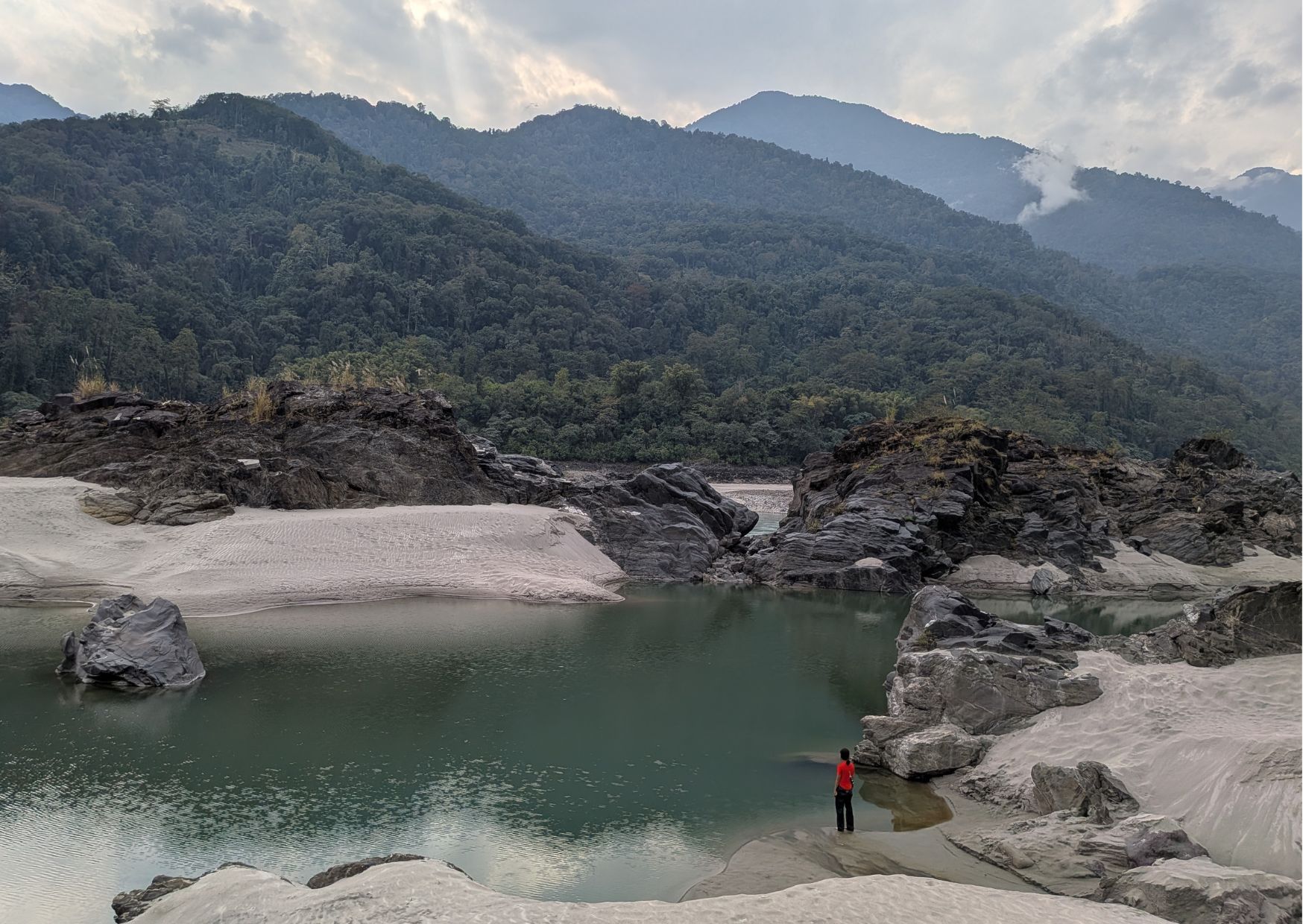
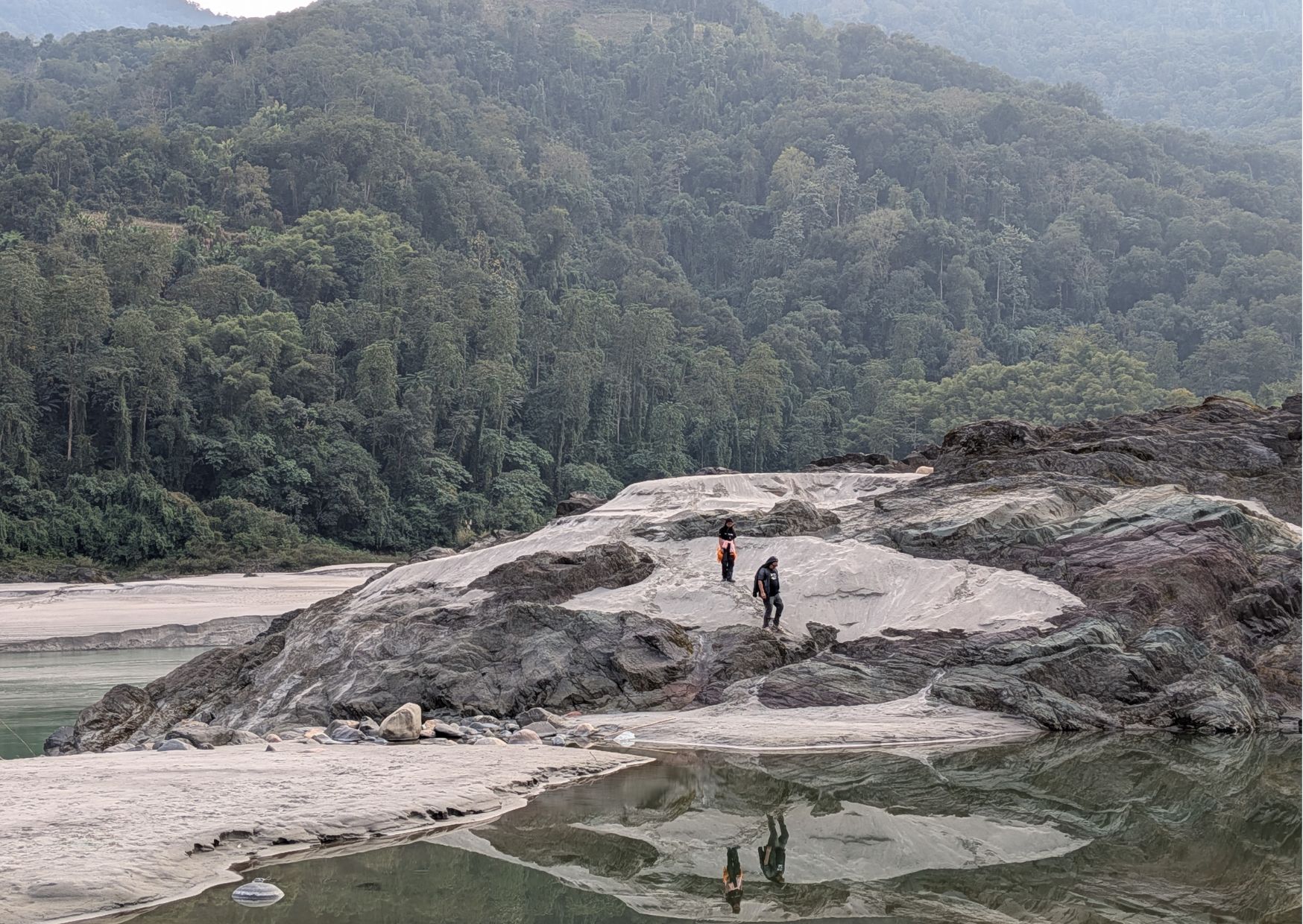
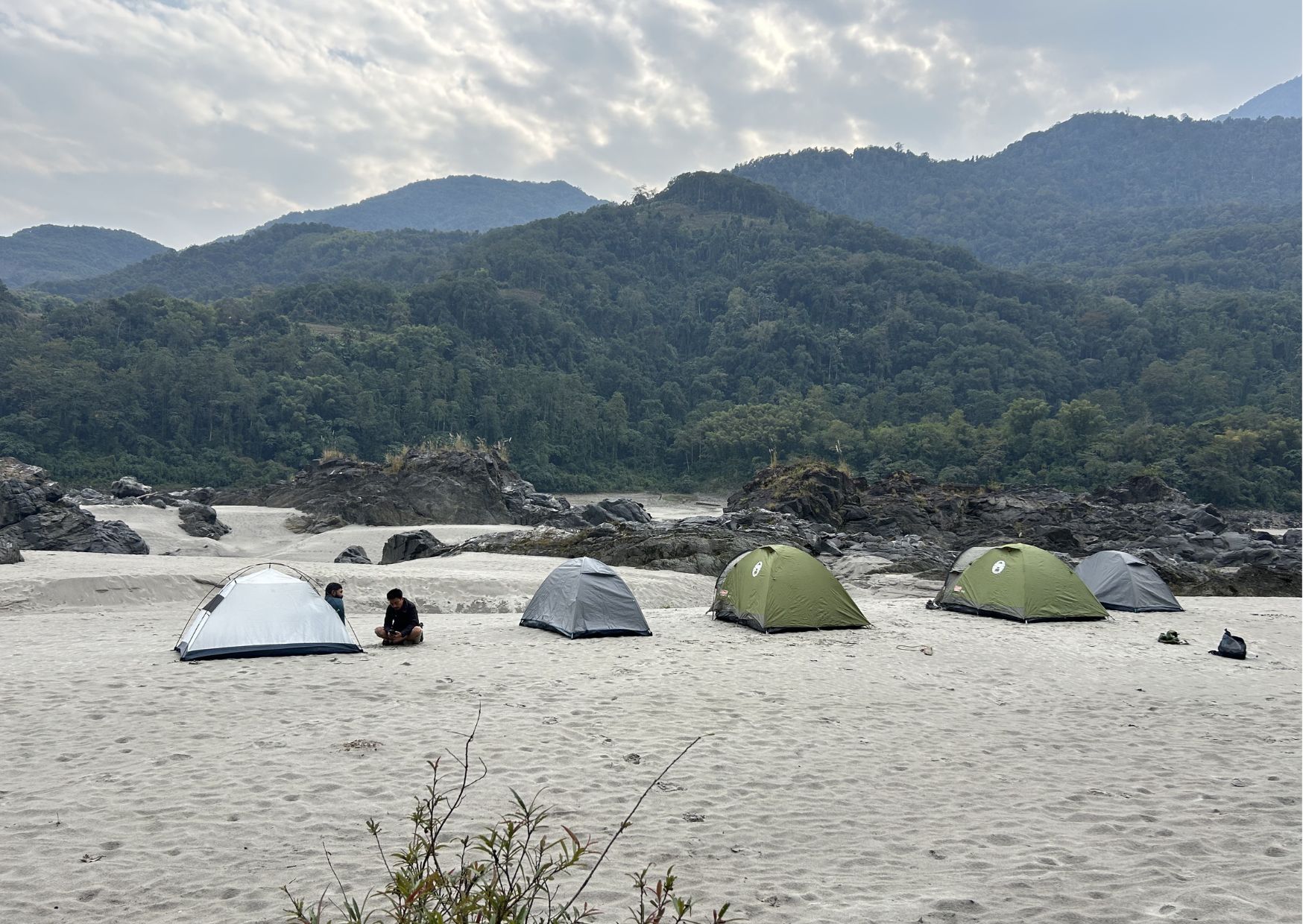
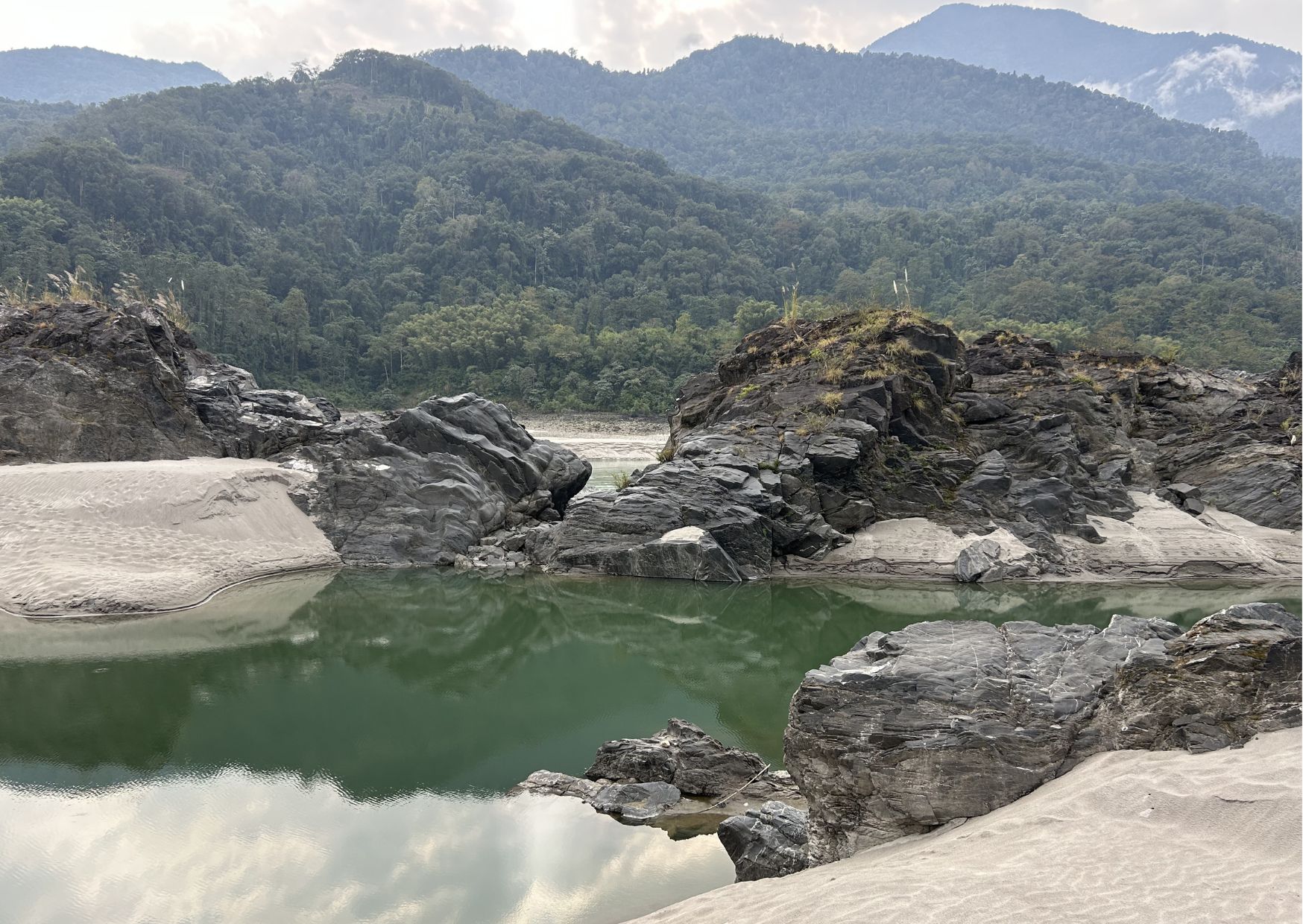
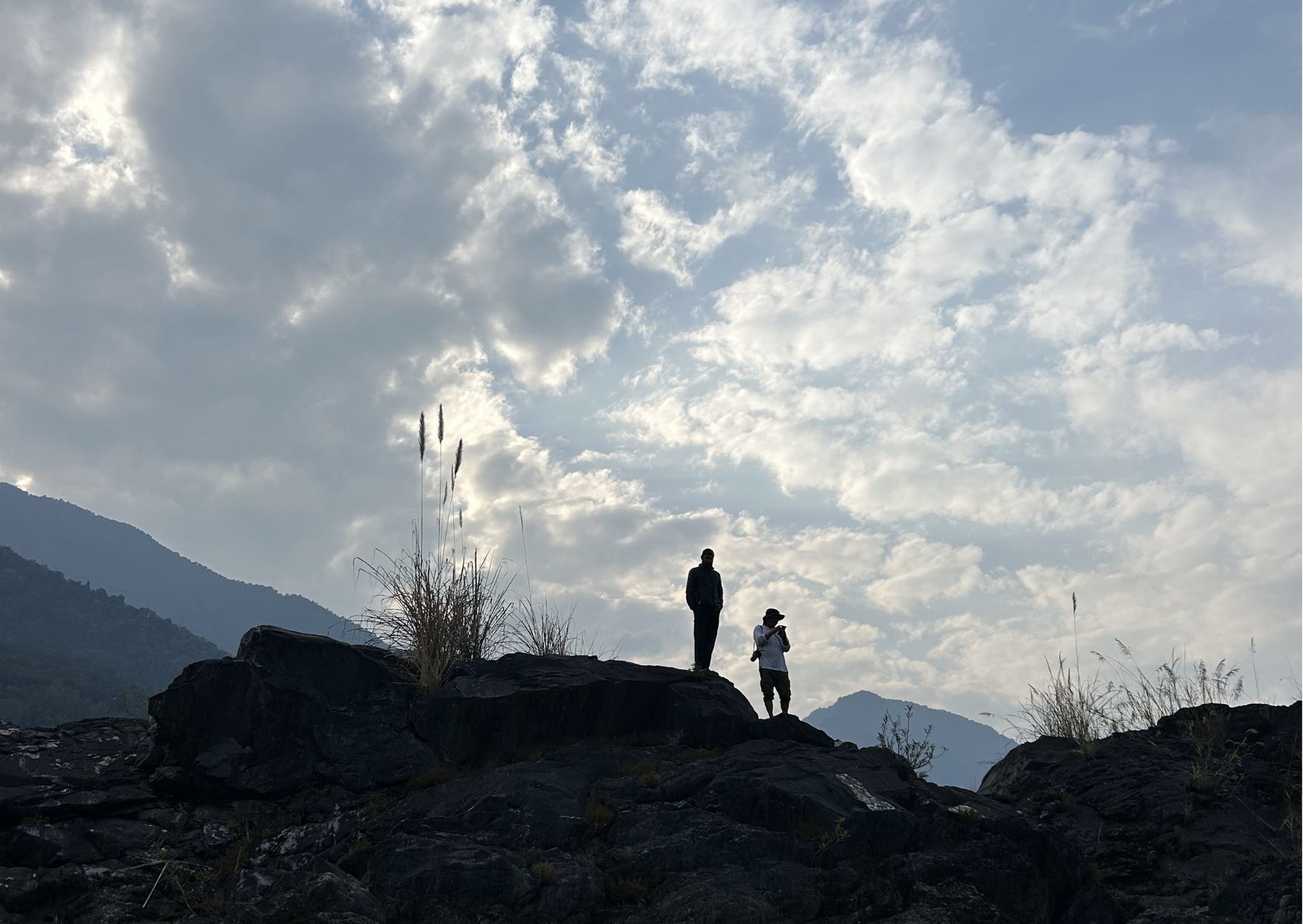
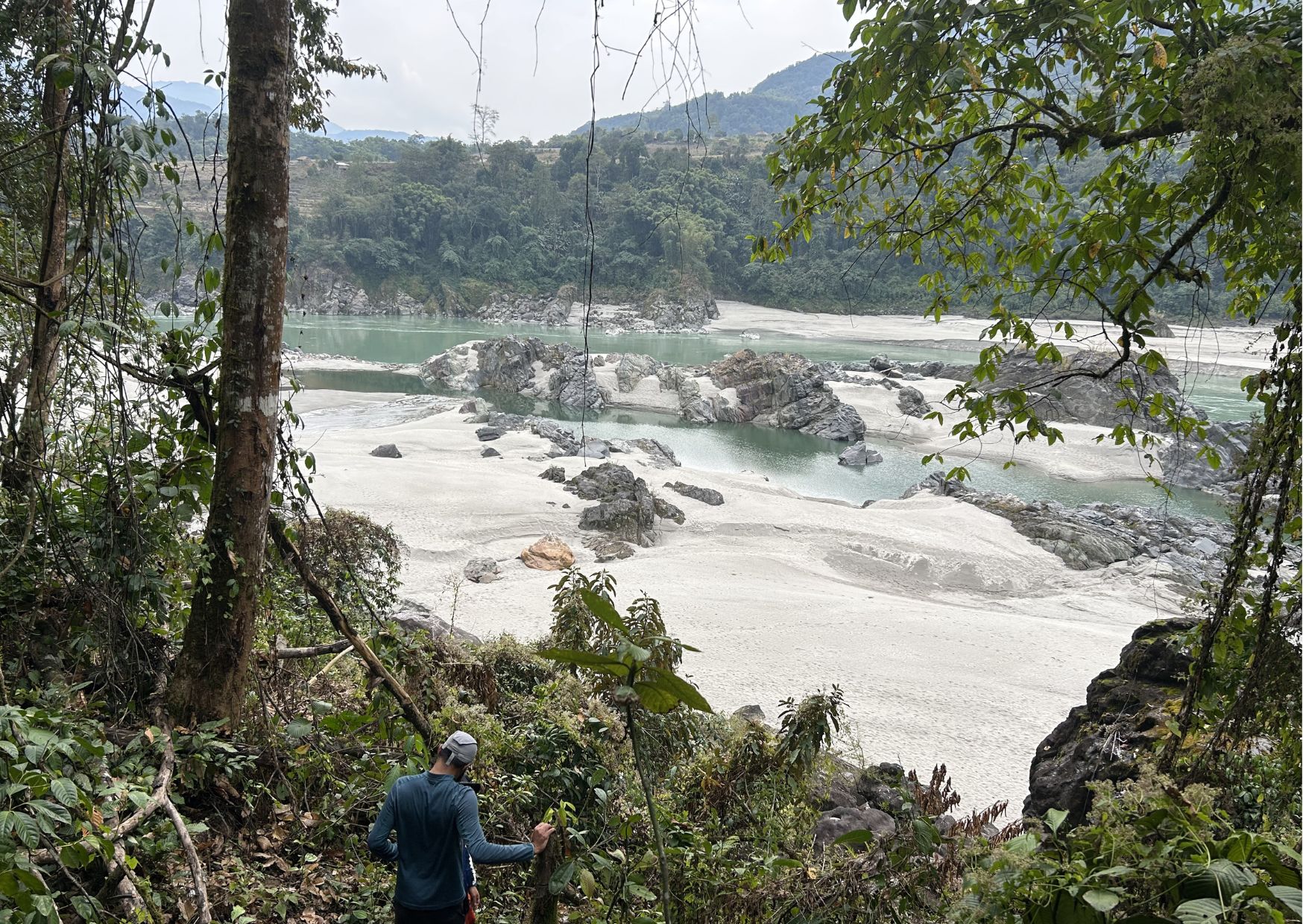
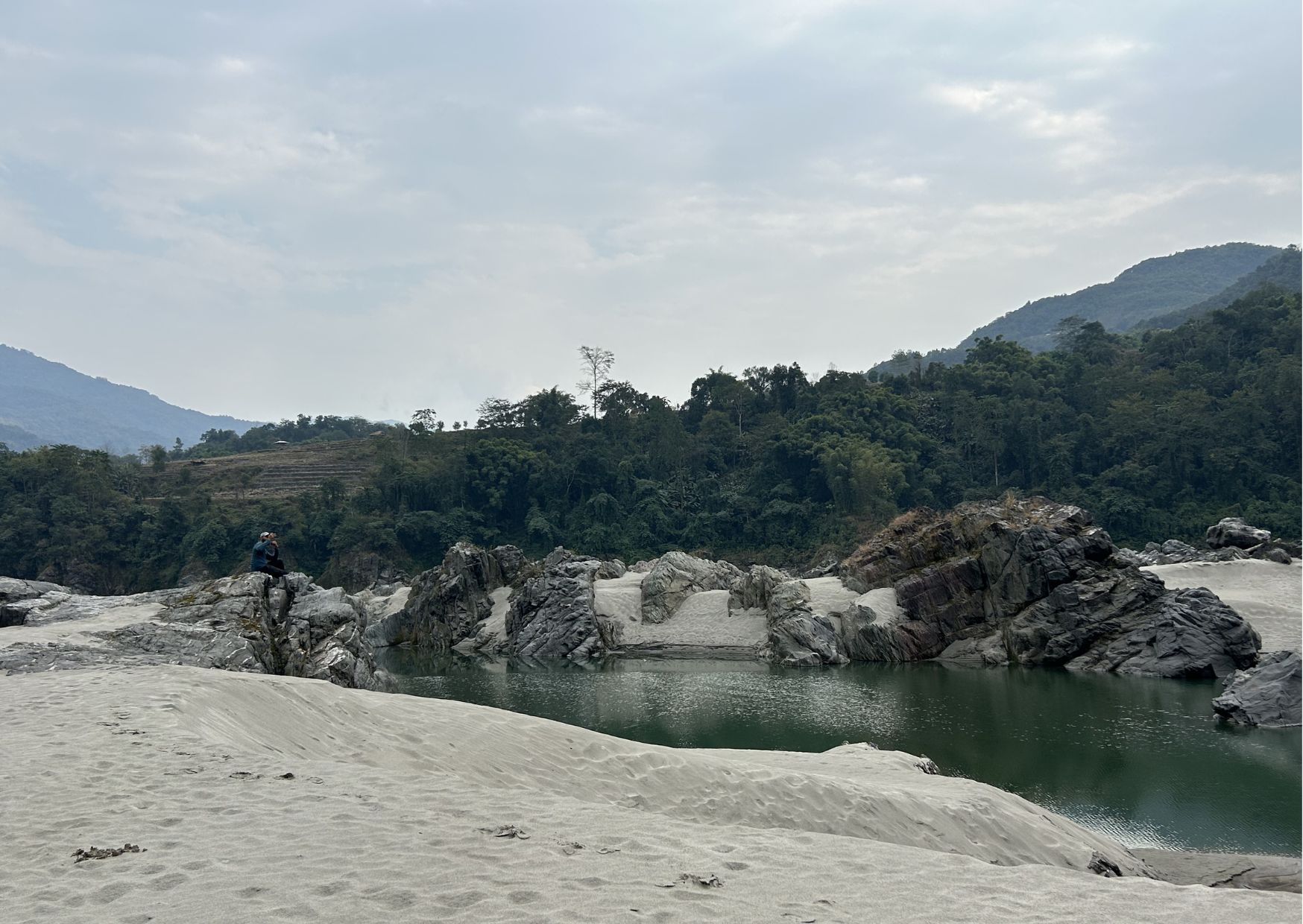
The journey concludes at our private riverside camp on the banks of the Siang, on a secluded stretch of sand the camp sits between two lush green hills. Natural rock pools invite quiet swims, as you watch birds gliding across the valley from one forested slope to the other.
Stay in comfortable twin-sharing tents with thoughtfully arranged facilities, including toilet tents and changing tents. As evening falls, gather around the wood fire for dinner, watch the stars emerge above the valley, and reflect. It is a fitting final night—immersed in the wild beauty of the Siang, yet completely at ease.
guides
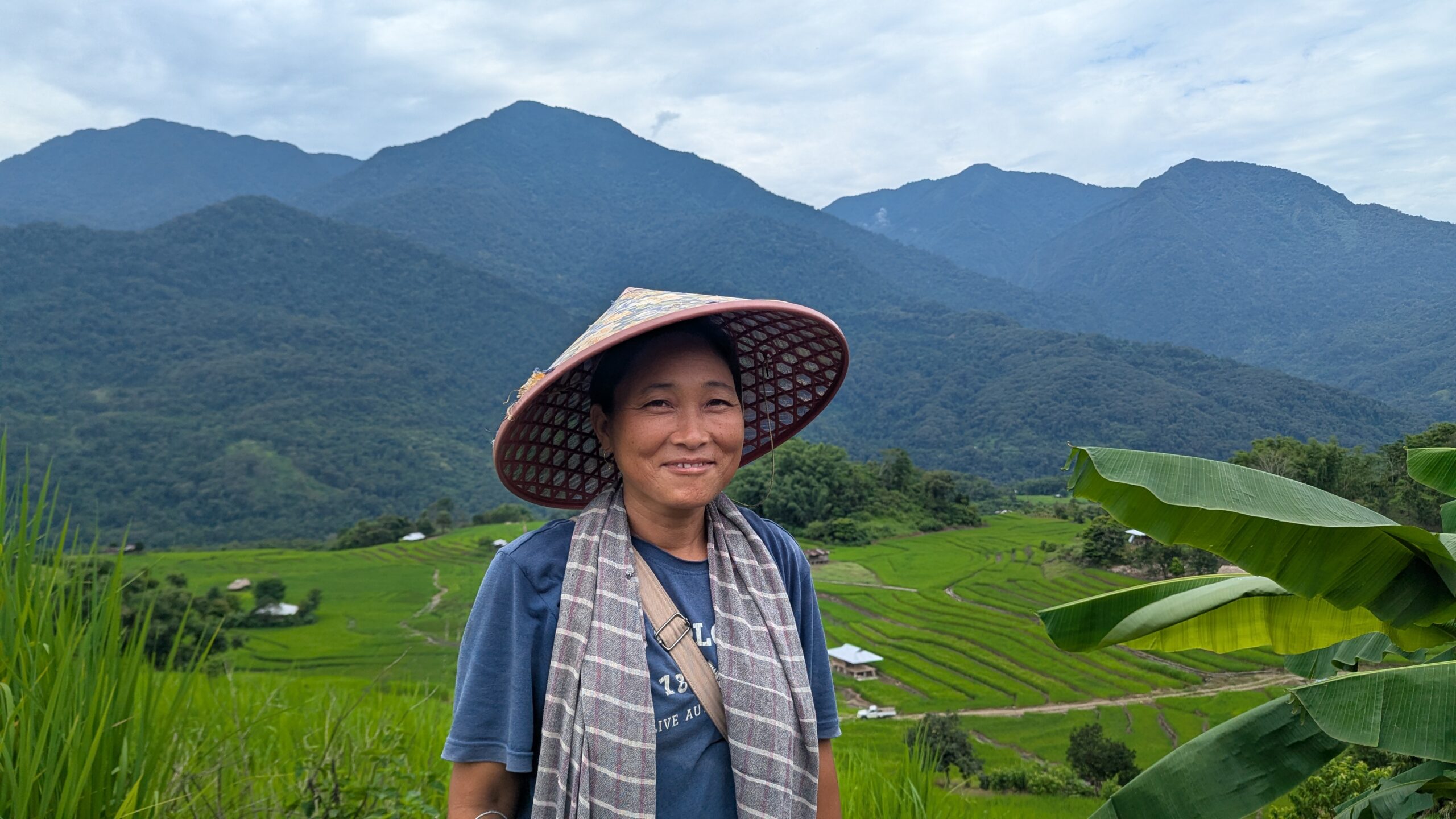
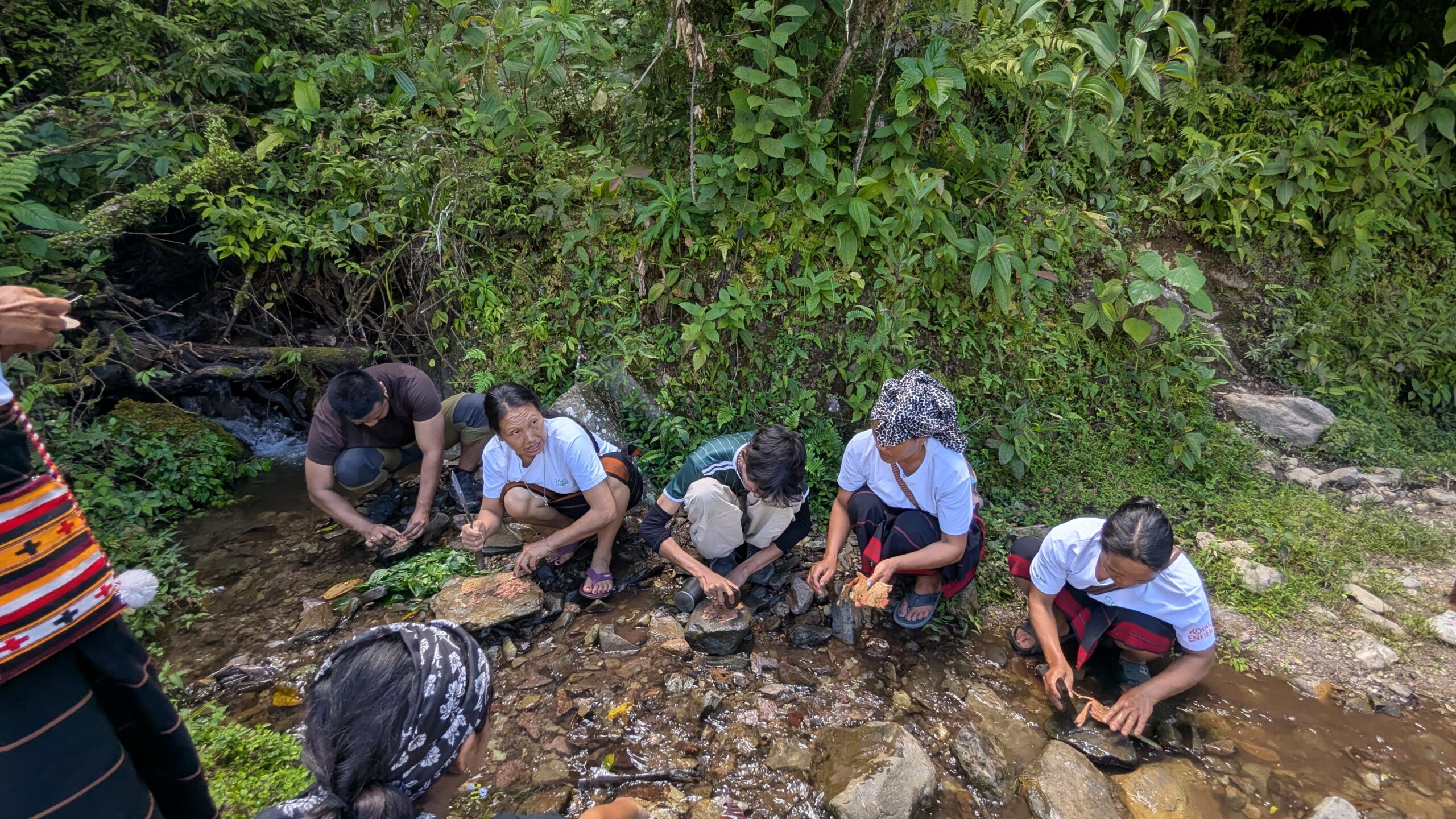
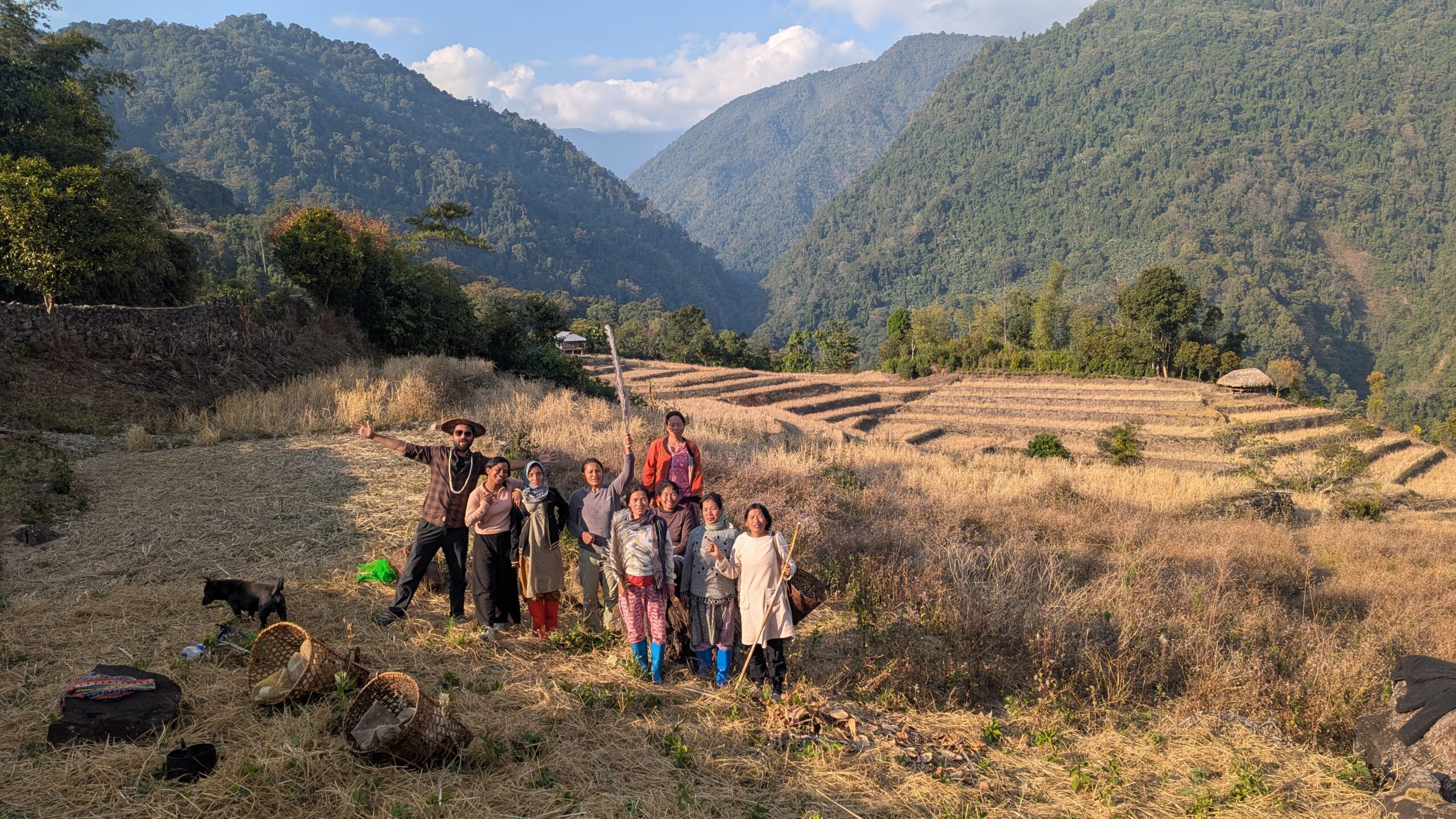
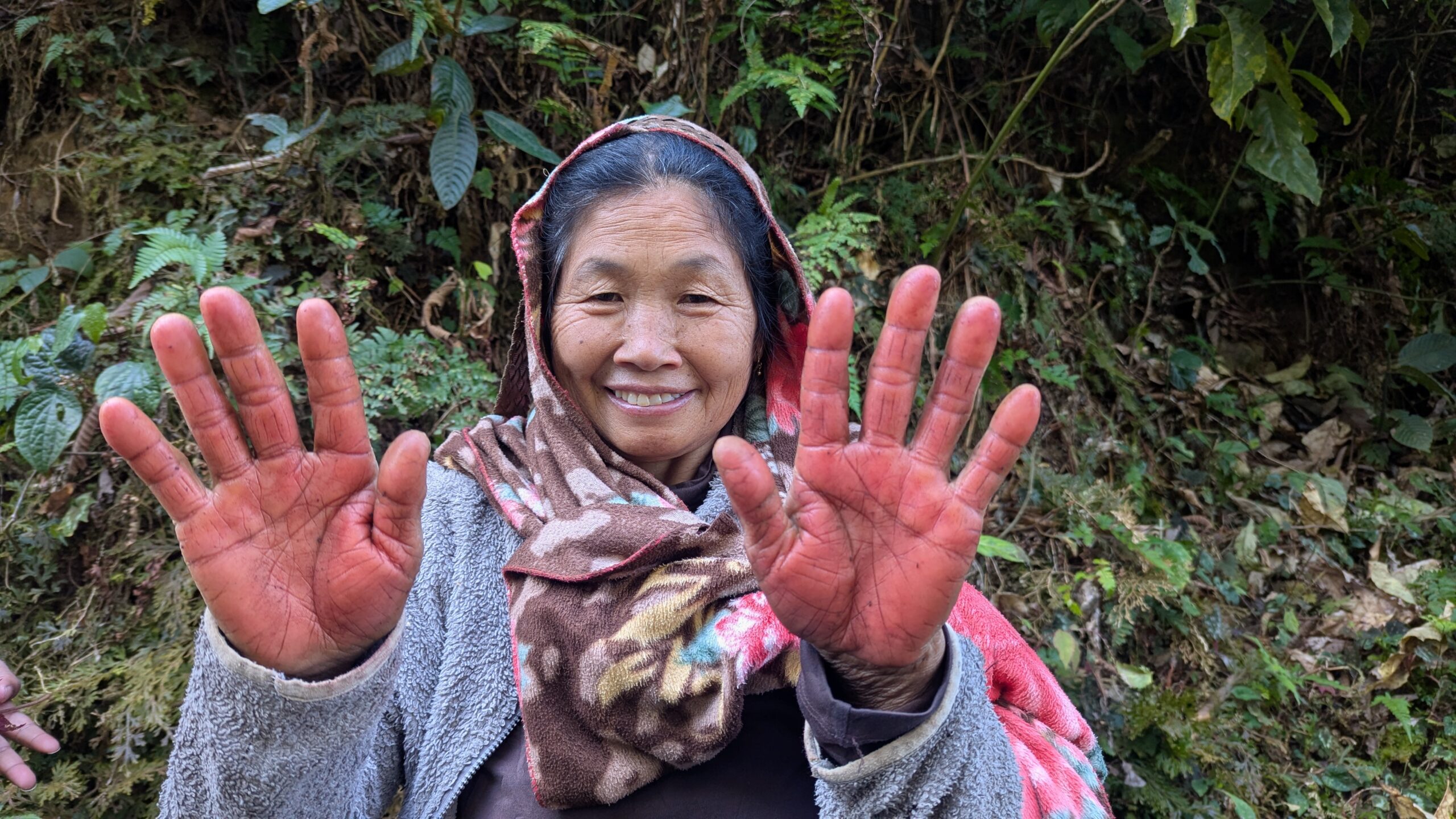
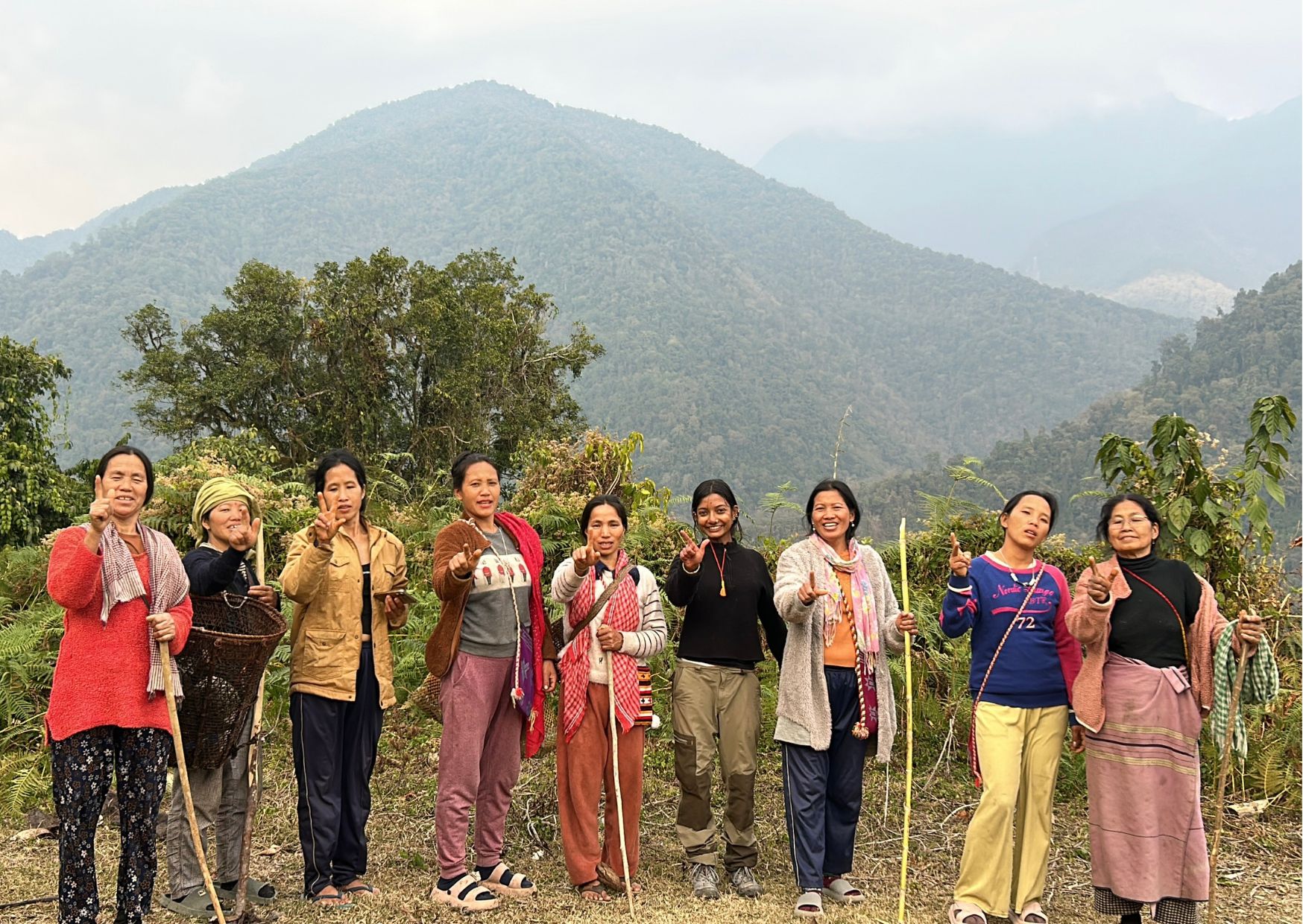
This journey is led entirely by members of the local Adi community—from village elders who welcome you into their homes to the younger generation who guide you along the forests, rivers, and trails they have grown up exploring.
More than guides, they are interpreters and custodians of the landscape. Through shared walks, meals, conversations, and everyday moments, they offer an understanding of the region that only comes from a lifetime spent here. Whether introducing you to a bird by its call, explaining the significance of a ceremony, or identifying a medicinal plant hidden amongst the undergrowth, their knowledge is generous.
Many of the people you’ll meet are part of local self-help groups and community-led initiatives working to preserve the region’s ecological and cultural heritage. By travelling with them, you’re supporting those who continue to protect and carry these traditions forward.
While English may not always be the language they are most comfortable speaking, curiosity, patience, and genuine conversation go a remarkably long way. We encourage you to take your time, ask questions, listen generously, and allow these relationships to unfold naturally.
who this is for
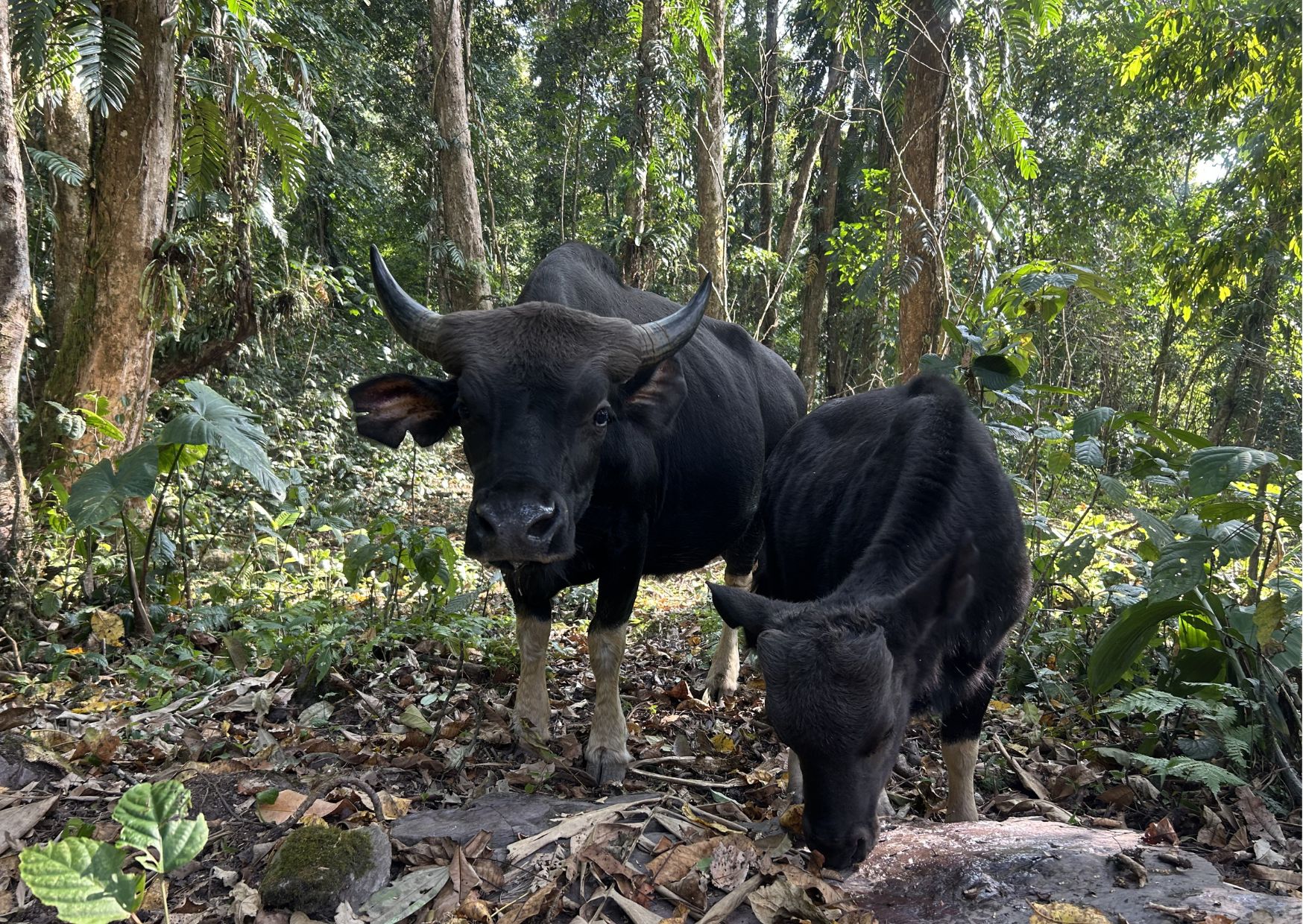
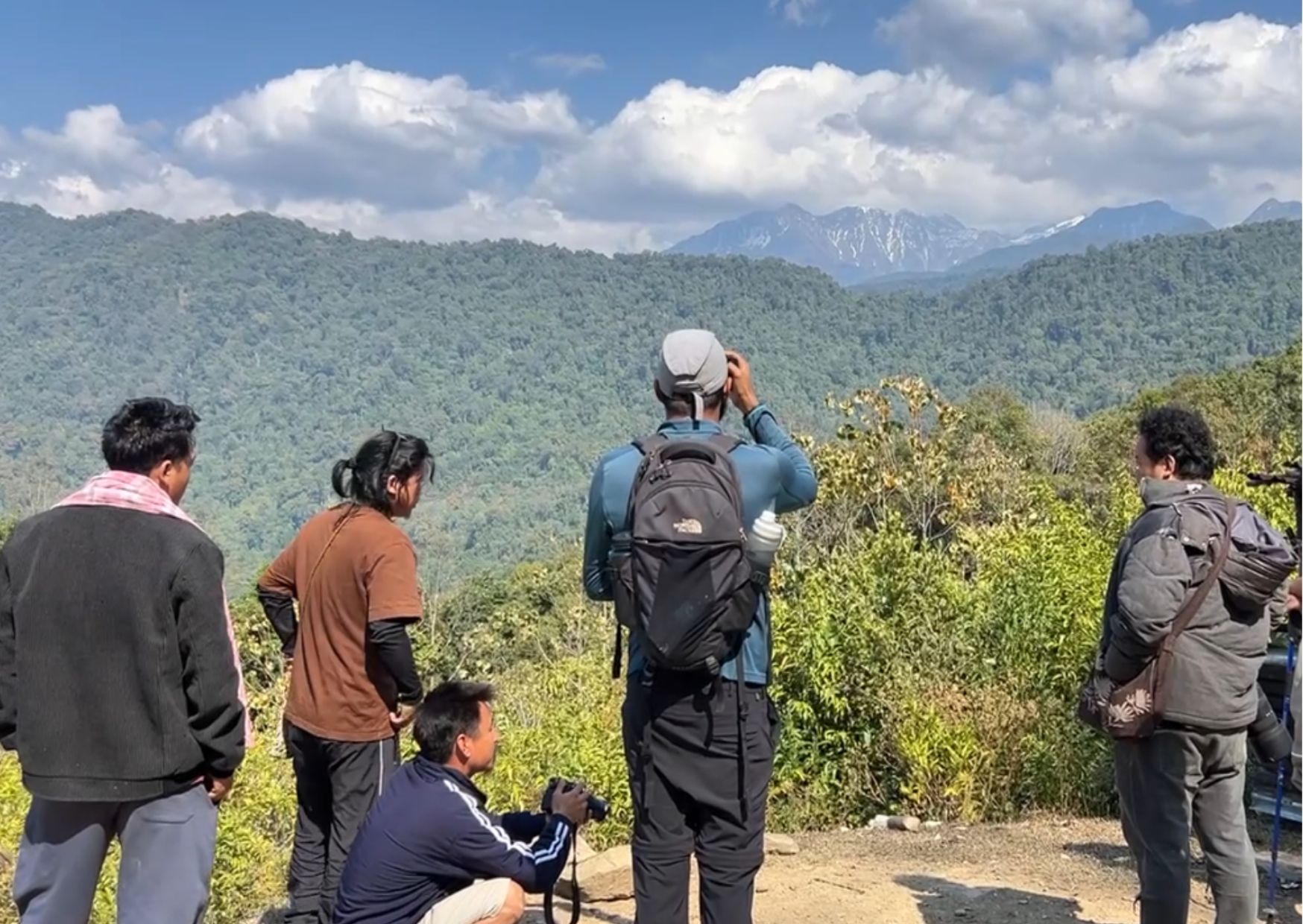
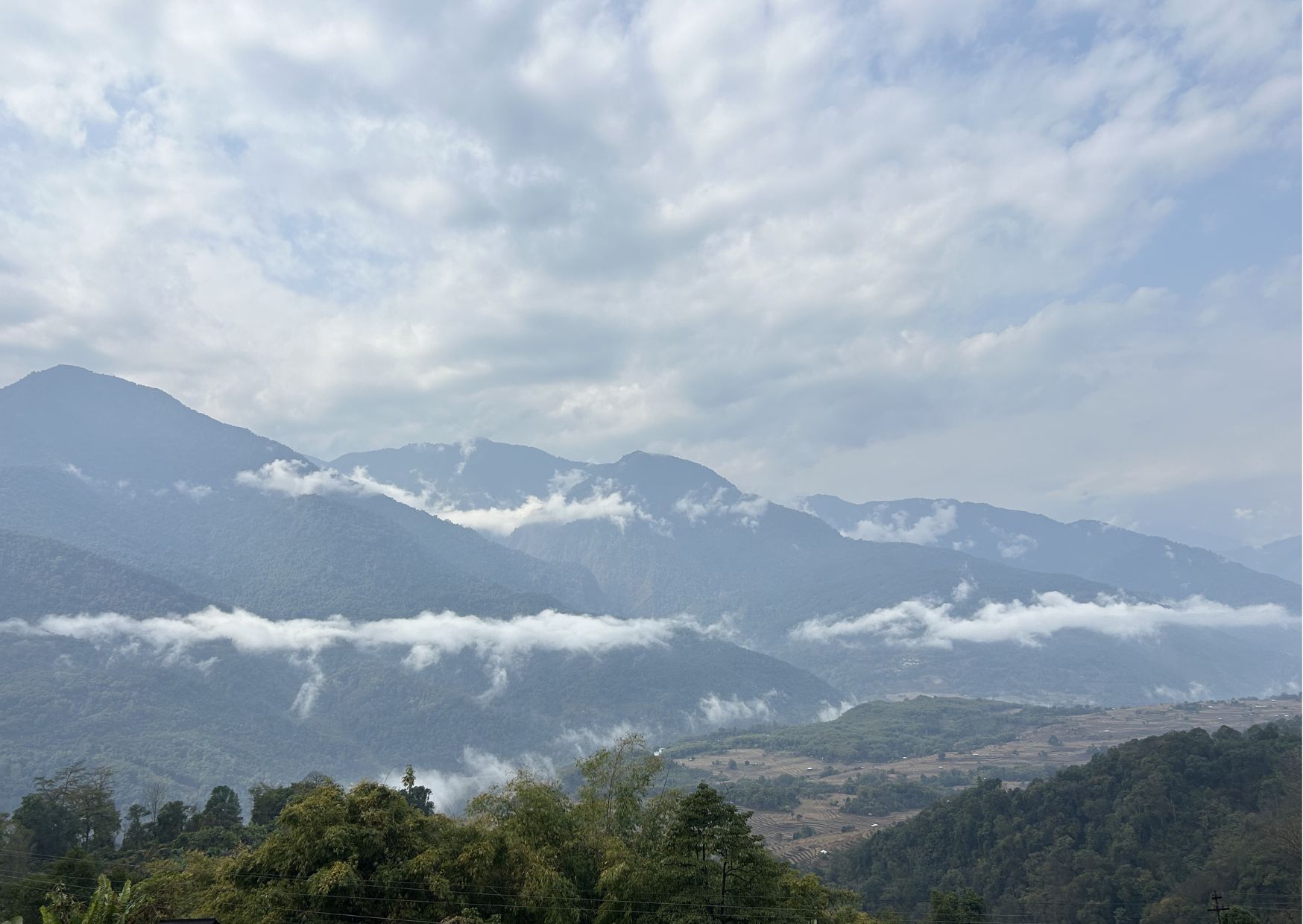
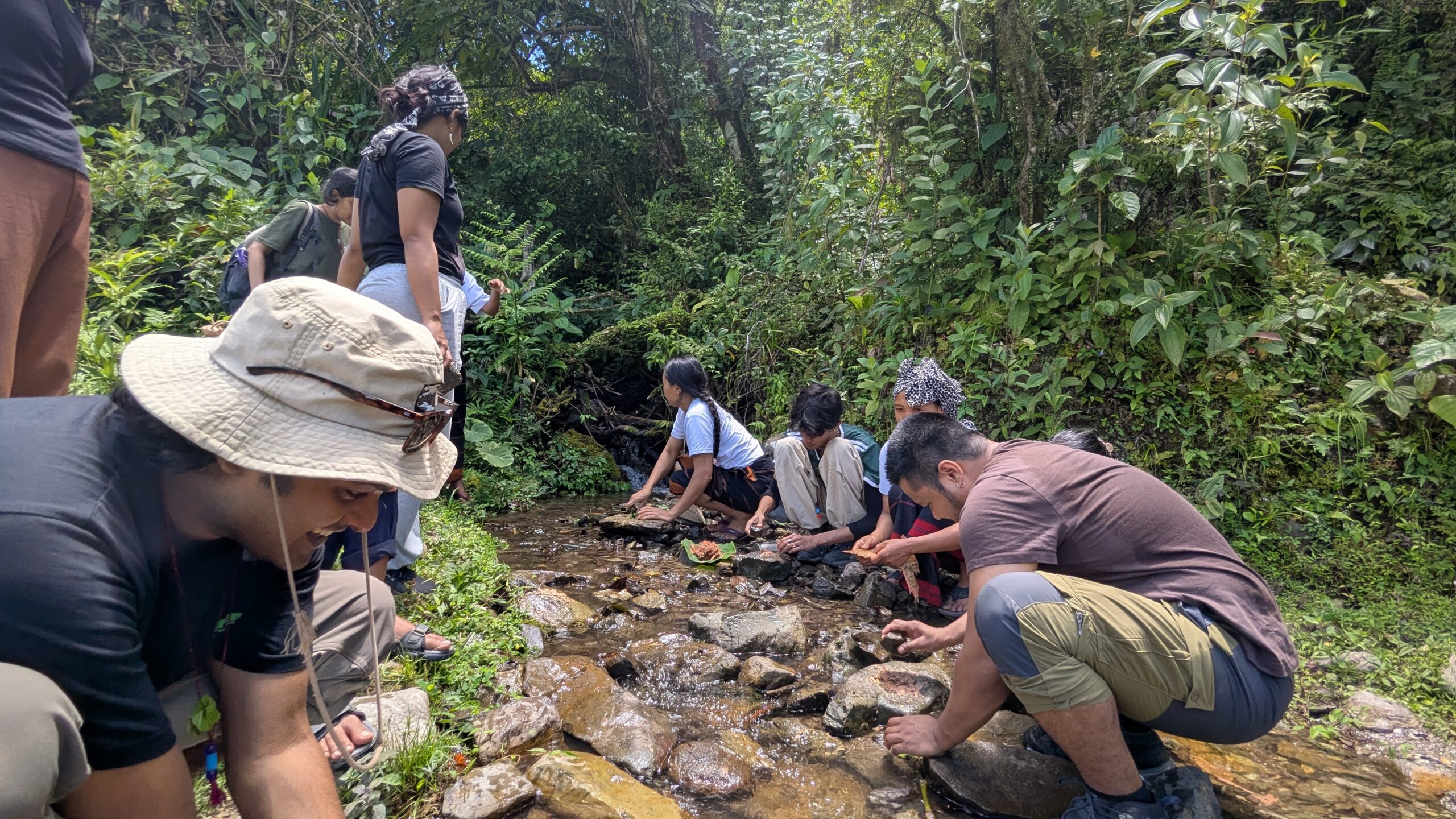
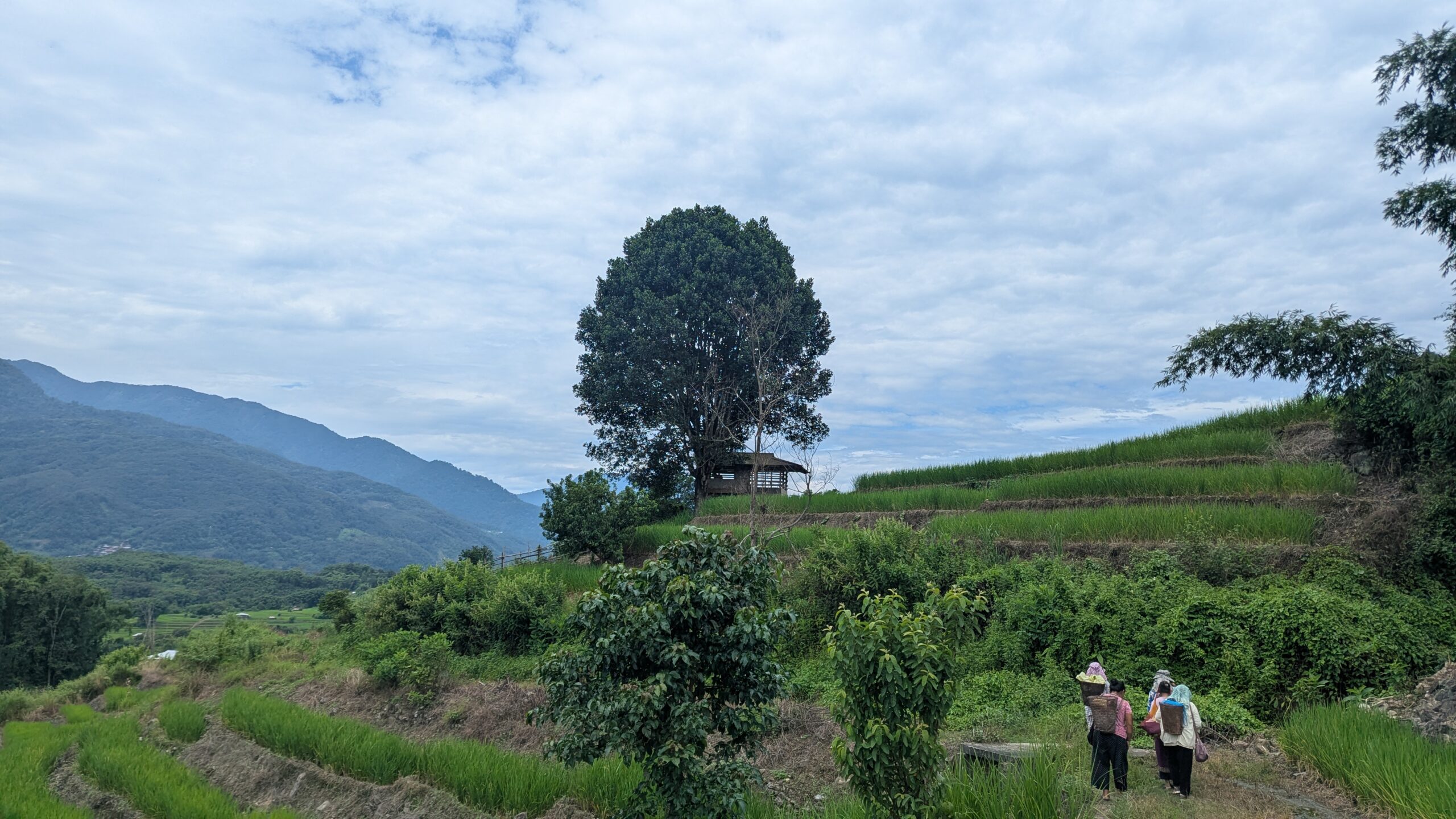
This journey is for those who travel with an open mind, seek immersion over indulgence, and connection over checklists.
The Upper Siang remains one of India’s most remote and least-altered landscapes. Rather than reshaping it for tourism, we’ve chosen to experience it on its own terms—through unchanged, village homes, forest trails, shared meals, and non-performative conversations, and everyday traditions. The pace is intentionally gentle, built around observation, interaction, and reflection, in true Knowhere Travel fashion.
This is an active holiday. The walks themselves are easy to moderate and suitable for anyone with an above average level of fitness, while some sections may be uneven or steeper than others. Previous outdoor experience is helpful, but not essential.
Throughout the journey, we’ve taken great care to ensure that safety and comfort meet the standards you expect from us, while preserving the character of the places you’ll call home along the way.
If you’re looking for a luxury-first holiday, this may not be it. But if you’re drawn to wild landscapes, living traditions, and experiences that leave you seeing the world a little differently, we think you’ll find something truly special here.
responsible practices
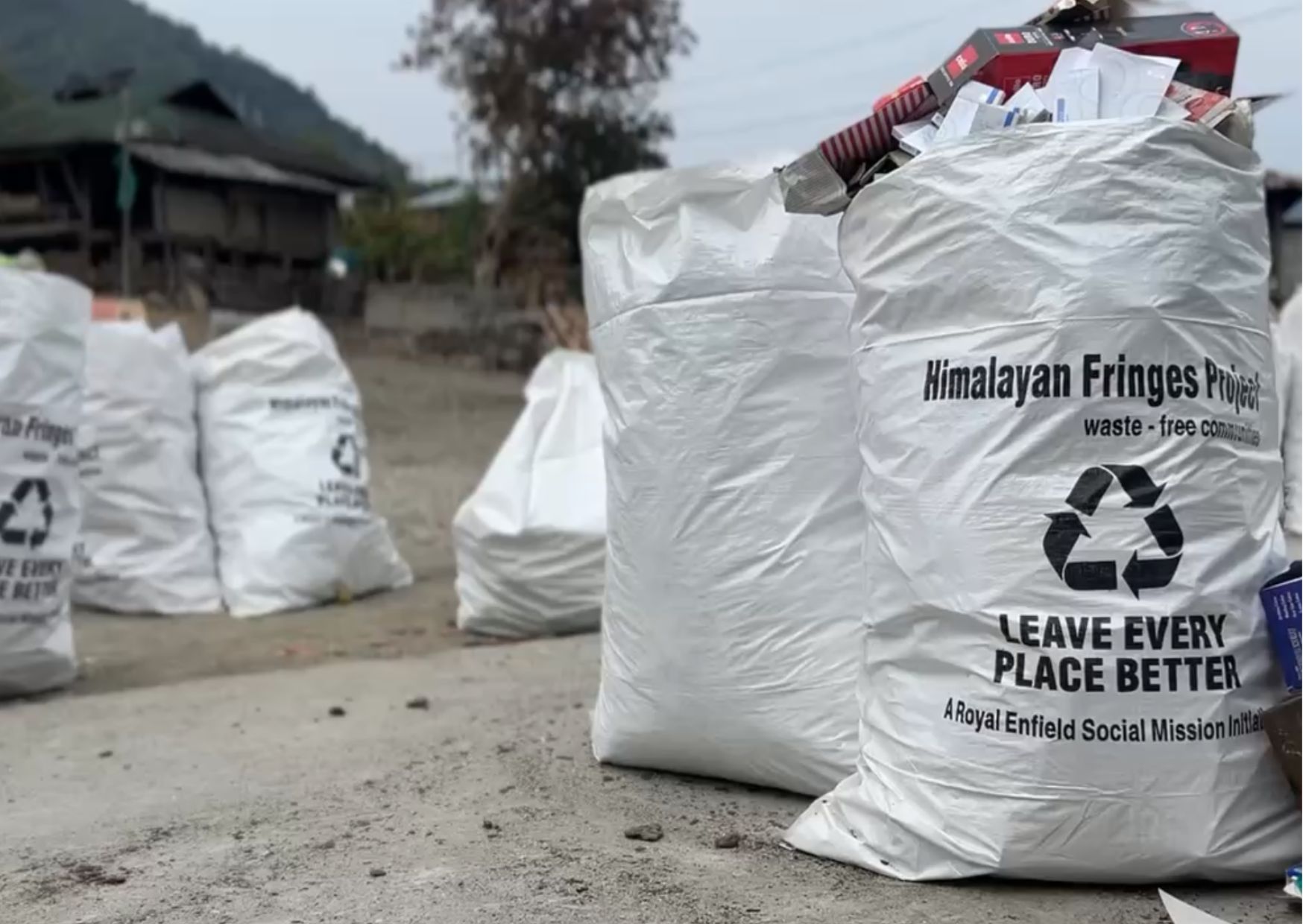
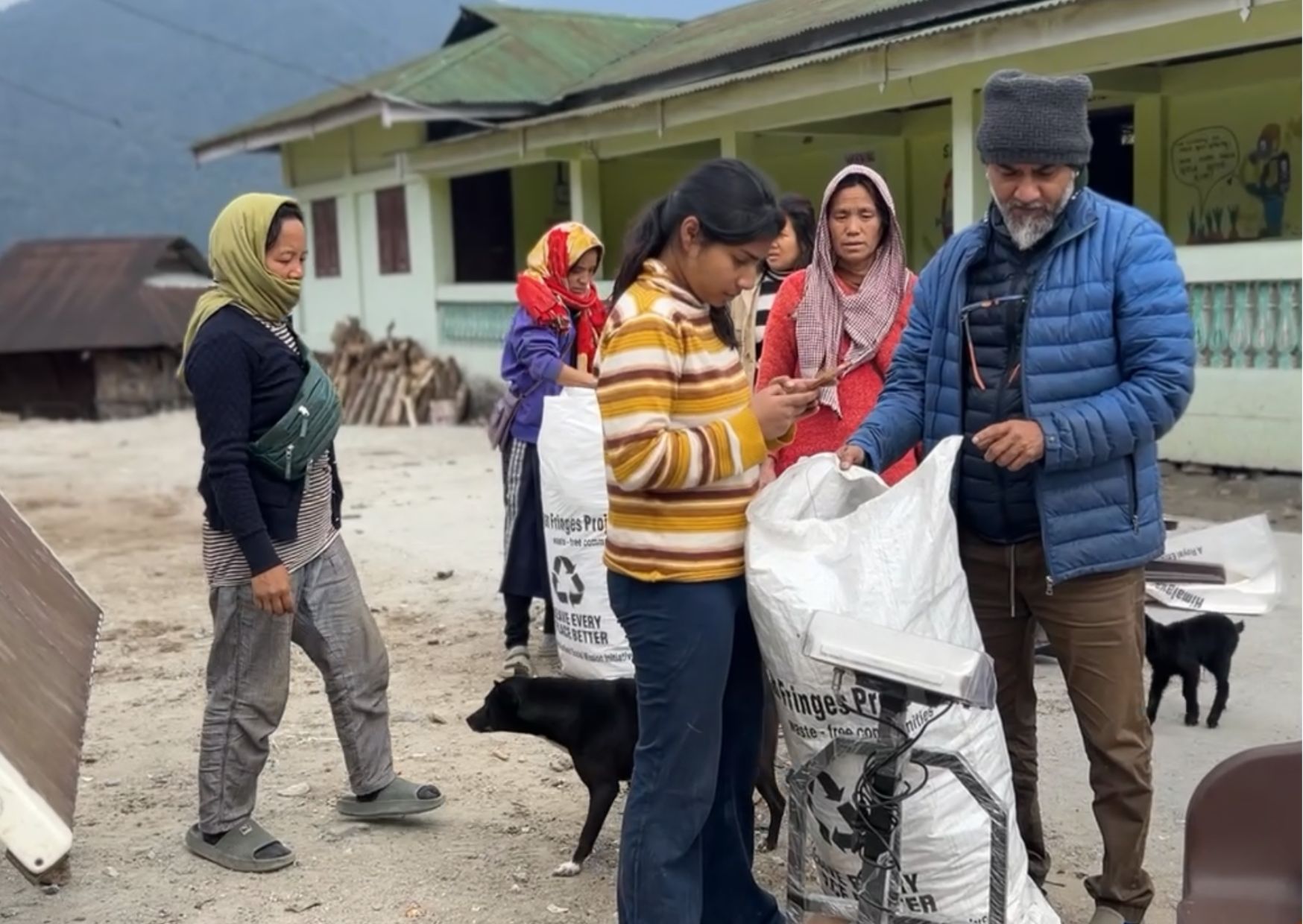
The Upper Siang remains one of the most remote and least-altered landscapes of the Eastern Himalaya that has remained remarkably untouched by mass tourism.
We encourage guests to approach the region with curiosity, humility, and respect, recognising that many of the customs, beliefs, and ways of life here may differ from those they are familiar with.
We travel only in small groups of 6 guests only, follow the Leave No Trace principles, and make every effort to ensure that our presence leaves as little impact as possible. We ask guests to avoid removing anything from the forests and rivers, and to embrace the small compromises that help preserve the character of these landscapes for generations to come.
Our experiences are led in partnership with Green School– a place-based nature and conservation education initiative led by Canopy Collective who facilitate local communities, self-help groups, conservation practitioners, and researchers to continue protecting their ecology, cultural heritage, and traditional knowledge.
We are also proud to partner with the Further & Beyond and their Himalayan Fringes Project, whose long-term work in community-led waste management and environmental education helps ensure that this remains a low-impact, waste-conscious journey.
By travelling here, you are contributing directly to local livelihoods while supporting organisations committed to safeguarding one of India’s last truly wild landscapes.
overview, pricing, & dates
itinerary & getting there
Day 1 – Pick up from Dibrugarh and transfer. Settle into the village, followed by an introduction and orientations.
Day 2 – Spend the day exploring the village on a local trail experience.
Day 3 – Begin the walk from the first village to the next. Overnight in the next village.
Day 4 – Spend the day in and around the village, interacting with local elders before walking to the rice fields. Participate in seasonal farming activities, birding, and local interactions. Overnight in field farmhouses.
Day 5 – Continue exploring the agricultural landscape through activities such as foraging, fishing, harvesting, outdoor cooking, waterfall visits, and time with the farming community. Overnight in field farmhouses.
Day 6 – Walk to the riverside camp. Spend the afternoon swimming, relaxing by the river, and enjoying the surrounding landscape before an evening under the stars. Overnight at the riverside camp.
Day 7 – Drive to Pasighat and spend the night.
Day 8 – After breakfast, transfer for your onward journey.
Guests are requested to arrive in Dibrugarh on Day 0 of the itinerary. We recommend booking a flight that reaches Dibrugarh by the afternoon or evening, allowing you to settle in before the journey begins the following morning.
You will spend the night at a hotel in Dibrugarh. Our team will receive you the next morning and you will be under our care until we drop you back to the airport for your onward journey.
Day 1 – Pick up from Dibrugarh and transfer. Settle into the village, followed by an introduction and orientations.
Day 2 – Spend the day exploring the village on a local trail experience.
Day 3 – Begin the walk from the first village to the next. Overnight in the next village.
Day 4 – Spend the day in and around the village, interacting with local elders before walking to the rice fields. Participate in seasonal farming activities, birding, and local interactions. Overnight in field farmhouses.
Day 5 – Continue exploring the agricultural landscape through activities such as foraging, fishing, harvesting, outdoor cooking, waterfall visits, and time with the farming community. Overnight in field farmhouses.
Day 6 – Walk to the riverside camp. Spend the afternoon swimming, relaxing by the river, and enjoying the surrounding landscape before an evening under the stars. Overnight at the riverside camp.
Day 7 – Drive to Pasighat and spend the night.
Day 8 – After breakfast, transfer for your onward journey.
Guests are requested to arrive in Dibrugarh on Day 0 of the itinerary. We recommend booking a flight that reaches Dibrugarh by the afternoon or evening, allowing you to settle in before the journey begins the following morning.
You will spend the night at a hotel in Dibrugarh. Our team will receive you the next morning and you will be under our care until we drop you back to the airport for your onward journey.
dates and pricing
Dates for Group Departures (2026-2027):
October 18 to October 25
December 25 to January 01
Pricing for Group Departures:
Rs. 59,999 per person
Children between the ages of 6-12 years are charged 60% and will share the room with their families. If a single child is accompanying a single parent, adult charges will be applicable for the child.
Includes: accommodation for 7 nights, all meals (veg and non-veg), transfers to and from Dibrugarh, all internal transfers, local guides, support staff, all applicable taxes and service charges.
Excludes: flight/rail/bus fares, first night stay at Dibrugarh, 5% additional charges for foreign nationals, tips, trip extensions, travel insurance, alcoholic beverages, anything not mentioned under ‘includes’
Our group departures are confirmed only when a minimum of 2 adults sign up. Group sizes are limited to a maximum of 6 adults (kids extra) and we work on a first come first serve basis.
Dates for Group Departures (2026-2027):
October 18 to October 25
December 25 to January 01
Pricing for Group Departures:
Rs. 59,999 per person
Children between the ages of 6-12 years are charged 60% and will share the room with their families. If a single child is accompanying a single parent, adult charges will be applicable for the child.
Includes: accommodation for 7 nights, all meals (veg and non-veg), transfers to and from Dibrugarh, all internal transfers, local guides, support staff, all applicable taxes and service charges.
Excludes: flight/rail/bus fares, first night stay at Dibrugarh, 5% additional charges for foreign nationals, tips, trip extensions, travel insurance, alcoholic beverages, anything not mentioned under ‘includes’
Our group departures are confirmed only when a minimum of 2 adults sign up. Group sizes are limited to a maximum of 6 adults (kids extra) and we work on a first come first serve basis.